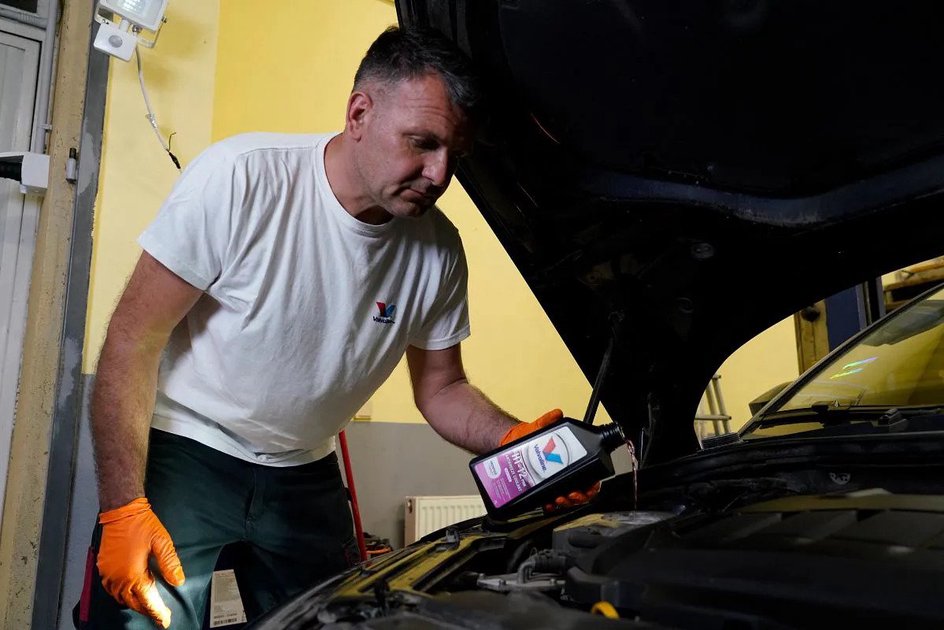
Despite the electronic oil monitoring systems found in today's vehicles, manually verifying your engine oil level remains a worthwhile habit — particularly ahead of extended drives or demanding conditions.
The majority of cars still feature a dipstick, typically fitted with a brightly coloured handle for easy identification. Park on flat ground and let the engine cool, then withdraw the dipstick, wipe it dry, reinsert it completely, and pull it out once more to read the level. The oil film should fall between the two reference marks. A reading near or below the lower marker signals that the engine is running short on lubrication.
Pay attention to the oil's condition as well as its quantity. Diesel engines darken their oil rapidly by nature, but heavy grit in the sample is a clear sign that a change is overdue. For drivers seeking a dependable top-up or a high-performance option, SynPower 5W-30 suits the majority of contemporary engines, including those with turbochargers and start-stop technology.
Always inspect coolant with a fully cold engine to eliminate any risk of burns. Locate the translucent expansion tank — it will have 'MIN' and 'MAX' markings along its side — and confirm the fluid sits somewhere within that range.
A consistently falling coolant level can point to a minor leak in the radiator or connected hoses. Beyond quantity, colour matters here as well. Depending on the formulation, modern coolants typically appear pink, green, or blue. A rusty tint or milky appearance, however, should be treated as a warning sign requiring prompt attention.
Selecting the correct coolant type is not optional. Valvoline's HT-12 Antifreeze carries approval for a broad range of European vehicles and delivers durable protection against corrosion, even when operating under extreme conditions.
Brake fluid tends to be overlooked precisely because it requires topping up so infrequently — but that rarity does not excuse ignoring it altogether. Its reservoir is generally positioned toward the rear of the engine bay, clearly labelled and often carrying a slightly yellowish tint.
Maintain the fluid between the 'MIN' and 'MAX' lines. A dropping level can indicate either worn brake pads or a leak within the braking system. Either scenario warrants a thorough inspection by a qualified technician.
There is an important caveat, however: brake fluid gradually absorbs atmospheric moisture over time, which lowers its boiling point and can compromise braking effectiveness. Even when the level appears acceptable, the fluid should still be renewed every two to three years.
Washer fluid may seem trivial, yet it can prove critical in the right circumstances. Road dust, insects, and winter road salt can rapidly impair visibility — particularly on lengthy journeys — so keeping the reservoir topped up is always worthwhile. The washer fluid tank is straightforward to locate, commonly identified by a windscreen icon on its cap.
Confirm adequate fluid before longer trips or when weather conditions are likely to shift, and take low-level dashboard warnings seriously. Plain water is not a suitable substitute: it is susceptible to bacterial contamination and will freeze in cold temperatures. Instead, opt for a concentrated washer fluid formulated for year-round use.
Many contemporary vehicles — electric and hybrid models in particular — rely on electronic power steering and sealed automatic transmissions. That said, certain vehicles still call for occasional manual checks: vans, older models, and heavy-duty machinery are common examples.
Hydraulic power steering systems have a dedicated reservoir marked with steering-related symbols; the fluid should rest between the indicated levels and appear clean. Transmission fluid checks differ depending on the vehicle. Older automatics equipped with a dipstick should show fluid that is pinkish-red and transparent. Fully sealed modern systems don't permit manual inspection, but it is still possible to watch for fluid pooling beneath the vehicle or notice sluggish gear engagement as indirect indicators.
Whether your vehicle serves professional or recreational purposes, a small amount of attention now can prevent a far more costly repair later. With the right products and the expertise behind Valvoline Global, keeping your vehicle in peak condition has never been more straightforward.