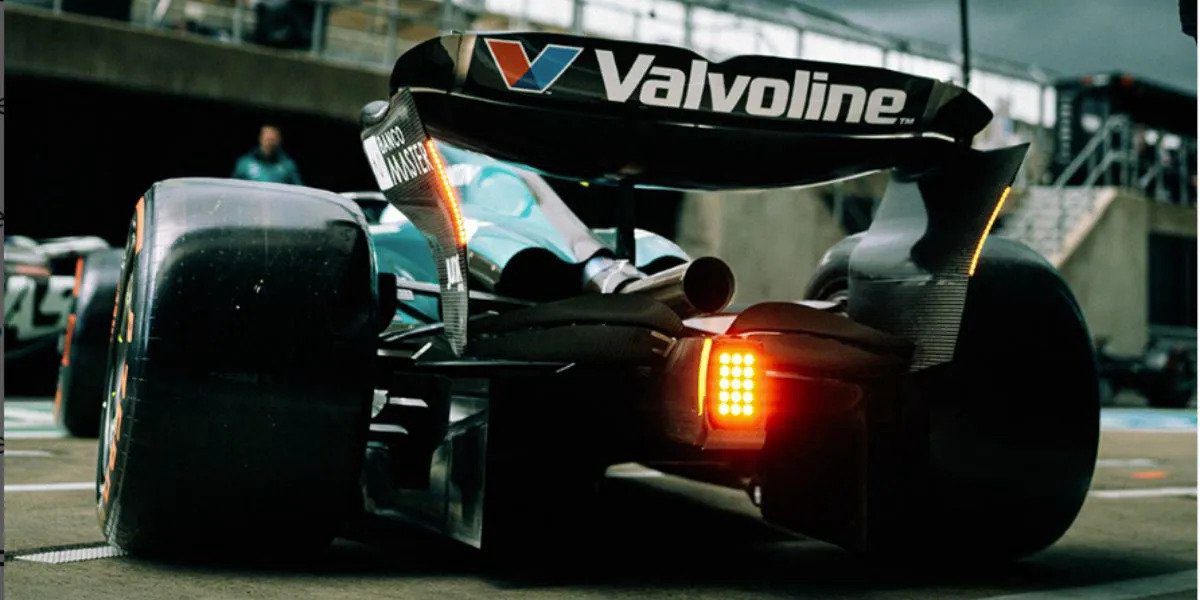
Before partnering with Valvoline, take time to explore this guide and deepen your understanding of race car lubrication — an in-depth look at the science and strategy driving motorsport lubricants. Armed with this knowledge, you'll be equipped to make confident lubrication decisions that help propel you across the finish line. Whether you're setting up a classic muscle car for a weekend track day or fine-tuning a professional race car ahead of the next major event, the insights here will help you extract the most from your vehicle in terms of both performance and durability under the punishing conditions of racing.
Race cars are engineered for extreme performance across gruelling conditions, demanding precision-built components and robust engineering capable of surviving the rigours of high-speed competition. On the racetrack, elevated temperatures and intense pressures are constant realities rather than occasional hazards. From the engine to the gearbox, every system in a racing car must operate at its best to uphold both competitiveness and safety.
Material selection is a fundamental consideration in racing car construction. Components must strike a careful balance — light enough to aid performance yet strong enough to absorb the mechanical stresses racing demands. Advances in materials science have introduced composites and specialised alloys that deliver structural strength without adding unnecessary weight, boosting both speed and handling agility.
The fuel and 2 stroke oil systems found in racing vehicles are likewise engineered for maximum efficiency and output. High-performance racing fuels are specially formulated to combust more cleanly and efficiently, delivering the power required while minimising the risk of damage to internal engine components. In two stroke engines, where oil and fuel are combined, oil quality is particularly critical — it directly affects the prevention of engine wear and the smoothness of operation.
Race car engineering must account for the severe conditions these machines face in competition. Oil viscosity, for example, plays an essential role in ensuring all moving parts receive adequate lubrication, whether at the starting line or during the prolonged heat of a lengthy race. Similarly, the car engine coolant system must operate with exceptional effectiveness to prevent overheating even when the vehicle is pushed to its absolute limits. Racing cars routinely employ advanced cooling systems designed to sustain an ideal engine temperature and guard against performance degradation — systems considerably more capable than those found in standard road vehicles.
Proper lubrication stands as one of the most critical factors influencing both the performance and lifespan of racing engines. High-quality racing lubricants are developed with specialised additives specifically formulated to handle the intense stresses generated under racing conditions. These lubricants are engineered to hold their integrity when pushed to extremes, delivering consistent and dependable performance from the start of a race to its conclusion.
Beyond thermal resistance, these lubricants incorporate advanced dispersant and detergent technology that plays a vital role in sustaining engine cleanliness. By actively managing and eliminating the contaminants and residues that accumulate in high-performance engines, these lubricants keep internal components in optimal condition, preventing deposit build-up that could otherwise compromise performance.
Valvoline's product lineup — including the well-regarded SynPower and VR1 Racing series — reflects cutting-edge lubrication technology developed to meet the exacting demands of motorsport. These products are built around enhanced formulations that sustain optimal oil viscosity across a broad spectrum of operating temperatures. This is a critical capability, ensuring the lubricant continues to deliver effective protection, limiting wear and prolonging the service life of engine components even under the harshest racing conditions.
Conventional Oils: Derived directly from crude oil, conventional oils have long served as the standard choice across many applications. They deliver adequate lubrication at a comparatively modest cost, making them appropriate for less demanding uses. That said, conventional oils contain a wider range of molecular sizes and weights, which contributes to quicker degradation and a greater tendency to lose viscosity when exposed to heat.
Synthetic Oils: Synthetics are chemically engineered to deliver specific performance characteristics. The manufacturing process produces a more uniform molecular structure, which markedly improves both lubricant performance and thermal stability. Synthetic lubricants are purpose-built for demanding environments such as racing, where harsh operating conditions allow these oils to demonstrate their full capabilities.
When it comes to selecting racing lubricants, several key factors must be carefully evaluated to ensure your racing engine delivers peak performance and stands up to the demands placed on it. Below is a detailed breakdown of what to weigh during the selection process:
The choice of oil viscosity is a consequential decision shaped by both the specific engine design and the ambient conditions on race day. The oil must achieve a precise balance — thick enough to prevent wear while remaining fluid enough to circulate freely at the high operating temperatures a race generates. Valvoline's VR1 Racing Oil addresses this by offering multiple viscosity grades to suit different racing engines and climatic conditions, ensuring reliable performance in both hot and cold environments.
The chemical composition of racing lubricants is carefully engineered to satisfy the demanding requirements of high-performance racing engines. Products infused with specialised additives are recommended to optimise engine operation under the most severe conditions. These lubricants contain elevated concentrations of phosphorus, zinc, and other anti-wear agents that play a critical protective role for engine components during high-speed manoeuvres.
Phosphorus functions as a key component in these formulations, acting as an anti-wear agent that deposits a protective film across metal surfaces. This film substantially reduces the metal-to-metal contact that occurs within the engine during racing, cutting down on wear and lengthening the operational life of vital engine parts. Zinc, another essential additive in racing oils, works in tandem with phosphorus to create a dual layer of protection — reinforcing the oil's capacity to resist wear and helping preserve the structural integrity of internal components when they are under extreme stress.
Certain oils, including Valvoline's VR1 Racing Oil, also feature elevated levels of friction modifiers that reduce internal engine resistance, enabling smoother operation and potentially unlocking additional horsepower. This attribute is especially valuable in racing, where even marginal gains in power and efficiency can determine the outcome of a competition.
Selecting a lubricant that is fully compatible with your specific engine type is essential for maximising both performance and longevity in a racing context. Compatibility extends beyond simply choosing between 2 stroke oil and oil intended for four-stroke engines — it also requires understanding the particular operating characteristics and requirements of your engine so the lubricant works in its favour rather than against it. In motorcycles and other high-revving sports vehicles, two-stroke engines are commonly paired with lubricants that blend effectively with fuel and provide efficient lubrication without leaving behind deposits that could compromise engine performance.
Four-stroke engines, which power the majority of modern racing cars, present a distinct set of demands. These engines benefit considerably from lubricants offering stable viscosity across varied temperatures and operating conditions. Valvoline All Climate Engine Oil and Valvoline MaxLife Engine Oil are strong examples of products engineered for high-performance four-stroke applications. They deliver superior protection against the stresses of high-speed racing, with enhanced film strength to guard against wear and corrosion while retaining their protective qualities even when subjected to extreme heat.
Racing engines are repeatedly exposed to extreme temperatures during testing, training, and race day, making the thermal stability of lubricants a non-negotiable requirement. These lubricants must sustain their viscosity and efficiency through all that heat. Racing engines frequently exceed 200°C, which means lubricants must resist both thermal breakdown and viscosity loss — without that resistance, friction rises to dangerous levels and engine components deteriorate rapidly.
Thermal stability also encompasses resistance to oxidative degradation, a process that causes oil to thicken and form sludge. This type of degradation undermines the oil's ability to lubricate effectively and impairs its heat transfer properties, potentially triggering overheating. Research has demonstrated that sustaining an optimal engine temperature can improve fuel efficiency by as much as 3%, further underscoring the importance of strong thermal stability in racing lubricants.
Selecting and applying the right lubricants can have a meaningful impact on both the performance and reliability of a racing vehicle. Each racing discipline carries its own distinct challenges and requirements, calling for tailored lubrication strategies. The following practical guidance is intended to help racers choose and apply lubricants effectively across disciplines such as drag racing, circuit racing, and off-road racing.
Drag Racing: Drag racing engines endure extreme stress concentrated into very brief intervals. Select a lubricant with excellent thermal stability and the ability to sustain viscosity under intense pressure. Prioritise oils that can rapidly form a protective film to prevent wear during sudden high-speed engagements.
Circuit Racing: In circuit racing, lubricants must perform consistently over extended periods of competition. Synthetic oils offering high oxidation resistance and low volatility are well suited for this application. The lubricant must be capable of withstanding continuous high temperatures without breaking down, which is especially important during longer races.
Off-Road Racing: Lubricants for off-road racing must excel at protecting engines from ingress of dirt, dust, and water. Seek out oils with robust dispersant properties. Given the unpredictable terrain encountered, lubricants must maintain their film strength to protect against shock loads and vibrations.
Oil analysis is a valuable diagnostic tool that allows racers to assess the condition of their lubricants and, in turn, the health of their engines. The following guidance explains how to interpret oil analysis reports for effective maintenance planning and informed oil change decisions:
1. Wear Metals: Elevated concentrations of metals such as iron, aluminium, or copper are indicative of wear. Tracking these levels over time helps identify whether the engine is experiencing abnormal deterioration.
2. Viscosity: Verify that the oil's viscosity falls within the recommended range for your engine and operating conditions. Significant deviations may signal oil breakdown or contamination.
3. Contaminants: Watch for evidence of contaminants including dirt, fuel, or car engine coolant. Rising levels can point to underlying issues such as leaks or inadequate air filtration.
4. Additives: Track the depletion of key additives such as detergents, dispersants, and anti-wear agents. A drop below threshold levels may require an oil change ahead of the standard interval.
5. Acid Number: An increasing total acid number is a sign of oil oxidation, which can corrode engine parts and diminish the oil's protective effectiveness.
6. Particle Count: Particularly relevant for hydraulic systems, particle counts reflect the cleanliness of the oil. An excess of particles accelerates wear and tear on engine components.
Selecting the right racing lubricant is more than a routine maintenance decision — it can be the factor that unlocks the full potential of your race car and your performance behind the wheel. At the level of high-performance racing, every detail matters, so approach your lubricant selection with the same seriousness you give every other aspect of race preparation.
Valvoline's dedication to motorsport excellence is demonstrated through its partnerships with premier names in the industry, including Formula 1 and Aston Martin. The Valvoline x Aston Martin collaboration is a natural union between two brands that together bring over 250 years of combined industry experience. Joining forces to create something fast, refined, and elevated made perfect sense. The faith Aston Martin placed in Valvoline has delivered results: in the 2024 season, Fernando Alonso has been competing among the top 10 drivers, while Lance Stroll works to break into the leading ten. Follow the Aston Martin team across upcoming races and support the iconic deep green machine!
Through relentless innovation and a profound understanding of the motorsports world, Valvoline continues to lead at the forefront of the sport — ensuring that your racing engines are not merely protected, but fully optimised for victory.