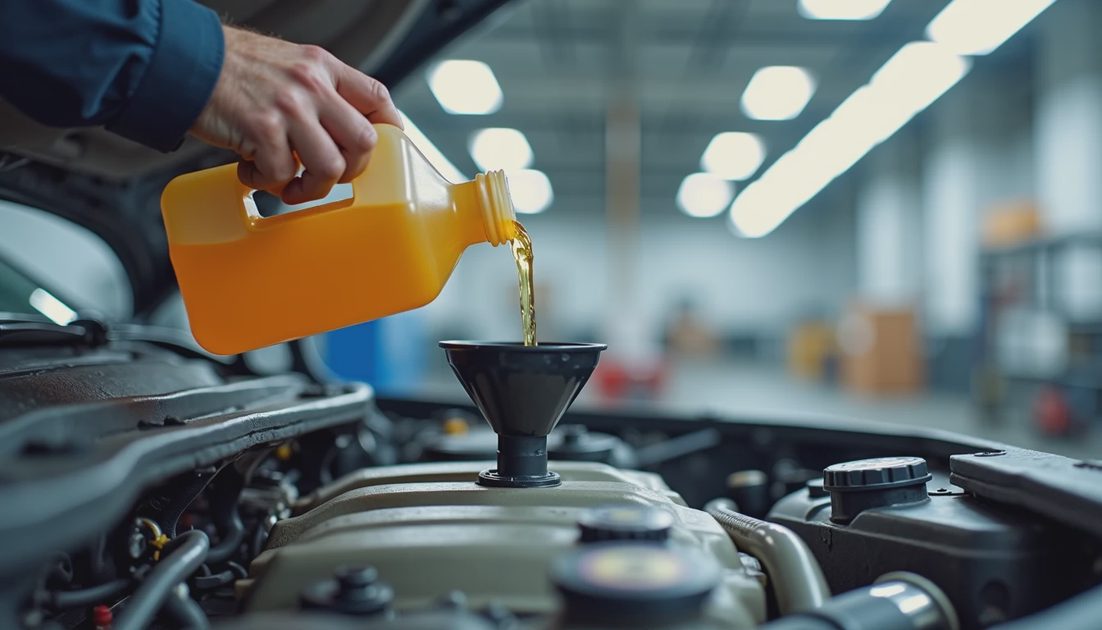
Choosing the right full synthetic oil prevents engine wear and saves you money on rebuilds
You've probably heard that one specific brand is the absolute best full synthetic oil for your engine. Here's what the data actually shows.
Why This Matters
Changing your oil correctly and selecting the right specification can prevent a $4,000 engine rebuild. Modern engines run tighter tolerances than ever, meaning the lubricant isn't just a convenience—it's a critical component. When you chase marketing claims instead of verified specifications, you risk inadequate film strength, accelerated wear on camshafts and bearings, and premature sludge formation. Sticking to the right specs ensures your engine stays protected under heat, pressure, and daily driving cycles.
What You Need to Know
The discussion around "the best" oil usually boils down to three measurable factors: viscosity grade, API certification, and additive formulation. Viscosity (how thick the oil is at a given temperature) dictates how quickly the fluid circulates during cold starts and how well it maintains a protective film at operating temperature. The source discussion highlights 0w20 as a widely used modern specification, designed to flow rapidly at startup while stabilizing under heat.
API (American Petroleum Institute) ratings are your baseline for quality. Look for the API Service Symbol on the bottle. This certification guarantees the oil meets minimum standards for wear protection, deposit control, and seal compatibility. Additive packages are where the real engineering happens. Detergents keep sludge suspended, anti-wear agents protect metal surfaces under boundary lubrication, and viscosity index improvers keep the oil stable across temperature swings.
> Science Corner: Synthetic base oils are engineered from uniform hydrocarbon molecules, unlike conventional oils which contain irregular chains and impurities. This molecular consistency reduces internal friction, resists thermal breakdown, and maintains viscosity longer, which is why modern manufacturers increasingly specify full synthetics.
How It Works
Selecting the right oil is a straightforward verification process. First, open your owner's manual and locate the recommended viscosity grade and API service category. If your manual calls for 0w20 and a current API rating, any mainstream full synthetic bearing that certification will perform within the engineered parameters. Second, verify the API donut on the bottle. The certification guarantees the fluid has passed industry-standard bench tests for oxidation, wear, and deposit control. Third, match the additive profile to your driving conditions. If you frequently tow, idle, or drive in extreme temperatures, prioritize oils that explicitly list enhanced thermal stability and oxidation resistance in their technical data sheets.
> Pro Tip: Always check the oil when the engine is warm but off for 5 minutes. Cold fluid settles too thickly in the pan, giving you a false low reading, while a hot engine can give a false high reading as oil coats the upper passages.
Common Mistakes
Despite what automotive forums and advertising claim, there is no single "best" oil that outperforms all others across every application. The biggest mistake DIYers make is swapping brands every oil change based on anecdotal reviews rather than sticking to a consistent specification. Another common pitfall is ignoring the API certification in favor of "racing" or "high-mileage" marketing labels. High-mileage formulas typically contain extra seal conditioners and higher detergent levels, but they still must meet the base API standard to be safe for your engine. Overfilling is another frequent error. Adding too much fluid causes the crankshaft to whip air into the oil, creating foam. Foamy oil cannot maintain hydraulic pressure or lubricate bearings properly, leading to immediate wear.
Bottom Line
The data shows that any mainstream full synthetic meeting your manufacturer's specified viscosity and API certification will protect your engine effectively. Focus on the API service symbol, match the viscosity grade to your climate and manual, and change the oil at the intervals recommended by your vehicle manufacturer. Stop chasing brand loyalty and start reading the certification label. That's how you keep your engine running clean, cool, and reliable for the long haul.