Earlier articles in this series covered the critical role that engine oil selection plays in keeping your vehicle running well. Choosing the wrong lubricant opens the door to a host of engine performance problems.
Among these problems is low-speed pre-ignition (LSPI). Known by other names such as stochastic pre-ignition (SPI) or super-knock, LSPI is a phenomenon specific to modern turbocharged gasoline direct injection technology. When it strikes, it can inflict catastrophic engine damage without warning.
What exactly is low-speed pre-ignition?
What triggers it?
What steps can you take to prevent it?
Read on for a comprehensive breakdown of everything you need to know.
Low-speed pre-ignition is a condition primarily associated with downsized gasoline direct injection engines fitted with turbochargers.
Petrol engines have undergone profound changes over the past several decades. Turbochargers, direct injection systems, and engine downsizing rank among the most significant advances. Together, these technologies enable manufacturers to build compact petrol engines that punch well above their weight, delivering improved fuel economy and lower exhaust emissions in the process.
Exhaust emission regulations in Europe have grown steadily more demanding over time. These standards form a body of rules aimed at curbing harmful pollutants from vehicles. Euro 6 currently represents the most recent benchmark, with Euro 7 scheduled to take effect by 2025.
For automakers, compliance with these targets has never been more pressing. Starting in 2030, the European Union will mandate that new motor vehicles emit roughly 37.5% less carbon dioxide than levels recorded in 2021.
Further developing and refining petrol engines stands out as one of the most effective strategies for cutting harmful emissions, and engine downsizing has emerged as a particularly promising path forward.
Engine downsizing involves shrinking both the displacement and the cylinder count. Where conventional engines might displace 1.2 or 1.5 liters, downsized units come in at around 1 L. To make up for the loss in displacement and maintain adequate power output, these engines are paired with turbochargers.
The turbocharger is bolted to the engine's exhaust manifold and works by increasing air density to boost power output. It drives a greater mass of air into the engine, which in turn allows more fuel to be injected into the combustion process.
These systems are engineered to cut emissions while improving fuel efficiency. Operating effectively at low speeds under high torque, they deliver both superior efficiency and a higher power density.
Turbocharged direct injection technology appears exclusively in petrol-powered vehicles. Diesel engines have long made use of similar systems. As the name implies, fuel in downsized gasoline engines is sprayed directly into the combustion cylinder, producing a cooling effect inside the chamber.
It is clear, then, that the advantages of these systems are considerable. That said, downsized gasoline engines are not without their drawbacks. A notable concern is the tendency for low-speed pre-ignition to occur, driven by elevated combustion pressures. The condition manifests in smaller engines, though its precise root causes remain an open question.
Normal engine operation depends on fuel igniting in a precisely controlled combustion event. During this process, the air-fuel mixture burns within the combustion chamber. Ignition begins at the spark plug, and the resulting flame travels uniformly across the chamber. The valve train, timing chain, and cam mechanisms govern exactly how this flame propagates. Under ideal conditions, the entire air-fuel charge burns completely. The heat produced travels from the piston to the cylinder wall and is ultimately absorbed by the cooling system.
Auto-ignition stands in direct contrast to this orderly sequence. Also referred to as stochastic pre-ignition, super knock, or mega knock, low-speed pre-ignition (LSPI) is a form of uncontrolled combustion that unfolds outside the normal chain of events. It occurs when rising temperatures and mounting cylinder pressure cause unburned fuel to ignite ahead of the spark, producing severe engine knocking. True to its name, the phenomenon emerges at low engine speeds during moments of sudden acceleration.
The terms detonation and low-speed pre-ignition are frequently treated as synonyms. In reality, they describe two distinct phenomena.
Detonation, unlike LSPI, takes place after normal combustion rather than before it, and the damage it causes is comparatively limited. It results from excess heat and pressure that cause residual gases to combust spontaneously. For this reason, detonation is considered far less destructive than low-speed pre-ignition.
Downsized petrol engines are characterized by compact dimensions, heavy loading, elevated mean pressures, and reduced engine speeds. Each of these traits amplifies the potential for engine damage and raises the likelihood of low-speed pre-ignition occurring.
Although the precise cause of low-speed pre-ignition has yet to be pinpointed, the subject has attracted sustained research attention. Scientists continue to examine the roles played by fuel composition, engine oils, and engine hardware in triggering the phenomenon.
Here is a summary of what research has uncovered to date:
Early in the investigation, specialists in the industry pointed to two primary culprits: soot buildup and hot spots within the cylinder. Subsequent studies, however, demonstrated that low-speed pre-ignition can occur unpredictably at various locations within the combustion chamber.
Later research identified engine oil droplets as the most frequent initiator of stochastic pre-ignition. During the piston's compression stroke, tiny oil droplets infiltrate the combustion chamber by passing through the clearance between the piston and cylinder wall. These droplets blend with freshly injected fuel, and when the piston rings compress the mixture, it ignites prematurely — before the scheduled spark — producing abnormal combustion.
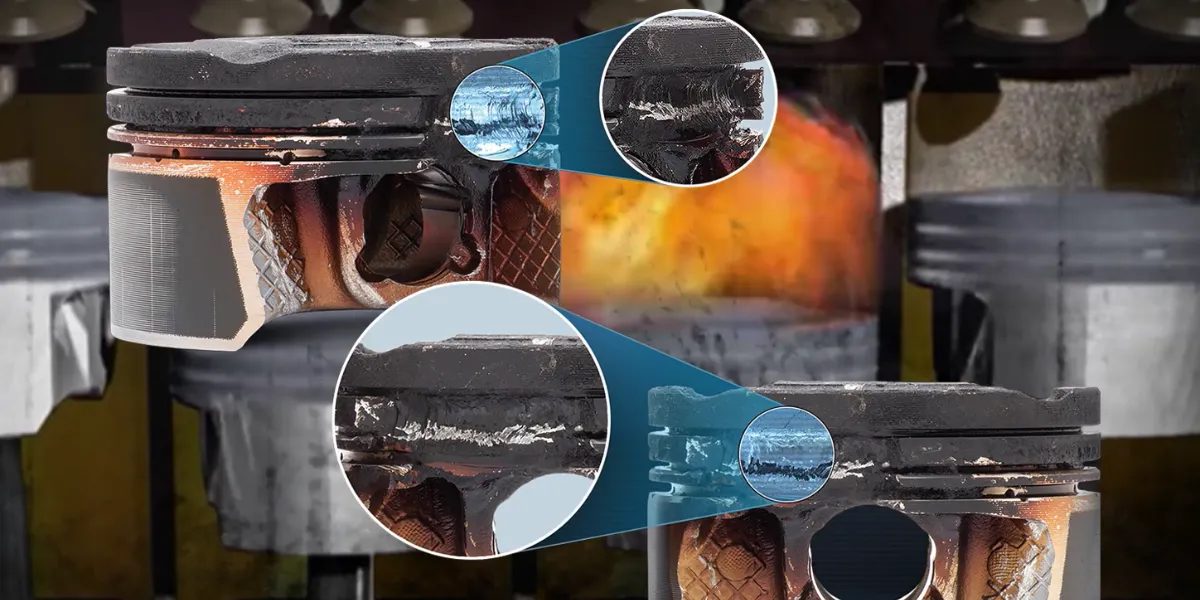
The result is a sudden and violent pressure spike within the combustion chamber that pushes back against the piston with destructive force. Pistons, rings, cylinder heads, and connecting rods bear the brunt of this pressure shock and are highly susceptible to damage. In serious cases, such extreme pressure escalation can lead to complete engine failure.
The super knock is capable of destroying an engine entirely. Recognizing the warning signs early is therefore critical. The following are among the most common symptoms:
LSPI affects petrol engines exclusively. This is because petrol engines rely on a spark plug to initiate controlled combustion. Diesel engines, by contrast, use gas compression as their ignition mechanism and are therefore not vulnerable to low-speed pre-ignition.
When LSPI goes unchecked, the enormous pressure and heat it generates wreak havoc on engine components including pistons, spark plugs, bearings, and cylinders. It is also worth noting that the destruction caused by low-speed pre-ignition is both more severe and more sudden than that associated with detonation. LSPI can punch holes through pistons, melt spark plugs, and bring about total engine failure.
Even though a complete understanding of low-speed pre-ignition's causes remains elusive, several concrete measures can reduce the likelihood of it occurring. These include using high-quality engine oil, selecting high-octane fuel, and applying appropriate cleaning products designed for petrol systems.
Here is what you need to know about each of these preventive measures:
Choosing the right engine oil is one of the most important steps in managing LSPI risk. Each vehicle manufacturer designs its engine with specific requirements, meaning that certain oil formulations are prescribed for each application. Always refer to your OEM guidelines and use the oil recommended for your gasoline engine.
Today's engine oils are formulated using premium base oils and carefully selected additive packages. Forward-thinking lubricant manufacturers like Valvoline invest continuously in refining their engine oil products to maximize both performance and operational efficiency.
Developing engine oils of the highest caliber demands a comprehensive, holistic approach to formulation design. What does this entail in practice?
Using premium petrol fuel — particularly high-octane grades — is equally important. A higher octane rating indicates a more stable fuel.
Octanes are hydrocarbons that rank among the most important constituents of petrol. These colorless liquids have a boiling point of approximately 125°C. Iso-octane serves as the reference standard for measuring fuel stability, reflecting a fuel's ability to resist and control spontaneous combustion.
Octane rating can be assessed through several testing methods, with RON and MON being the most widely used.
RON, or Research Octane Number, is established by evaluating fuel performance at relatively low temperatures and engine speeds.
The Motor Octane Number (MON) is obtained by testing fuel under more extreme conditions — including high temperatures, elevated speeds, and high pressure.
A range of petrol system cleaning products can also help lower the risk of low-speed pre-ignition. Maintaining and cleaning your petrol system on a regular basis reduces deposit accumulation on the combustion chamber, piston crown, and other engine components.
For the right service solution for your petrol engine, Valvoline has you covered.
Our Petrol System Cleaner is a high-concentration cleaning agent designed to elevate the overall performance of your petrol engine. Compatible with all gasoline engine types, it works to reduce the risk of low-speed pre-ignition by dissolving fuel system deposits, thoroughly cleaning the system, and restoring lost engine performance.
Our Petrol System Protector serves a complementary purpose, safeguarding your petrol system against deterioration. Its specialized formulation is designed to enhance both fuel quality and efficiency while guarding against suboptimal engine performance.
Driving a passenger car equipped with a downsized gasoline engine offers a compelling set of advantages. It is an efficient means of improving fuel economy, cutting harmful emissions, and helping to improve overall air quality. Today, some of the most widely recognized passenger car models feature downsized turbo petrol engines that satisfy current sustainability benchmarks.
That said, these petrol engine types are susceptible to low-speed pre-ignition, which can cause serious engine damage. The good news is that with the right care and maintenance, LSPI is a preventable problem.
Start by scheduling regular preventive maintenance and having your engine checked by a professional. Above all, use high-octane fuel, a high-performance engine oil formulated to mitigate LSPI risk, and advanced petrol system cleaning products. Following these practices is the most reliable way to keep your vehicle in peak condition and reduce the danger of engine super knocks.
When selecting a premium engine oil, Valvoline is the most trusted choice available. For 150 years, we have been engineering and reimagining our engine oil formulations to meet the evolving demands of modern gasoline engines.
Every engine oil in our lineup is built from high-quality base oils and enhanced with advanced additive technology. The result is a product capable of elevating the performance of your downsized gasoline engine and, most importantly, reducing exposure to the risks posed by low-speed pre-ignition.
Our SynPower MST C5 is a fully synthetic, low-SAPS formulation engineered specifically to combat LSPI. It maintains the emission control system in peak condition, contributes to improved fuel economy, and helps keep the engine clean and deposit-free.
If you are uncertain about which engine oil is the best fit for your turbocharged gasoline direct-injection engine, reach out to your nearest Valvoline distributor or use our Lubricant Advisor. Simply enter your vehicle type and model, and the tool will point you toward the lubricant best suited to your engine's needs.




No letters yet — pray write the first.