You've probably heard that a slow oil drip is nothing to worry about. Here's what the data actually shows: the first oil pan gasket leak symptoms show up long before the puddle on your driveway. Most car owners don't realize how fast a tiny seep becomes a major leak. By the time you notice a spot, the gasket has been seeping for hundreds of miles. As a lubricant formulator, I've seen too many engines ruined by a part that costs less than a tank of gas. Let's break down what to look for.
What the Oil Pan Gasket Does
The oil pan gasket seals the oil pan to the engine block. It keeps oil where the pump can grab it. Most gaskets are cork, rubber, or silicone. They handle heat, oil, and vibration for years. Eventually they harden and shrink. Then oil escapes.
Science Corner: Most OEM gaskets are rated around 300°F continuous service. Local hot spots near the exhaust can exceed that, which is why the gasket often fails on that side first. Torque specs matter: most oil pan bolts take just 7 to 15 ft-lbs. Too many people overtorque and crush the gasket.
5 Oil Pan Gasket Leak Symptoms You Shouldn't Ignore
These oil pan gasket leak symptoms build gradually. Watch for these signs.
One: A small oil spot under the front-middle of the car after parking. The pan is the lowest point, so the drip lands in the middle. A pan gasket leak leaves a streak along the pan underside.
Two: A burning oil smell after driving. Oil seeps onto the exhaust or heat shields and burns. The smell is strongest near the engine.

Three: You're adding oil between changes. A leak of one drop per minute costs about a quart every two weeks. If you're topping off more than half a quart every thousand miles, find the leak.
Four: A grimy oil film along the pan-to-block seam. Clean the area with a degreaser. If fresh oil reappears on the same seam, that's your source.
Five: Oil streaks on the crossmember that trace back to the pan lip. Use a flashlight and a clean rag. If the oil starts above the seam, suspect a valve cover gasket instead.
How to Confirm It's Really the Pan Gasket
Check the other usual suspects first. Valve cover gaskets leak down the side of the block, and rear main seals leak at the back of the pan. An oil pressure sensor can drip too. A phone photo taken before cleaning helps you remember where the oil trail started. Clean the entire bottom of the engine, run it to temperature, then park over cardboard. After an hour, trace the oil trail to its highest point. If that point is the pan seam, you've got a pan gasket leak.
Science Corner: Why Small Leaks Get Big Fast
Here's the chemistry part. Oil flow through a gap scales with the cube of the gap height. Double the gap and you get roughly eight times the flow. A 5W-30 at operating temperature is thin enough to slip through a hairline crack. A thicker oil only masks the problem it doesn't fix the gap. That's why a seeping gasket can turn into a major leak in a few weeks.
What Happens If You Ignore It
Low oil means more friction, more heat, and faster wear. At one quart low, the oil pickup can suck air during hard turns. A low oil warning light on a hill means the pickup is already sucking air. At two quarts low, you risk bearing damage and scored cylinders. A $20 gasket and a Saturday of work can save you from a $4,000 engine replacement. Oil on your driveway also ends up in storm drains, which can bring fines in some towns.
Fixing It the Right Way
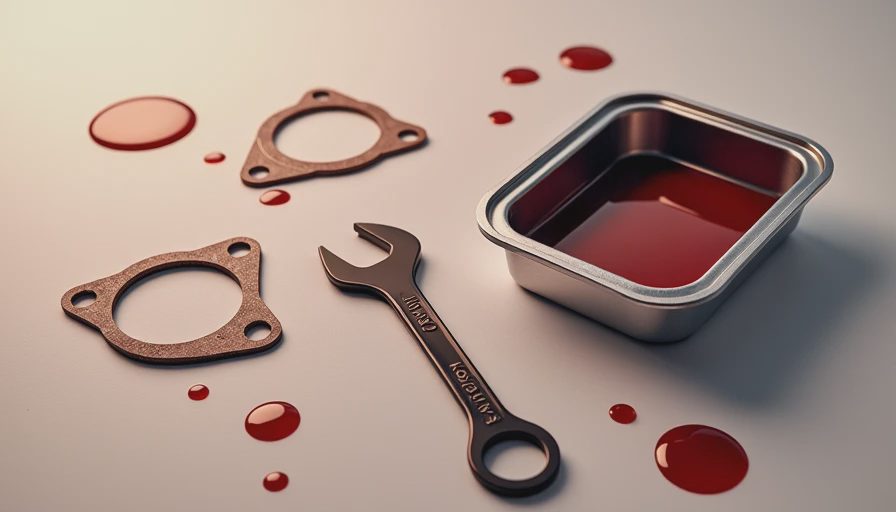
If you notice any oil pan gasket leak symptoms, drain the oil and pull the pan. Clean both sealing surfaces and check the pan rail for flatness. Use the gasket or RTV your service manual specifies. That's a spec decision, not a brand decision. Apply RTV as a continuous bead if required, and let it cure before refilling. While the pan is off, replace the drain plug washer and inspect the pan for dents. Torque the bolts to spec in a crisscross pattern. The number is usually 7 to 15 ft-lbs. If you remember one number from this post, make it this one: oil pan bolts hold the pan, not crush the gasket.
Quick Answers to Common Questions
Can a pan gasket leak cause a fire? In rare cases, oil that drips onto a hot exhaust manifold can ignite. It's uncommon, but a large leak spraying on the exhaust is a real hazard.
How long should an oil pan gasket last? Most factory gaskets last 80,000 to 120,000 miles. Heat cycling and age matter as much as mileage.
Is it safe to drive with a small pan gasket leak? For a few days, as long as you check the oil level every time you fuel up. Any leak that grows needs attention immediately.
Final Word
Check your oil level weekly and peek under the car after parking. Catching oil pan gasket leak symptoms early means a small repair instead of a new engine. Your oil pan gasket is one of the easiest parts to keep happy if you pay attention.




No letters yet — pray write the first.