You've probably heard that a small sidewall mark is harmless if the tire still holds air. Here's what the data actually shows: a tyre split sidewall can expose structural cords, weaken the casing, and turn an ordinary pothole into a sudden loss of control. Sidewalls flex constantly as the wheel rolls, so damage in this area deserves more caution than a shallow tread scuff.
What a tyre split sidewall actually means
A sidewall split is a cut, crack, or tear through the rubber on the vertical portion of a tire. The damage can run across the sidewall, follow its circumference, or appear as a short opening near the rim. Some splits are caused by an impact, while others develop after rubber aging, underinflation, chemical exposure, or prolonged sunlight.
The outer rubber is not merely decorative. Beneath it are cords made from polyester, nylon, or steel-related reinforcement, depending on the tire design. Those cords help contain inflation pressure and maintain the tire's shape. When a tyre split sidewall reaches the cord package, the tire's strength is compromised even if the cut looks narrow.
A surface crack is different from a structural cut, but you cannot reliably determine the difference by appearance alone. If cords are visible, the rubber is separating, or a bulge appears nearby, treat the tire as unsafe. Do not probe the opening with a screwdriver or continue driving to see whether it gets worse.
Science Corner: tire rubber contains polymers, carbon black or silica, oils, sulfur-based curing chemistry, and protective additives. Heat, ozone, ultraviolet exposure, and flexing gradually change that compound. Once the rubber loses elasticity, a tyre split sidewall can grow quickly under normal pressure.
Common causes of sidewall splits
Impact is one of the most common causes. Hitting a pothole, curb, parking block, or road debris can pinch the sidewall between the rim and the obstacle. The damage may appear immediately or become visible after the tire is inflated again. A hard impact can also bend the wheel, so inspect the rim for a flat spot or new vibration.
Low inflation pressure increases sidewall flex and heat. That does not automatically create a tyre split sidewall, but it raises stress on an already aged or damaged casing. Overloading the vehicle has a similar effect. Read the pressure shown on the driver's door-jamb label rather than copying the maximum pressure molded into the tire sidewall.
Aging is another factor. Tires can develop fine weather-checking cracks even when tread depth remains acceptable. Storage near electric motors, ozone-producing equipment, or strong solvents can accelerate deterioration. Tire dressing products containing petroleum distillates can also attack rubber over time; use a product specifically labeled as tire-safe or skip the dressing entirely.
Manufacturing defects are possible but should not be assumed without an inspection. Save purchase records, take clear photographs, and record the tire identification number if the damage appeared without an obvious impact. A tire shop or manufacturer inspection is more useful than an internet diagnosis based on one photograph.
Can you repair a tyre split sidewall?
In normal consumer tire service, sidewall cuts and splits are not repaired with a plug or patch. Plugs are designed for limited punctures in the tread, and internal patches are not an appropriate solution for structural sidewall damage. A tyre split sidewall sits in a high-flex area, so a repair that appears sealed can still fail as the tire bends through each rotation.
Do not use super glue, rubber cement, tire sealant, or an exterior patch as a permanent fix. These products might reduce air loss temporarily, but they do not restore the original cord strength. Sealant can also complicate an inspection and create balancing or sensor problems in some tire-and-wheel assemblies.
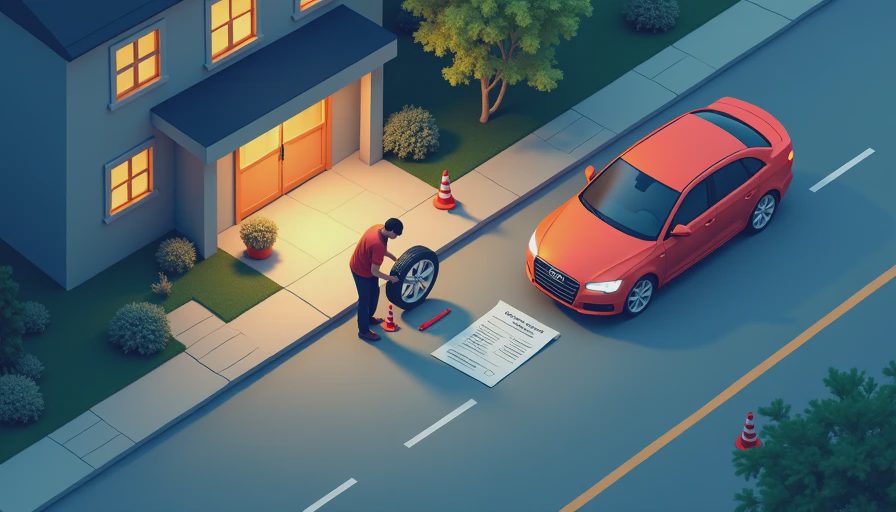
If the opening is deep, the tire has a bulge, cords are visible, or pressure is falling, install the spare or arrange roadside assistance. If the vehicle has no usable spare, a mobile tire service can often prevent a risky drive to a shop. Keep speed and distance as low as possible only when moving the vehicle out of immediate danger; do not treat that as a repair strategy.
How to inspect the damage safely
Park on a level surface away from traffic and switch off the engine. Look at the entire sidewall, not just the most obvious mark. Check both sides of the tire, because inner-side damage can be hidden by the suspension. Use a flashlight and photograph the area before cleaning it.
Measure pressure with a reliable gauge. A tire that loses several pounds overnight has a different urgency from a cosmetic mark that remains stable, but stable pressure does not prove the casing is safe. Look for exposed cords, a flap of rubber, a raised bubble, discoloration, or a cut that opens when the sidewall flexes slightly under normal load. Do not jack up the vehicle unless you know the correct lifting points.
If you see a tyre split sidewall along with vibration, pulling, thumping, or a tire-pressure warning, stop driving. Those symptoms can indicate internal separation or wheel damage. Tell the technician what happened, including the road impact, approximate speed, load in the vehicle, and pressure reading.
Replacement choices and matching considerations
The safest replacement is usually a tire with the same size, load index, speed rating, and construction type specified by the vehicle manufacturer. Read the full marking, such as 225/65R17 102H, rather than choosing only by diameter. The load index matters because a tire that fits the wheel can still be inadequate for the vehicle's weight.
Replacing one tire can be acceptable in some situations, especially when the remaining tires are relatively new and the replacement matches closely. All-wheel-drive systems may require tighter circumference matching, and some manufacturers specify limits for tread-depth differences. Ask the shop to measure the existing tires instead of guessing from mileage.
Do not select a lower speed rating or load index simply because it costs less. The price difference between a suitable replacement and an incompatible tire is insignificant compared with the cost of a collision, suspension damage, or roadside recovery. Compare the required specification, warranty terms, manufacture date, and wet-grip performance rather than trusting the loudest label on the sidewall.
Preventing another sidewall failure
Check cold tire pressure at least monthly and before long trips. Inspect after pothole impacts, rotate according to the vehicle manual, and maintain alignment when the steering wheel is off-center or the vehicle pulls. Avoid carrying more weight than the door-jamb label permits, including passengers and cargo.
When washing a vehicle, rinse away road salt and inspect the inner sidewalls. Replace tires showing widespread cracking, repeated air loss, bulges, or questionable repair history. Tire age is not determined by tread depth alone; the date code on the sidewall helps identify when the tire was manufactured.
If you remember one number from this post, make it the vehicle's recommended cold pressure, not the maximum molded into the rubber. Correct pressure reduces flexing and heat, but it cannot reverse a tyre split sidewall. Read the tire markings, inspect the structure, and use a qualified tire professional when damage is uncertain. Read the spec, not the bottle—and for tires, read the casing before you drive.





No letters yet — pray write the first.