
You've probably heard that thicker oil is always better for older engines or that thin oil will wreak havoc on a high-mileage car. Here's what the data actually shows. Motor oil viscosity grades are not about thickness alone; they tell a precise story about how the oil behaves at different temperatures. If you understand the SAE system, you can pick the right grade without falling for the myths.
Let's start with the basics. Viscosity is simply a fluid's resistance to flow. In an engine, you want the oil to be thin enough to flow quickly during a cold start and thick enough to maintain a protective film at operating temperature. That's why modern oils are multigrade — they carry two numbers like 5W-30. The first number with a W (for winter) indicates cold performance; the second is the hot operating viscosity.
What SAE Viscosity Grades Really Tell You
The Society of Automotive Engineers (SAE) sets the standards for motor oil viscosity grades. These aren't arbitrary numbers — they correspond to specific test methods. For example, a 5W oil must have a certain maximum viscosity at -30°C. A 30-grade oil must fall within a range of kinematic viscosity at 100°C. When you see a bottle labeled 10W-40, it has passed tests for both cold and hot conditions. Science Corner: The cold test uses a cold-cranking simulator that measures how much torque is needed to spin a rotor at low temperature. That torque directly correlates to how easily your starter motor can turn the engine on a cold morning.
Many drivers assume that a higher second number always means more protection. That's not entirely true. The oil's film strength and additive package matter just as much. The correct motor oil viscosity grade for your engine is the one specified by the manufacturer. They designed the engine with specific bearing clearances and oil pump capacity. Using a thicker grade than recommended can reduce oil flow to critical areas, especially during warm-up.

The Difference Between Monograde and Multigrade Oils
Before multigrade oils became common in the 1960s, you had to change oil seasonally — a light grade in winter and a heavy grade in summer. Single-grade oils like SAE 30 or SAE 40 still exist for small engines, but passenger cars almost exclusively use multigrades. The magic lies in viscosity index improvers (VIIs). These are long-chain polymer molecules that are coiled up at low temperatures and unwind as the oil heats up, preventing the oil from thinning too much. Without them, a base oil that flows well at 0°C would be too thin at 100°C, and one that stays thick at high temperature would be like honey when cold. The SAE J300 standard defines the limits for each motor oil viscosity grade.
If you remember one number from this post, make it this one: the viscosity at 100°C is the most important single measurement for oil performance during normal driving. That's where the second number comes from. For example, a 30-grade has a kinematic viscosity between 9.3 and 12.5 cSt at 100°C. A 40-grade is between 12.5 and 16.3 cSt. Knowing this helps you understand why a 5W-30 and a 10W-30 behave the same at operating temperature — the hot viscosity is identical. The difference is only in cold flow.
How to Decipher the Numbers on the Bottle
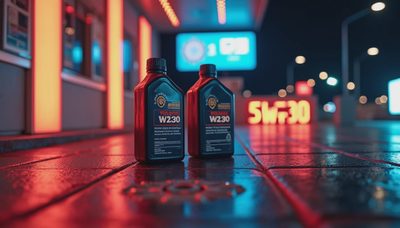
Walk into any auto parts store and you'll see dozens of bottles with various motor oil viscosity grades. Here's how to read them. The first number followed by a W is the winter grade. Common values are 0W, 5W, 10W, 15W, and 20W. Lower is better for cold starting. The second number is the hot grade: typically 20, 30, 40, or 50. Many modern cars call for 5W-20 or 5W-30. High-performance engines and some diesel trucks may require 10W-40 or 15W-50. But always start with the owner's manual. If it says 5W-30, that's what you should use. Don't be swayed by the myth that a heavier oil will quiet a noisy engine or reduce leaks. It might mask a symptom, but it won't fix the root cause — and it could accelerate wear.

Common Myths About Motor Oil Viscosity Grades Debunked
Myth 1: Thicker oil is always better for high-mileage engines. Truth: High-mileage engines often have wider clearances, but that doesn't automatically mean they need thicker oil. Many wear issues are actually caused by sludge and varnish deposits. A good high-mileage oil with seal conditioners and a proper motor oil viscosity grade (still the manufacturer's recommendation) will do more than a thicker grade. Myth 2: 0W-20 is too thin to protect. Truth: Modern engine clearances are tighter than ever. A 0W-20 oil formulated with advanced base stocks and a robust additive package can provide excellent film strength. Hundreds of millions of miles of fleet testing back this up. Myth 3: You can always go up one grade in an older engine. Truth: This may have been sound advice in the 1970s when engines had looser tolerances and oil was all conventional. Today, deviating from the specified motor oil viscosity grade can hurt fuel economy and may void your warranty.
How to Choose the Right Grade for Your Car
Read your owner's manual. It will list the recommended motor oil viscosity grades for the temperature range you expect. If you live in a very cold climate, a 0W or 5W is beneficial. In hot climates, a 10W or 15W might be fine. But the second number should match what the manufacturer designed for. If your car is out of warranty and you've done an oil analysis that shows excessive wear, you might discuss with a professional about a slight change. But as a general rule, do not fix what isn't broken. Stick with the spec. Read the spec, not the bottle — that's the rule here at RevJudge.
The takeaway is this: motor oil viscosity grades are a standardized way to describe flow behavior under specific test conditions. They are not a measure of quality. A high-quality 5W-30 synthetic will protect your engine far better than a cheap conventional 20W-50. Focus on the API rating (SN, SP, CK-4 for diesels) and the ILSAC starburst if applicable. Those certifications ensure the oil meets the latest industry tests for wear, sludge, and piston deposit control. Viscosity is just one piece of the puzzle, but understanding it prevents costly mistakes.




No letters yet — pray write the first.