Catch Oil Leaks Early: Save Thousands From Engine Failure
You've probably heard that a few drops of motor oil under your car is just normal seepage or harmless condensation. Here's what the data actually shows: even a slow drip means your lubrication system is losing volume, and that volume is the only thing standing between your engine’s moving parts and catastrophic metal-on-metal contact.
Why This Matters
Motor oil isn’t just a liquid you pour in and forget. It performs three critical jobs: lubricating the engine’s moving parts to reduce friction, regulating engine temperature by carrying heat away from combustion zones, and preventing corrosion by coating internal surfaces with protective films. When a leak develops, you’re not just losing fluid—you’re breaking that protective cycle. A consistently low oil level leads to inadequate lubrication, localized overheating, and eventually complete engine failure. Catching the leak early and restoring proper volume can prevent a $4,000 rebuild and keep your daily driver on the road for years.
What You Need to Know
Your engine’s oil system is a closed loop built around a few key components: the oil pan (the reservoir at the bottom), the oil pump (which circulates the fluid under pressure), the oil filter (which traps contaminants), and various engine gaskets and seals that keep everything contained. Leaks almost always start at the junctions where these parts meet, or when internal components wear beyond their design limits.
*Science Corner: The Chemistry of a Leak*
Motor oil relies on a precise balance of base stocks and additive packages to maintain viscosity (how thick the oil is at a given temperature) and film strength. When volume drops, the oil pump draws in more air, creating foam instead of a continuous lubricating film. That foam can’t support the microscopic peaks and valleys on metal surfaces, leading to accelerated wear on piston rings, cylinder walls, and valve stem seals. Replacing lost oil isn’t enough—you have to stop the leak to restore the system’s chemical and hydraulic balance.
How It Works
Diagnosing a motor oil leak is a systematic process of elimination. Start by parking on a clean, flat surface and checking the dipstick. If the level is consistently low, you’ve confirmed a leak. Next, look for visible oil accumulation on the ground or along the underside of the car. Fresh leaks will look amber or light brown, while older leaks turn dark and sticky.
Trace the leak back to its source using these common failure points:
1. External Seals and Gaskets: Inspect the oil pan gasket and the main engine gaskets (located between the engine block and cylinder head). These seals harden and crack over time due to heat cycles and mileage, creating gaps that let oil escape.
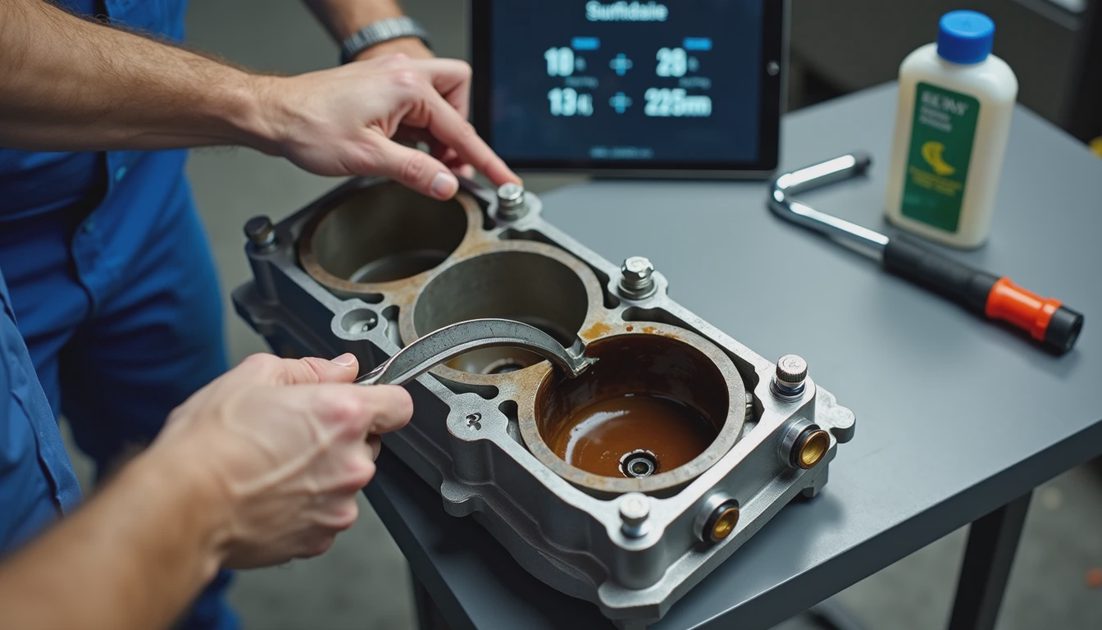
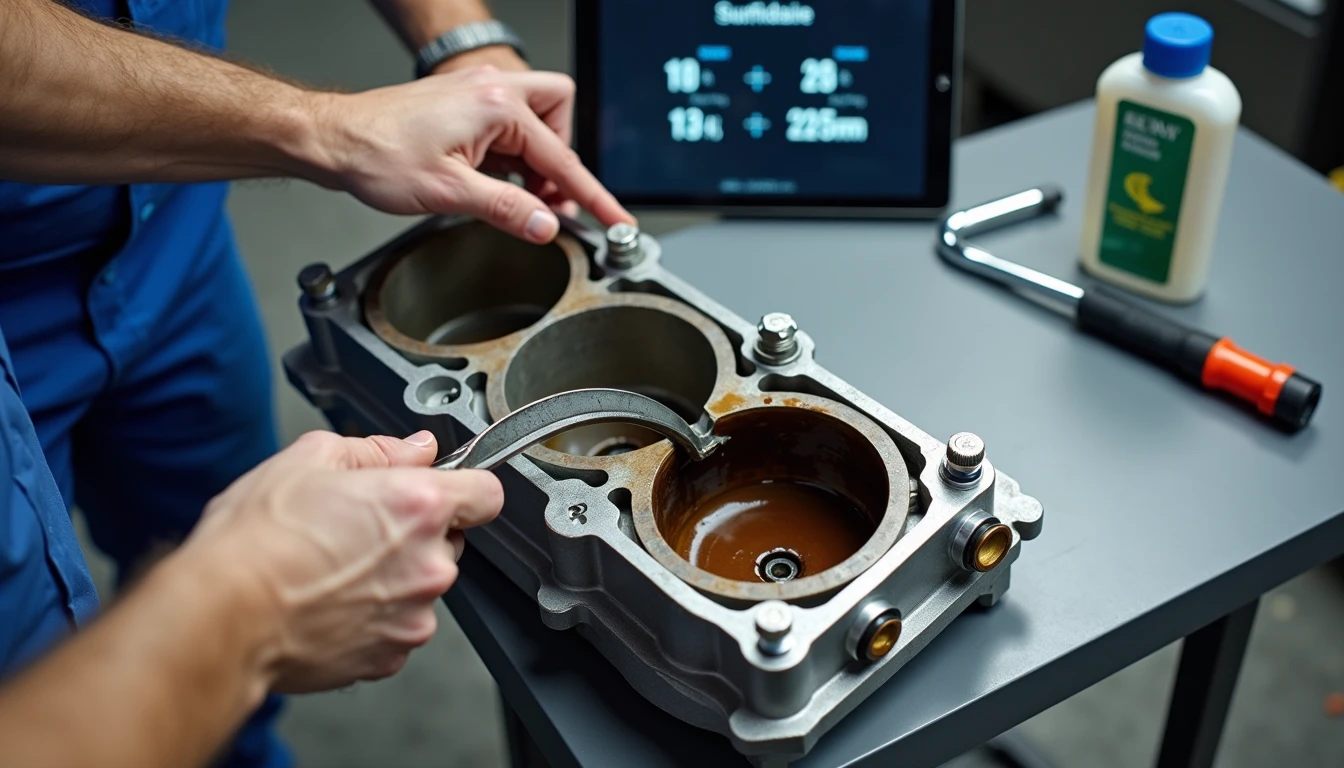
2. Internal Component Wear: If the leak isn’t external, check for internal consumption. Worn piston rings, scored cylinder walls, or degraded valve stem seals allow oil to slip past into the combustion chamber. You’ll notice this as blue-tinted exhaust smoke and a steady drop in oil level without visible drips.
3. Restricted Flow Paths: Clogged oil passages and a saturated oil filter can restrict circulation. When the pump can’t push oil through restricted channels, pressure builds upstream and forces fluid out through the weakest seal or gasket.
*Pro Tip:* Warm the engine for 5 minutes before inspecting. Cold fluid stays thick and hides slow drips. A slightly warmed system increases oil flow, making hidden leaks visible along gasket seams and filter housings.
Common Mistakes
Despite what online forums claim, you cannot simply top off oil and ignore a leak. Adding fluid masks the symptom while internal components continue to run with degraded lubrication and reduced cooling capacity. Another widespread myth is that all leaks require a full engine teardown. In reality, the majority of leaks originate at accessible external gaskets, seals, or the oil filter housing. Replacing these components restores system integrity without removing the engine.
Also, never assume a clogged oil passage is just “normal sludge.” Restricted flow changes the entire pressure dynamics of your lubrication system. When passages block up, the oil pump works harder, temperatures spike, and seals blow out from forced pressure. Regular filter changes and using oil that meets the correct API rating and viscosity grade for your engine are the only proven ways to keep those passages clear.
Bottom Line
A leaking motor oil system is a warning, not a minor inconvenience. The oil pan, oil pump, oil filter, engine gasket, piston rings, cylinder walls, and valve stem seals all depend on maintaining proper volume and pressure to do their jobs. Check your dipstick regularly, trace drips to their source, replace failed gaskets and seals promptly, and address internal wear before it cascades. Keep the system sealed, keep the chemistry balanced, and your engine will reward you with reliable mileage.