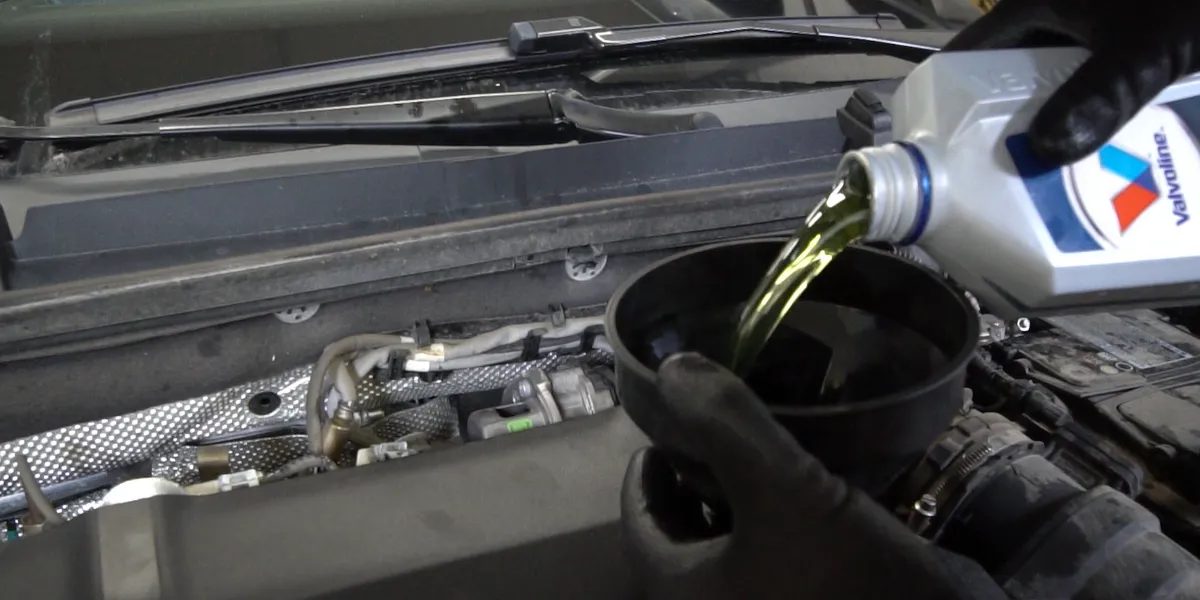
Among all the fluids your vehicle relies on, motor oil stands above the rest. It keeps engine components properly lubricated, cuts down friction, and prevents excessive wear. Beyond that, it delivers critical cooling and detergent functions. Selecting a high-quality lubricant for your engine is therefore not something to take lightly.
Not sure where to begin? Below is a concise overview of the key factors to keep in mind when picking an engine oil.
Based on the type of base oil used, engine oils fall into three categories: synthetic, semi-synthetic, and mineral.
Synthetic oils originate from chemically modified mineral oils. The vast majority of engine oils on the market today are synthetic.
Compared to mineral oils, fully synthetic oils offer a higher level of purity. Their thermal stability and ability to flow at low temperatures make them suitable for a broad spectrum of automotive and industrial uses.
Semi-synthetic oils go by another name: synthetic blend oils. As the name suggests, they combine a small proportion of synthetic oil with mineral oil.
Synthetic blend oils cannot match the superior protection that fully synthetic oils deliver. Even so, they outperform mineral oils in terms of overall performance.
Mineral oils are derived from refined crude oil through a process that strips away impurities. As one might expect, their performance falls short of synthetic alternatives.
This is the original motor oil formulation ever developed. It remains in use today primarily in older vehicle models.
Various institutions have established different engine oil standards over the years. Within the European market, ACEA approval carries the most weight.
ACEA defines the standard for engine oils sold in Europe and is set by the European Automobile Manufacturers' Association.
The letter component in an oil rating indicates the engine type:
The accompanying number, by contrast, reflects the performance level within each oil category — for example, SynPower MST C4 5W-30.
Beyond ACEA, your OEM or lubricant manufacturer may also reference the following engine oil standards:
Original equipment manufacturers (OEMs) establish their own requirements regarding which engine oils are compatible with their vehicles.
These classifications are named according to the manufacturer's own specifications, such as VW 501 01, Porsche C30, BMW Longlife-12 FE, and others.
Certain OEM approvals extend across multiple vehicle brands. Volkswagen specifications, for instance, are equally applicable to Audi, Skoda, and Seat.
Manufacturers make these specifications available to engine oil producers, enabling them to formulate products that comply with the required criteria.
You have likely spotted labels on engine oil packaging before — something like Valvoline Synpower DX1 SAE 5W-30.
But what exactly do these designations mean?
They indicate the lubricant's viscosity grade — that is, how fluid it is and how it performs across both low and high temperature conditions.
Lower viscosity grades result in thinner, more free-flowing oils. As the viscosity grade increases, the oil becomes thicker and flows more slowly, but offers stronger protection by forming a film around engine components that reduces friction and wear.
Since temperatures directly influence how engine oils behave, selecting the right one for your specific driving environment is essential.
In cold conditions, thinner motor oils with a lower viscosity grade are the better choice. They circulate more readily during a cold engine start.
In hot conditions, thicker oils with a higher viscosity grade are preferable. They hold up under elevated temperatures and deliver stronger resistance to friction and wear.
Engine oil grades are divided into two types: monograde and multigrade.
Monograde oils are intended for use in older vehicle types.
For summer use, monograde oils carry the designation SAE X, where "X" is a number ranging from 0 to 60.
Winter-grade monograde oils are labeled SAE XW, with the "W" standing for winter. Their low viscosity grades mean they remain fluid in cold temperatures.
Multigrade oils are the standard choice for modern vehicles. With a broader operating temperature range, they are well-suited for year-round use across varying driving conditions.
Their designation follows the XWY format — as seen in Hybrid C2 5W-30. Here, 5 refers to the low-temperature viscosity grade and 30 to the high-temperature grade.
Several factors come into play when selecting the right engine oil for your vehicle. Begin by evaluating the oil formula itself. Mineral oils come at a lower cost, but fully synthetic oils deliver superior performance, protection, and fuel efficiency.
From there, consider viscosity. Match it to your operating and driving conditions to achieve optimal engine lubrication and protection.
Lastly, give proper attention to oil standards. For European engines, ACEA specifications are paramount. OEM specifications are equally important and should not be overlooked — most vehicle manufacturers make them readily accessible to end users.
Whether your needs involve passenger car, recreational marine, heavy-duty, or ATV motor oils, Valvoline offers a comprehensive lineup of high-performance lubricants to suit any application.
If further questions about engine oils are on your mind, do not hesitate to reach out to us.




No letters yet — pray write the first.