You've probably heard that a check engine light means a trip to the shop, but common OBD codes are a language you can learn to read on your own. OBD stands for On-Board Diagnostics, and every car sold in the United States since 1996 speaks the same OBD-II language. Those five-character codes like P0300 or P0171 are not random. They point to specific fuel, ignition, emissions, and oil-pressure functions. As a petroleum engineer who spent years in lubricant R&D, I look at these codes through an oil-spec lens. Here's what the data actually shows.
What Are Common OBD Codes, Really?
An OBD code is a standardized trouble code your engine computer sets when a sensor reading falls outside an expected range. The first letter tells you the system: P for powertrain, C for chassis, B for body, and U for network. The first digit after that letter tells you if it is generic or manufacturer-specific. P0xxx codes are generic across all makes; P1xxx codes are unique. The last two digits name the specific fault. In practice, common OBD codes come down to a few families that DIYers see over and over, and once you know the families, you can stop guessing and start measuring.
P0300 – Random Misfire: The Code That Casts a Wide Net
A P0300 code means the engine computer has detected random cylinder misfires across multiple cylinders. You will usually feel a rough idle, a stumble on acceleration, or a flashing check engine light. The usual causes are worn spark plugs, failing ignition coils, vacuum leaks, and fuel pressure problems. Oil plays a role too. If the oil viscosity is too high, hydraulic valve lifters and variable valve timing systems may respond slowly, which can show up as a misfire on a cold start. If the oil is diluted with fuel, combustion gets inconsistent. When a misfire code keeps coming back, a used-oil analysis is often more useful than another spark plug.
P0171 – System Too Lean: A Fuel-Air Detective Story
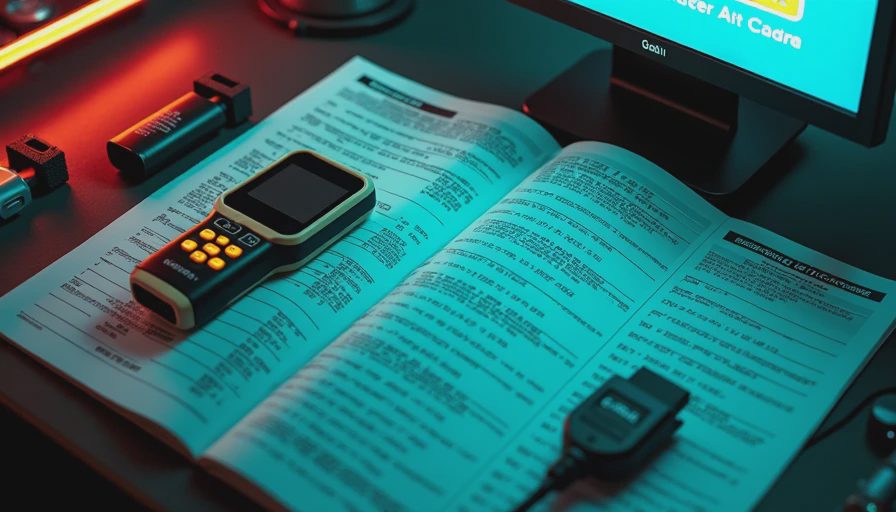
P0171 means bank one is running lean, with too much air or too little fuel. It is one of the most common OBD codes in older cars. A lean condition usually points to a vacuum leak, a failing mass airflow sensor, a weak fuel pump, or a clogged injector. Look at the oxygen sensor data and the fuel trims. If the fuel trims stay positive, the computer is adding more fuel to compensate, and that narrows the search. Start with an intake smoke test before buying parts. Cleaning the MAF sensor is a cheap step, but only if the live data tells you it is dirty.
P0420 – Catalyst Efficiency: What It Does and Does Not Tell You
P0420 is a catalyst efficiency code that every driveway mechanic knows. It means the rear oxygen sensor on bank one is seeing less difference between exhaust pulses than the computer expects. That can signal a failing catalytic converter, but it can also mean an exhaust leak, a lazy oxygen sensor, or misfires that are dumping raw fuel into the catalyst. Replacing the converter right away is a common mistake. Check the fuel trims first. If the engine has been running rich for months, the catalyst may truly be dead. If the code is intermittent and driveability is fine, inspect the O2 sensor wiring before spending a thousand dollars.
P0010 and P0520 – Two OBD Codes That Are Really About Oil
Now we get to the codes I care most about. P0010 is a variable valve timing code that points to the oil control solenoid circuit on bank one. VVT solenoids depend on clean engine oil at the right viscosity and pressure. A clogged screen, low oil level, or degraded additive package can set this code.

P0520 is an engine oil pressure sensor circuit malfunction. It does not always mean you have no oil pressure; it often means the sensor itself has failed or a connector is loose. But never assume that. Verify with a mechanical oil pressure gauge before you clear anything.
Science Corner: Engine oil pressure is created by the oil pump and controlled by bearing clearances and oil viscosity. Too thin an oil at operating temperature drops pressure, and VVT actuators may rattle. Read the API rating and the SAE viscosity grade in your owner's manual. That spec is the framework that keeps those actuators working.
Diagnosing Common OBD Codes in Six Steps
The fastest way to solve any of these codes is to work in order. First, read the code and the freeze frame data so you know what the engine was doing when the fault set. Second, search for manufacturer service bulletins for that exact code on your vehicle. Third, check the obvious items: oil level, coolant level, gas cap, battery voltage, and wiring connectors. Fourth, use a scan tool or multimeter to compare live data against the expected range. Fifth, make one repair at a time and road test the car. Sixth, clear the code and drive a full cycle before calling it fixed. Common OBD codes almost always trace back to a simple root cause when you follow this sequence.
When to Stop Guessing and Get the Data
If you find yourself clearing the same code for the third time, invest in a professional scan tool or a used-oil analysis. A cheap code reader tells you the code, not the story. The story is in fuel trims, oxygen sensor voltages, and oil pressure readings. I have watched good technicians chase P0171 for weeks before a fuel pressure test found a failing pump. The code is a symptom, not a diagnosis. That is the whole point of this site. Read the spec, not the bottle. That rule applies to motor oil, and it applies to these common OBD codes just as much.




No letters yet — pray write the first.