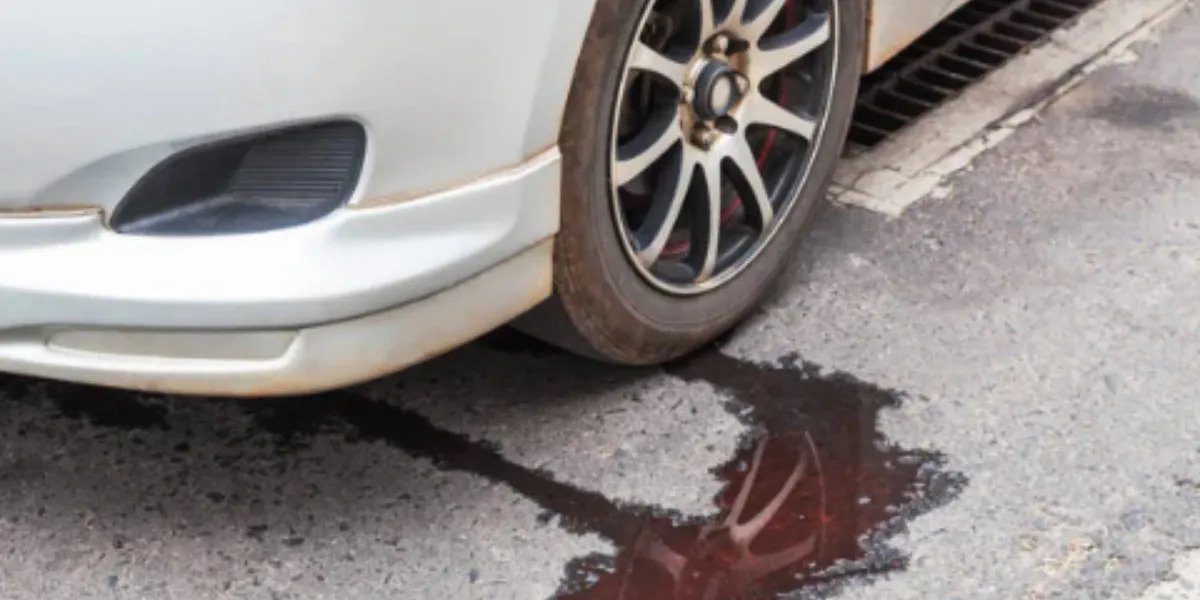
Among the most frequent contributors to engine damage are oil leaks. They accelerate engine deterioration and lead to costly repair bills. Beyond that, oil leaks present genuine safety hazards, potentially causing drivers to lose control of their vehicles.
For these reasons, understanding the root causes of engine oil leaks and knowing how to address them is critically important.
If you think a few drops of oil seeping from your car's internal combustion engine are nothing to worry about, it is worth reconsidering that assumption.
Oil leaks bring with them a range of safety and environmental concerns, and they cut short your engine's operational lifespan.
Below are several key consequences of engine oil spills.
From a safety standpoint, engine oil leaks are particularly serious. Oil is a flammable substance capable of catching fire, which can destroy the vehicle and, far more critically, endanger the people inside.
Beyond fire risk, leaking oil can cause harm to your engine, radiator, and HVAC (heating, ventilation, and air conditioning) system. Accumulated oil can also trigger premature breakdown of seals and rubber hoses throughout the engine bay.
It is also worth remembering that oil does not stay confined to roads and driveways. Rainwater and irrigation runoff carry it into storm drains, which eventually channel it into lakes, rivers, and other water sources.
Because motor oil does not dissolve in water, it becomes a serious environmental contaminant. These fluids contain mixtures of hazardous chemicals that are highly toxic to people, animals, and plant life.
Begin your diagnosis by crawling beneath the vehicle to look for signs of where the oil is escaping.
A straightforward method for detecting a leak is to measure oil levels with a dipstick. If the reading falls below the minimum mark, your engine oil is running low.
This is typically the first indicator that a leak exists.
While driving, watch for blue smoke rising from the hood area — this generally signals that oil is entering and burning within the engine itself.
You should also use your sense of smell: a sharp burning odor while the engine runs is another potential sign of a leak.
Additionally, look for any puddle that may have formed beneath the engine compartment after the vehicle has been parked.
Engine oil leaks can stem from a number of different sources. The following are among the most common:
An oil filter is responsible for straining contaminants out of the motor oil before they can harm engine components.
With time and accumulated mileage, however, oil filters begin to wear out.
As debris collects and clogs the filter, oil can begin to spray outward. Internal engine pressure can also cause the filter to work itself loose over time.
The straightforward remedy here is to replace the filter — a task manageable enough to be done at home by most vehicle owners.
Most manufacturers recommend changing oil filters every six months or every 5,000 to 10,000 km.
This is another significant source of engine oil leaks. With extended use, the filler cap on the oil tank can loosen or crack.
Fortunately, this issue is not difficult to spot. An oil puddle beneath the car or around the engine area is a telltale sign.
A loose cap simply needs to be tightened. If it no longer tightens securely, swap it out for a new filler cap — a repair that most people can handle on their own.
Excess engine oil is another condition commonly associated with leaks. It typically accompanies blue exhaust smoke, a burning odor, and elevated readings on the oil pressure gauge.
Use the dipstick tube to check current oil levels. If there is too much oil, have a mechanic perform an oil change to bring it back to the appropriate level.
The oil pan gasket functions as a seal between the oil pan and the engine block. Signs of a failing oil pan gasket include visible oil pooling under the car, a drop in oil level, and engine overheating.
Have the oil pan gasket inspected and replaced as necessary. Fortunately, this component is relatively inexpensive and is not difficult to access.
If your engine is leaking from the top, the culprit may be the valve cover gasket, which protects components inside the cylinder head and seals the space between the cylinder head and the valve cover.
As the valve gasket ages, it loses its sealing ability. When that happens, it is time to bring the vehicle to a mechanic for a replacement.
Based on the scenarios outlined above, it becomes clear that there is no one-size-fits-all solution to engine oil leaks. Repair costs vary depending on the make and model of the vehicle and the specific cause of the leak.
Start by pinpointing the source of the problem to reduce safety risks and prevent further engine wear.
After the leak has been resolved, be sure to fill your engine with a high-quality oil. For more than 150 years, Valvoline has been developing and refining its range of engine oils.
Unsure which engine oil suits your vehicle best? Our lubricant advisor is ready to point you in the right direction!




No letters yet — pray write the first.