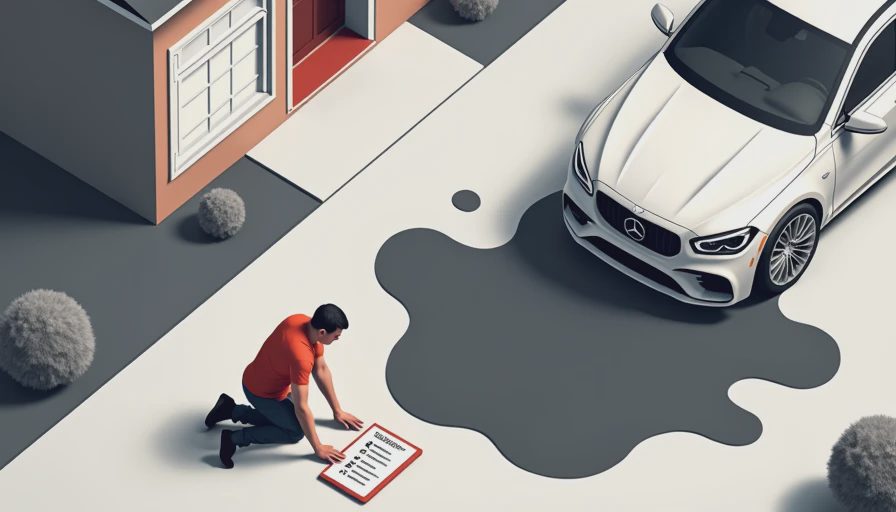
You've probably heard that any dark spot under a vehicle means the engine is dying. Here's what the data actually shows. If you're asking **why is there a puddle of oil under my car**, the answer is usually more specific than “bad engine.” The location, color, thickness, and timing of the leak tell you a lot. A fresh puddle can come from engine oil, but it can also be transmission fluid, power steering fluid on older vehicles, or even an overfilled crankcase pushing oil past a seal. Before you assume the worst, treat it like diagnosis, not drama.
First, make sure it is actually engine oil
Engine oil usually shows up as amber to dark brown, with a slippery feel and a medium thickness. Fresh oil from a recent change can look honey-colored. Older oil turns brown or nearly black as soot, oxidized hydrocarbons, and additive byproducts build up in service. That dark color alone does not prove a severe problem.
Where the puddle sits matters. If it forms near the center-front of the car, think oil pan, drain plug, oil filter, or front crank seal. If it lands farther back, the source could be the rear main seal or transmission area. A leak that appears only after parking overnight often points to a slow drip from a gasket or seal. A puddle that appears minutes after shutdown can mean oil is collecting on a shield or crossmember while driving and then draining off once the engine stops.
A quick garage test helps. Put clean cardboard under the engine after parking. Check the drip point in the morning, then compare that spot to the components above it. Gravity lies; the pavement location is not always the same as the leak origin.
The most common sources of an oil puddle
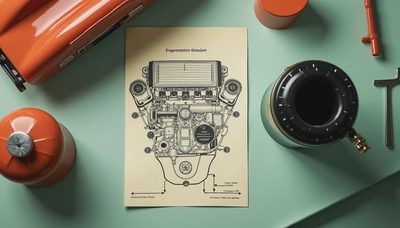
On most daily drivers, the usual suspects are not exotic. Start with the oil filter. A filter installed with a dry or doubled gasket can seep immediately. Next is the drain plug. A worn crush washer, damaged threads, or under-torqued plug can leave a steady drip after an oil change. Then look at the oil pan gasket, valve cover gasket, timing cover, and cam or crankshaft seals.
Valve cover leaks often fool people. Oil starts high on the engine, runs down the block, and ends up dripping from the bottom, making the oil pan look guilty when it is not. Rear main seals get blamed a lot too, but they are not the first thing I suspect unless the bellhousing area is wet and the higher components are dry.
Science Corner: seals do not fail just because oil is “too slippery.” That old myth refuses to die. Seal leaks usually come from age, heat cycling, shaft wear, gasket compression loss, sludge-related restriction in crankcase ventilation, or improper installation. Chemistry matters here: oxidation thickens old oil, heat hardens elastomers, and pressure from a restricted PCV system can push oil out past otherwise marginal seals.
What changed recently? That clue matters more than people think
If you are wondering **why is there a puddle of oil under my car** right after service, start with what was touched. An oil change introduces several failure points: loose filter, loose drain plug, missing gasket, spilled oil left on splash shields, or the wrong viscosity grade in a worn engine that already had marginal seals. I am not saying one viscosity step causes leaks by itself, but a thinner oil at startup will reveal an existing sealing weakness faster than a thicker one.
Also check oil level. Too much oil can whip air into the sump, increase crankcase pressure, and encourage leaks. Too little oil will not create a puddle by itself, but it tells you the leak rate may be serious.
If you remember one number from this post, make it this one: a puddle larger than about 3 inches across after a single overnight park deserves attention soon. A few drops are one thing. A repeatable puddle is a system fault.

How to inspect it safely at home
Start with a cool engine, level ground, gloves, paper towels, and a flashlight. Check the dipstick first so you know whether the leak is cosmetic or actively lowering the oil level. Then inspect from top to bottom. Look around the valve cover perimeter, oil fill cap, PCV hose connections, timing cover seam, and the area around the oil filter. After that, move underneath and inspect the drain plug, oil pan edges, and any wet crossmembers.
If the whole underside is dirty, clean suspected areas with degreaser, drive a short loop, and recheck. Fresh wetness is more useful than old grime. UV dye can help, but even without it, a clean baseline goes a long way. Read the spec, not the bottle: if you top off, use the viscosity grade and performance spec your owner’s manual calls for, such as SAE 5W-30 meeting the required API or OEM standard.
Do not crawl under a car supported only by a jack. Use ramps or jack stands on a hard surface. That is not lawyer talk; it is workshop reality.
When you can drive, and when you should stop
A small seep with stable dipstick level often allows a short trip to a shop or time for a planned gasket repair. A fast leak is different. If the oil pressure warning light comes on, if you smell oil burning on a hot exhaust, or if the dipstick falls below the safe range after a short drive, stop driving. Low oil level risks bearing damage, timing chain wear, and in turbocharged engines, very expensive turbo failure.
You should also treat smoke seriously. Oil dripping onto an exhaust manifold can turn a simple valve cover repair into a fire risk. Likewise, if the puddle is reddish or pink instead of brown-black, you may be looking at transmission fluid rather than engine oil, which changes the diagnosis completely.
So, **why is there a puddle of oil under my car**? Usually it comes down to a filter, plug, gasket, or seal, not a mystery and not magic. Trace the fluid, confirm the source, check the oil level, and fix the root cause before a minor leak becomes an engine problem. The smartest move is not guessing. It is observing the pattern and letting the evidence narrow the list.




No letters yet — pray write the first.