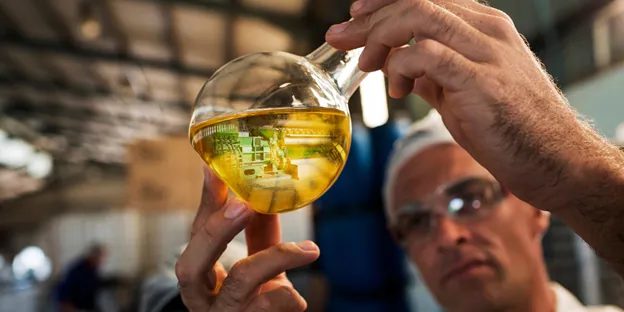
Synthetic lubricants function as the essential foundation upon which countless industries depend. Despite carrying a higher price tag than conventional mineral-based oils, they deliver substantial value through a combination of superior performance characteristics and extended operational life that ultimately justifies the investment.
This guide covers everything you need to know about synthetic industrial lubricants — what they are, how they function, and where they are applied. You will gain a thorough understanding of the advantages that synthetic oils, greases, and other industrial lubrication products bring to the table.
Let's dive right in!
The category of industrial lubricants is broad, encompassing products ranging from oils and greases to specialty fluids, workshop products, and various chemical compounds.
These products serve a primary function of reducing friction, limiting wear and tear, and repelling moisture. Beyond that, they modify surface characteristics, manage operating temperatures, and flush out contaminants like dirt and debris. Taken together, these functions improve the performance of industrial machinery, extend equipment lifespan, and shield it from damage.
Depending on their thickness, or viscosity, industrial lubricants operate across several distinct lubrication modes:
As covered in earlier articles on industrial lubricants, these products are classified as either mineral or synthetic based on the type of base oil used.
Mineral industrial fluids originate from petroleum and can vary significantly in molecular weight. As a result, these oils tend to have higher viscosity and are more susceptible to temperature-related changes in performance.
Synthetic lubricants were developed specifically to address the limitations inherent in mineral-based alternatives. They are formulated using synthetically produced base oils and are further enhanced with performance-boosting additive packages.
Compared to conventional lubrication solutions, synthetic oils offer a number of meaningful advantages. They generally deliver a superior viscosity index, a higher flash point, and a better pour point. In heavy-duty industrial environments, these characteristics translate directly into improved machinery performance and longer service intervals.
The following are some of the most important benefits that synthetic industrial lubricants provide:
True to their name, synthetic lubricants are produced through a chemical synthesis process using artificially created compounds. During manufacturing, petroleum molecules are broken apart and restructured from the ground up. This process yields a far more uniform molecular structure, which in turn enables more consistent lubrication across machinery components, resulting in reduced power consumption and greater overall efficiency.
Mineral oils come from natural sources that inherently contain oxygen, sulfur, phosphorus, and other chemical elements. These impurities can compromise both the service life and general performance of the lubricant. Because synthetic lubricants are built from purpose-made synthetic compounds, they are considerably purer — and that purity translates into better performance and a longer useful life.
The higher viscosity index of synthetic lubricants means they resist changes in viscosity across a wide range of temperatures. This quality is critically important in industrial environments where machines and vehicles face demanding operating conditions. Because these oils maintain their consistency at elevated temperatures, they deliver better flowability and more reliable protection.
The lower flammability of synthetic oils makes them well-suited to extreme temperature environments and challenging work settings. In industrial applications where fire risk is a persistent concern, they serve a genuinely important protective function.
A high pour point reflects a lubricant's capacity to remain fluid at low temperatures. This characteristic ensures uninterrupted lubrication during cold-weather operation and supports the consistent performance of industrial equipment, vehicles, and machinery.
To deliver maximum lubrication to industrial equipment components and guard against wear and tear, synthetic lubricants are formulated with premium additive packages. The value of these additives is well established — they strengthen the effectiveness of the base synthetic oil formulation while also introducing additional beneficial properties.
Based on the functions they perform, additives found in industrial lubricants can be grouped into the following categories:
In terms of physical form and application, synthetic industrial lubricants fall into two primary categories: oils and greases.
Industrial oils offer outstanding cooling and lubrication capabilities. They transfer heat efficiently and penetrate porous metal surfaces more readily than heavier greases. These oils serve as the foundation of many industrial systems, hydraulic systems being among the most prominent.
One well-known example within Europe is the Valvoline Ultramax Bio-46 oil, which ranks among the most widely used synthetic hydraulic oils on the continent. It is engineered to handle high pressure and extreme heat, making it suitable for even the most demanding applications. Beyond its strong thermal stability, this oil exhibits excellent biodegradability and demulsibility. Its hydraulic performance characteristics make it a reliable choice across forestry, construction, earthmoving, and general industrial equipment.
Synthetic greases are semi-fluid-to-solid lubricants composed of synthetic base oil, additives, and thickening agents. Relative to their mineral-based equivalents, synthetic base oils deliver superior temperature resistance, stronger protection, and better shear stability.
While oils excel at continuous lubrication and heat dissipation, greases are the preferred solution for machine components that are harder to access and less frequently serviced. They offer sealing effects, noise dampening, and enhanced lubrication for worn machinery. They are especially well-suited to heavy-duty machines and vehicles that operate under extreme conditions.
Valvoline produces a comprehensive lineup of synthetic industrial greases engineered for use across diverse industries. A representative example is the Multipurpose Synthetic grease, a lithium complex thickened synthetic grease built on a synthetic base oil capable of withstanding the most extreme temperatures. This all-purpose lubricating grease is appropriate for a broad range of industrial, automotive, mining, and construction applications, offering excellent temperature stability alongside superior lubrication and high load-carrying capacity.
Given their advanced performance profile, it comes as no surprise that synthetic lubricants — including synthetic engine oils, synthetic hydraulic oils, synthetic industrial oils, and synthetic greases — are found across a wide variety of industries. A sampling of these includes:
Incorporating high-quality synthetic oils into your operations can benefit machinery and equipment in several meaningful ways. Chief among these is protection against oxidation, rust, corrosion, and other forms of system degradation.
Premium synthetic lubricants can handle extreme temperatures and the harshest environmental conditions, improving both operational efficiency and reliability. Perhaps most significantly, selecting the right lubrication solution for your industrial equipment will extend its working life and reduce the costs associated with maintenance.
Based on their specific functions and roles within industrial environments, synthetic industrial oils are further broken down into circulation oils, compressor oils, heat transfer oils, industrial gear oils, process oils, slideway oils, and turbine oils.
As an industry leader, Valvoline maintains the broadest portfolio of industrial lubricants available. The company's synthetic industrial lubricant lineup spans the following product categories:
Synthetic circulation oils are applicable across a range of industrial uses, including bearings, cylinders, and bevel gears. They feature a high viscosity index and excellent temperature resistance, along with strong anti-wear, anti-oxidation, and anti-foaming characteristics.
Valvoline's circulation lubricants are purpose-engineered to deliver reliable operation under harsh conditions — including elevated working temperatures and high-heat environments. They are formulated with non-toxic synthetic base oil and zinc-free additives, providing outstanding thermal, hydrolytic, and oxidation stability. Their wide operating temperature range and high viscosity index help protect machinery from wear and tear, and they are available across multiple ISO grades.
Compressor oils serve in a variety of roles, covering air compressors, vacuum pumps, and pistons. These products feature advanced anti-wear and demulsibility performance while also preventing oxidation and corrosion.
Valvoline's range includes synthetic compressor oils available in multiple ISO grades. Valvoline Synthetic Compressor Oils are engineered to operate across a wide temperature range, facilitate easy cold-weather starts, and protect against wear. They are recommended for vacuum pumps, screw air compressors, rotary vanes, and screw compressors, and they see frequent use in hydraulic systems as well.
Heat transfer fluids are formulated to deliver steady, reliable heat transfer while providing strong anti-oxidation and anti-corrosion properties.
Valvoline's heat transfer fluids are built to handle extreme temperatures, remaining effective across a wide operating range. They demonstrate excellent hydrolytic stability, maintaining their integrity when exposed to water.
These heat transfer oils are suitable for use in closed heat transfer systems running at very high temperatures, with applications spanning the textile, manufacturing, food, plastics, rubber, and pharmaceutical industries. They can also be deployed in open heating systems, particularly within laboratory environments.
Industrial gear oils are engineered to handle the intense pressures generated inside industrial gearboxes, concrete mixers, agricultural machines, marine deck equipment, and reduction gears.
Valvoline's synthetic extreme pressure gear fluids deliver superior flow properties, anti-corrosion capability, and temperature stability. Every gear oil in the Valvoline lineup is engineered to withstand both sustained heavy loads and sudden shock loads, making them suitable for a broad array of demanding industrial applications.
Efficient operation of industrial equipment and machinery has a direct and significant impact on overall productivity. That is why selecting the appropriate industrial lubricant is a decision that carries real operational weight.
The examples discussed above make clear that synthetic lubricants hold a meaningful performance edge over their mineral counterparts. Their high viscosity index, flash point, and pour point are all critical attributes for lubricants used in high-performance industrial settings.
That said, the role of mineral lubricants in industrial applications remains significant and should not be overlooked — they continue to account for the largest share of usage. Valvoline's industrial oil portfolio includes a comprehensive range of both mineral-based and synthetic-based products, covering engine oils, greases, hydraulic oils, and more.
When selecting the appropriate lubricant for your machinery or equipment, always begin by consulting your original equipment manufacturer's (OEM) guidelines. If you remain uncertain about which product best fits your needs, reach out to your local Valvoline distributor or make use of our straightforward Lubricant Advisor tool.
For over 150 years, Valvoline has been developing, testing, and refining an extensive selection of premium industrial lubricants. Every industrial product in our lineup is engineered to boost performance, minimize downtime, and reduce the impact on business profitability. Valvoline works closely with operators and industrial equipment manufacturers to deliver superior-quality products with enhanced service lifecycles.
Alongside our broad range of mineral and synthetic engine oils, greases, industrial oils, and hydraulic oils, we also supply specialty fluids and a full suite of workshop products.




No letters yet — pray write the first.