You've probably heard the old mechanic's advice: as your engine racks up miles, switch to a thicker oil for older engine to reduce oil consumption and quiet down noisy lifters. But is that actually backed by the chemistry? The short answer is yes—sometimes—but the key is understanding why viscosity matters and when a step up in grade does more good than harm. Let's walk through the numbers and the science so you can make an informed call for your engine.

Understanding Viscosity and Your Engine's Design
Viscosity is the measure of an oil's resistance to flow. The SAE grade—say, 5W-30 or 10W-40—tells you its flow characteristics at cold and hot temperatures. When an engine wears, bearing clearances increase. That means the gap between moving parts gets larger, and a thinner oil can leak through more easily, dropping oil pressure. In that scenario, stepping up to a thicker oil for older engine can restore film strength and maintain pressure. But here's the catch: not every high-mileage engine has the same clearance profile. Some components, like the valve train, may still have tight tolerances where thicker oil can't reach quickly enough, leading to wear on startup.
When Thicker Oil Actually Makes Sense
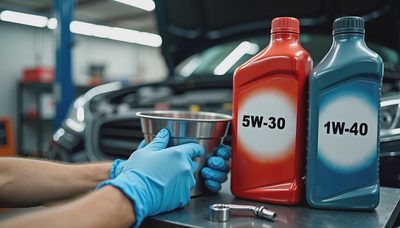
If your older engine is showing signs like low oil pressure at idle (especially when warm), high oil consumption (burning or leaking), or noisy hydraulic lifters, a thicker oil can be a reasonable first step. Many seasoned mechanics have been recommending a single-grade bump—like going from 5W-30 to 10W-40—for engines past 100,000 miles. However, I always advise checking the manufacturer's original viscosity recommendation first. If the factory fill was 5W-20, jumping to 20W-50 is probably too aggressive. The goal is to select a thicker oil for older engine that remains within the range the engine was designed to tolerate, not one that overburdens the oil pump or starves tight clearances.
The Risks of Going Too Thick
You've probably heard that thicker oil always provides better protection. Here's what the data actually shows: if you go too thick, you can reduce flow to critical parts like the camshaft bearings and variable valve timing mechanisms. Thicker oil also increases parasitic drag, which lowers fuel economy and can cause the engine to run hotter. In cold climates, a high-winter-grade oil (like 20W-50) becomes like sludge at startup, delaying lubrication to vital parts. So while a slightly thicker oil for older engine can help in some scenarios, going up two or three grades is rarely the answer. A used oil analysis will tell you whether your engine actually benefits from the change.
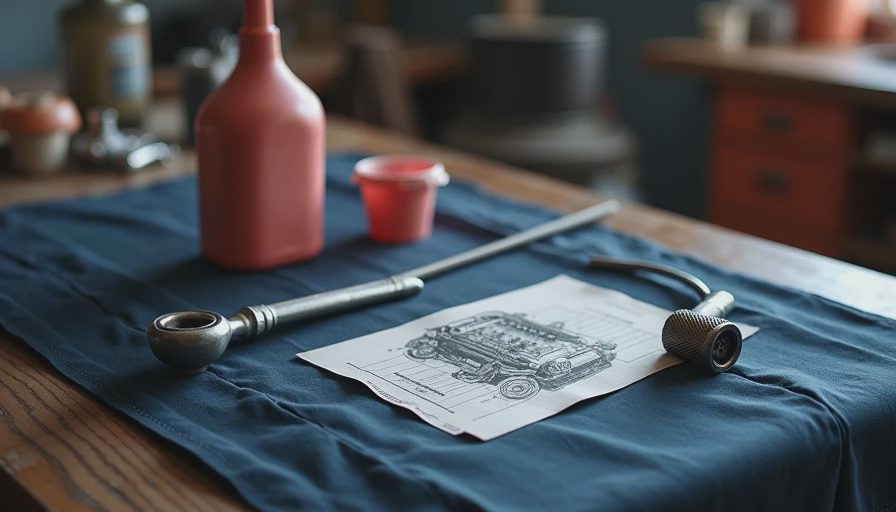
Science Corner: How Viscosity Index Improvers Work
Multigrade oils achieve their wide temperature range through viscosity index improvers (VIIs)—long-chain polymers that expand as the oil heats up to prevent thinning. When you choose a thicker oil for older engine, you're not just selecting a heavier base oil; the additive package matters just as much. High-quality VIIs resist shear better, meaning the oil stays in grade longer under the mechanical stress of an older engine. Cheap VIIs can break down quickly, leaving you with a thin oil after only a few thousand miles. That's why reading the API service category (e.g., SP, SN Plus) is more important than the brand name.
How to Choose the Right Grade: Read the Spec, Not the Bottle
If you've decided to try a thicker oil for older engine, start by checking your owner's manual for the acceptable viscosity range. Most manuals list a range for different temperatures. Pick the highest viscosity in that range that still allows easy cold starts. For example, if the manual allows 5W-30, 10W-30, and 10W-40, and you live in a moderate climate, 10W-40 is a safe bump. Look for API certification and, if your engine is newer than 2010, ensure it has the latest SP rating for low-speed pre-ignition protection. Also consider a high-mileage oil from any reputable manufacturer—it will include seal conditioners that can reduce leaks, complementing the thicker oil for older engine.
Step-by-Step Checklist Before Switching to Thicker Oil
If you're leaning toward trying a thicker oil for older engine, work through this checklist first to avoid costly mistakes. 1) Confirm low oil pressure at idle with a mechanical gauge—don't rely on the dash light. 2) Perform a compression test to rule out ring or valve wear that requires mechanical repair, not just thicker oil. 3) Check the PCV system: a stuck open PCV valve can mimic oil consumption symptoms. 4) Review your owner's manual for the allowable viscosity range; never exceed it. 5) Consider a used oil analysis (UOA) to measure wear metals and viscosity breakdown. A UOA costs around $30 and can tell you if your current oil is shearing down or if wear is accelerating. 6) Buy a single quart of the thicker grade and test it for cold-start behavior before filling the crankcase fully. 7) After the oil change, monitor oil pressure, consumption, and any new noises for 500 miles. If anything feels off, drain and revert to the factory grade. This systematic approach ensures you don't cause damage while chasing a quick fix.
The Bottom Line
Using a thicker oil for older engine can be a useful band-aid for specific wear-related issues, but it's not a cure-all. Always diagnose the root cause—excessive blow-by, worn valve seals, or a failing PCV system deserve a fix, not just a viscosity adjustment. If you do make the switch, monitor oil pressure, consumption, and check the dipstick regularly. And remember: the best oil for your engine is the one that meets its viscosity and performance specs, not the one with the flashiest marketing. Read the spec, not the bottle.


No letters yet — pray write the first.