You've probably heard that the difference between group iv and group v base oils is just PAO versus ester. Here's what the data actually shows. Group IV is the PAO family, built from uniform molecules that give excellent low-temperature flow, low volatility, and very stable viscosity. Group V is the catchall for other synthetics, with esters leading the pack in motor oil because they bring polarity, solvency, and seal compatibility that PAO does not provide on its own. In a finished lubricant, the real question is not which group sounds fancier. It is what the blend needs to do in a hot engine, a cold start, or a long drain interval.
What the difference between group iv and group v base oils really means
Group IV base oil is polyalphaolefin, or PAO. Chemically, PAO is a synthetic hydrocarbon built to have a very even molecular structure. That uniformity is why PAO behaves so predictably in cold weather and high heat. It usually has a low pour point, strong oxidation resistance, and low volatility, which helps reduce oil loss through evaporation. That makes it useful in passenger-car oils, heavy-duty products, and performance formulas where clean operation matters.
Science Corner: PAO is mostly non-polar. That sounds like a small detail, but it changes how the oil interacts with metal and additives. A non-polar base oil does not naturally cling to surfaces the way an ester does, so formulators have to build the finished oil carefully. That is one reason a lab sheet can be more revealing than a bottle that simply says synthetic.
Another point gets missed all the time. Group IV does not mean best in every case. A base oil can have excellent stability and still need help with seal swell, additive solubility, and wetting of internal engine parts. In practice, that means a well-designed oil is a system, not a trophy for the base stock alone. If you remember one number from this post, make it this one: the additive package and the finished viscosity grade matter just as much as the base-oil group.
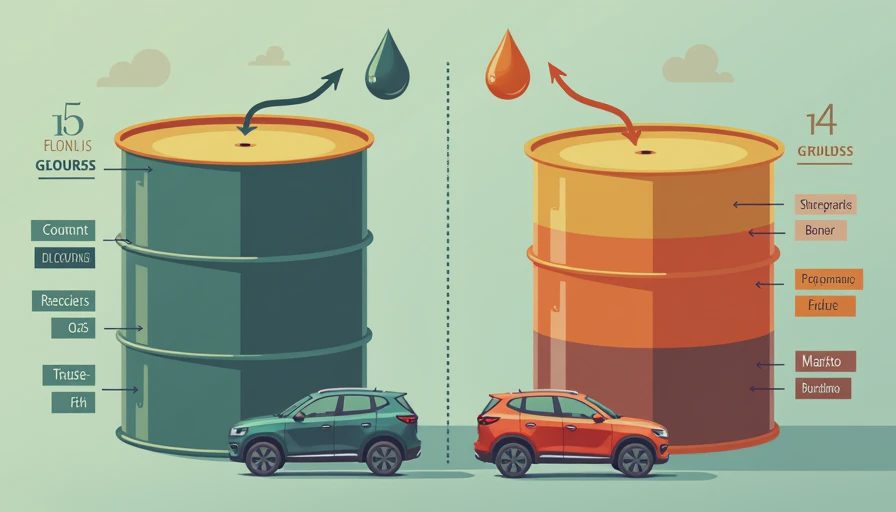
What Group V Base Oils Add to a Formulation
Group V is the everything-else category, but in motor oil the heavy hitter is the ester. Esters are polar molecules, and polarity gives them a talent PAO lacks: they grab onto surfaces and help dissolve additives. That makes them valuable in a finished oil because detergents, dispersants, antiwear agents, and antioxidants all need to stay evenly mixed and available. A little ester can also help with seal conditioning and improve compatibility in blends that would otherwise feel too dry.
That said, Group V is not magic. Some esters are excellent lubricants, but they can also be more expensive, more hygroscopic, and more reactive than PAO depending on the chemistry. Hygroscopic means they can absorb moisture from the air, which is one reason formulators choose the right ester type instead of just loading up on as much as possible. In a motor oil, more ester is not automatically better. It is a balancing act between solvency, oxidation resistance, volatility, and cost.
You will also see other Group V chemistries in specialty lubricants, such as polyalkylene glycols and alkylated naphthalenes. Those show up less often in mainstream engine oil, but they matter in industrial and niche automotive applications. The point is simple: Group V is a toolbox. Esters are the wrench you reach for most often, but not the only tool on the bench.
Why finished oil performance depends on the blend
When I look at the difference between group iv and group v base oils in a finished oil, I care less about labels and more about behavior. A PAO-heavy formula tends to offer strong cold-crank performance and low evaporation. A formula with some ester may improve deposit control and keep the additive package in solution. Blend them correctly and you can get a product that flows well at startup, resists thinning at operating temperature, and stays cleaner in service.
That is why API SP, ILSAC GF-6, and CK-4 oils do not win just because of one base-stock group. They win because the whole formulation passes the tests that matter: wear control, oxidation resistance, turbocharger deposit protection, piston cleanliness, and shear stability. A 0W-20 for a modern gasoline engine and a 5W-40 for a hard-worked turbocharged application can both be excellent, but they are solving different problems. The base oil is part of that answer, not the whole answer.
Science Corner: if the base oil is too non-polar, some additives can be harder to keep uniformly dispersed. If it is too polar, the oil can become more expensive and less chemically stable than necessary. Formulators tune that balance with the additive package, not with marketing language.

When the difference matters to real drivers
This chemistry matters most when the engine is stressed. Short-trip driving in winter punishes cold flow. Turbocharged engines punish oxidation control and deposit resistance. Extended drains punish volatility and additive reserve. Fleet trucks care about consistency over thousands of miles, while a weekend performance car may care more about high-temperature film strength and ring cleanliness. The same blend does not have to solve all of those jobs, and that is where the base-oil mix earns its keep.
A real-world example helps. A driver who runs a late-model commuter in mild weather may never feel a night-and-day difference between two oils that both meet the same spec. But if the vehicle sees long highway runs, towing, or very cold starts, the chemistry starts to matter more. A formula with more PAO may show lower evaporation and better cold-start behavior. A formula with more ester may keep the package cleaner and more stable in a demanding environment. Neither one is automatically superior without context.
That is also why used-oil analysis can be useful. You are not looking for a medal. You are looking for trends in viscosity retention, oxidation, fuel dilution, and wear metals. Read the spec, not the bottle.
How to read the label without getting fooled
Start with the viscosity grade, then the API or ACEA category, then any OEM approval listed on the back. Those are the parts that tell you whether the oil is actually built for your engine. Base-oil groups are not usually printed on the bottle, and even when they are implied in marketing, they do not tell the whole story. A product can use a lot of Group IV and still be poorly suited to a given application if the additive system or viscosity grade is wrong.
If you are comparing oils, look for the requirements that match your engine: API SP for many gasoline cars, the correct ACEA category if you are dealing with a European application, or an OEM approval when the manual asks for one. For diesels, CK-4 still matters in a lot of on-road and off-road equipment. The spec sheet is where the honest details live.
The myth that one base oil group wins every argument
The biggest myth is that Group IV is always better because it sounds more advanced. That is too simple. Group V can improve solvency and low-temperature behavior. Group IV can reduce volatility and deliver strong stability. The smartest formulators use both when the application justifies the cost.
If you remember one thing about the difference between group iv and group v base oils, remember this: the winner is the blend that meets the spec, stays stable in service, and fits the engine's job. Everything else is label talk. Read the spec, not the bottle.





No letters yet — pray write the first.