
You've probably heard that once you use conventional oil, switching to synthetic is risky—seals will leak, sludge will come loose, the engine will reject it. I get asked "can I switch from conventional to synthetic?" almost weekly, and the short answer is yes, you absolutely can. But the longer answer involves understanding what changes inside your engine. I've formulated both types of oil, and I'll break down the chemistry so you can make an informed choice.
What Actually Happens When You Switch?
Your engine doesn't care what's in the bottle as long as the oil meets the viscosity grade and API rating it was designed for. Synthetic base oils are chemically more uniform and have fewer impurities than conventional mineral oils. When you switch, the synthetic oil will start cleaning out deposits left by conventional oil over time. That's a good thing—but it can sometimes expose pre-existing seal wear or gunk buildup. If your engine has high mileage or a history of neglected oil changes, you might notice minor leaks after switching. That's not the synthetic oil causing damage; it's just revealing what was already there. In most modern engines, the transition is seamless.

Science Corner: Why Synthetic Oil Is Different
Conventional motor oil is refined from crude oil—a mixture of thousands of hydrocarbon molecules with varying chain lengths and shapes. Synthetic oil, on the other hand, is engineered from pure base stocks (typically Group III, IV, or V) that are chemically tailored for consistent molecular size and thermal stability. This means synthetic oil resists oxidation better, flows more easily at low temperatures, and maintains viscosity under high heat. That's why many OEMs now fill their engines with synthetic from the factory. If your owner's manual specifies a synthetic blend or full synthetic, switching is not just safe—it's recommended.
Can I Mix Conventional and Synthetic Oil?
Another common fear: if I switch, do I have to flush the engine? No. You can safely mix conventional and synthetic oil—they are compatible. The resulting blend will have properties between the two, but it will not harm your engine. In fact, many “synthetic blends” are exactly that: a mixture of conventional and synthetic base stocks. So if you're halfway through an oil change and realize you only have synthetic but the engine had conventional, top it off without worry. The only downside is that you temporarily lose some of the benefits of full synthetic if you mix heavily. But for a short period, it's perfectly fine.
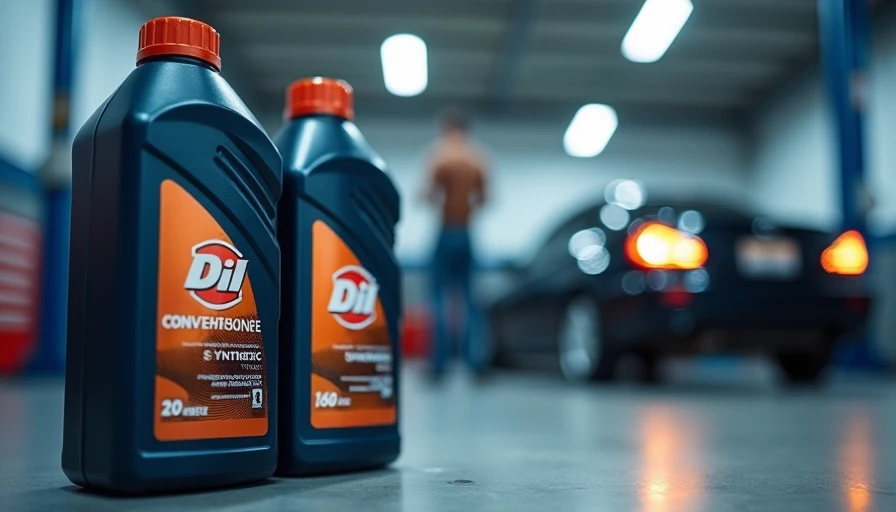
How to Switch From Conventional to Synthetic Properly
If you're ready to make the switch, here's a straightforward process:
- **Check your owner's manual.** Confirm the recommended viscosity (e.g., 5W-30) and API service category (e.g., SN Plus or SP).
- **Do a full oil change.** Drain the old conventional oil completely and replace the filter. You don't need a special flush—just a standard drain.
- **Fill with the correct synthetic oil.** Use the same viscosity and API rating. No need to step up to a heavier grade unless specified.
- **Monitor for changes.** Check oil level regularly after the first few hundred miles. If you see a new leak, it was likely a pre-existing seal issue. In most cases, the engine will simply run cleaner.
Common Myths About Switching
**Myth: Synthetic oil causes leaks.**
Synthetic oil has smaller molecules, but modern seal formulations are designed to handle it. Older engines (pre-1990s) with deteriorated seals might leak, but that's a seal problem, not an oil problem.
**Myth: You can't go back to conventional after synthetic.**
Completely false. You can switch back and forth at any time. The oil doesn't “star” into the engine. It's just lubrication.
**Myth: Synthetic oil is too thin for high-mileage engines.**
High-mileage oils exist in both conventional and synthetic forms. If your engine has over 75,000 miles, a high-mileage synthetic with seal conditioners can actually help reduce leaks.
Final Verdict: Should You Switch?
If you're asking "can I switch from conventional to synthetic?" and your engine is in good condition, the answer is a confident yes. The benefits—better wear protection, longer drain intervals, improved fuel economy—are backed by data and lab tests I've seen firsthand. Read the spec, not the bottle: match the viscosity and API rating, and you're good to go. I've done it on my own cars for years with zero issues. The only time I'd hesitate is if you have a severely neglected engine with sludge buildup—but that's a separate problem that synthetic oil can actually help clean out over time.
So go ahead and switch. The chemistry says it's safe, and your engine will thank you.
Real-World Oil Change Comparison: Conventional vs. Synthetic Intervals
To illustrate the practical difference, let's compare typical oil change intervals for a 2018 Honda Accord with a 2.4L engine. Using conventional oil, most mechanics recommend changing every 3,000–5,000 miles depending on driving conditions. With full synthetic, many manufacturers now extend that to 7,500–10,000 miles. For a driver averaging 12,000 miles per year, that means two conventional changes (about $70–$100 total) versus one synthetic change (about $50–$80). Even though synthetic costs more per bottle, you save a trip to the shop and reduce waste. If you're still wondering "can I switch from conventional to synthetic?", consider this: after the switch, your oil stays effective longer, you cut down on disposal, and your engine runs cleaner. It's a win-win for your wallet and your car's longevity.




No letters yet — pray write the first.