You've probably heard that a small **oil puddle** under a parked car is normal on an older engine. Here's what the data actually shows: engines are designed to keep oil inside, and visible leakage means a seal, gasket, fitting, or housing is no longer doing its job. That does not automatically mean catastrophe, but it does mean you should diagnose it before oil level drops far enough to affect pressure, lubrication film thickness, and bearing protection. If you walked into the garage and found an **oil puddle**, the right move is not panic. It is identification, oil-level verification, and a clean inspection path.
Start by confirming it is actually engine oil
Not every dark spot on concrete is engine oil. Automatic transmission fluid, power steering fluid on some older vehicles, gear oil, and even dirty water mixed with road grime can fool people. Fresh engine oil is usually amber to brown. Used engine oil trends darker brown to black. Transmission fluid is often red or reddish brown, though age can darken it. Coolant usually feels thinner and has a sweet smell. Engine oil feels slippery, spreads slowly, and leaves a persistent stain.
Use white cardboard or a drip sheet under the vehicle overnight. That gives you color, drop location, and rough leak rate. A few drops near the oil pan drain plug suggest one path. A wet area farther forward near the crank pulley suggests another. Also check the dipstick before starting the engine. If the level is already below the safe range, the **oil puddle** is no longer just cosmetic.
Science Corner: engine oil is a blended fluid of base oils plus additives such as detergents, dispersants, anti-wear chemistry, antioxidants, and viscosity modifiers. When it leaks, you are not just losing volume. You are losing the fluid that maintains hydrodynamic separation between moving parts.
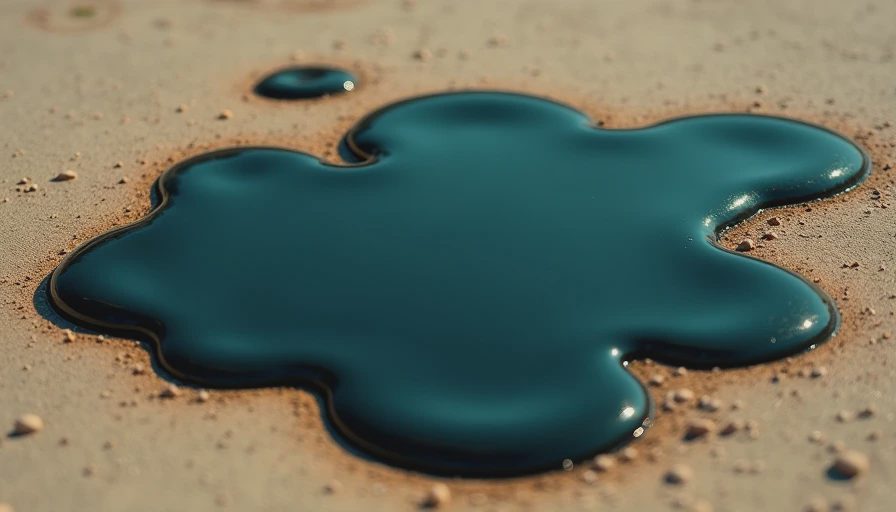
The most common places an oil puddle starts
In the shop, the usual suspects are boring, which is good news. The oil pan drain plug may be under-tightened, over-tightened, cross-threaded, or missing a sealing washer. Oil filters can leak from a damaged gasket, a double gasket from a rushed oil change, or a loose installation. Valve cover gaskets are another classic source; they seep down the engine and make the leak look worse than it is.
Then you move into more involved leaks: oil pan gaskets, timing cover seals, camshaft seals, front or rear main seals, oil cooler lines, and oil pressure sender leaks. On some engines, the vacuum pump or turbo oil feed and drain lines can also create a very convincing **oil puddle**. The key is to trace from the highest wet point downward. Oil follows gravity and airflow, so the lowest drip point is often not the source.
If you remember one number from this post, make it this one: one quart low in a typical passenger car can be roughly 20 to 25 percent of the sump capacity. That is enough to matter.
How serious is an oil puddle, really?
Severity comes down to leak rate, location, and oil level. A quarter-sized spot after several days is different from a hand-sized **oil puddle** after one commute. A seep from a valve cover is annoying and can create smells if oil hits a hot exhaust manifold, but it usually does not dump the sump rapidly. A failed oil filter gasket, loose drain plug, or ruptured cooler line can empty oil fast enough to become an engine survival issue.
Watch for warning signs that move this from weekend project to immediate stop-driving territory: low oil pressure light, sudden increase in valvetrain noise, burning oil smell through the vents, smoke from the engine bay, or fresh oil coating the underbody after a short drive. If any of those show up, shut it down and tow it.
Read the spec, not the bottle. If you need to top off before repair, use the viscosity grade and performance specification required by the owner’s manual, such as SAE 5W-30 with the correct API service category or dexos approval if your vehicle calls for it. Matching the spec matters more than chasing marketing claims.

How to inspect the leak without guessing
A clean engine is easier to diagnose than a dirty one. Wipe down accessible areas or use a safe engine degreaser on a cool engine, then drive briefly and recheck. Start at the top of the engine, because leaks from above travel downward and create false trails. Inspect the valve cover perimeter, oil fill cap seal, PCV system hoses, and around the filter housing. Then move lower to the oil pan rail, drain plug, and front cover area.
A UV dye kit can be useful if the leak is elusive. Add the correct dye to the engine oil, run the vehicle, and inspect with a UV light. This is one of the few shortcut tools that actually earns its keep. It helps separate active leaks from old residue.
Science Corner: viscosity grade affects how oil flows at cold start and at operating temperature, but it does not "fix" a seal in any permanent way. A thicker oil might slow a marginal seep in some cases, yet the chemistry of the seal material, wear pattern, and crankcase pressure matter more than folklore suggests.
What to do next and what not to do
If the **oil puddle** is small, the engine oil level is full, and the source appears to be a minor seep, you can usually monitor, top off as needed, and schedule repair. If the leak is active enough to form a new puddle after each drive, repair should move up the list. Keep a log: check the dipstick every few days, note how much oil you add, and watch whether the leak worsens with heat or highway use.
What I would skip: miracle stop-leak products as a first response. Some seal-conditioning chemistry can temporarily swell certain elastomers, but it is not a universal cure, and it will not fix a torn gasket, damaged filter seal, cracked housing, or stripped drain plug threads. Diagnose first.
Also, do not ignore an **oil puddle** because the engine still sounds fine. Lubrication failures often give little warning before damage. The practical path is simple: verify fluid type, confirm oil level, clean and trace the leak, top off with the correct spec oil, and repair the failed part before a cheap seal turns into expensive metal.




No letters yet — pray write the first.