You've probably heard that any puddle under a vehicle means trouble. Here's what the data actually shows: if you're asking **why is there a puddle under my car after rain**, the answer is often simple water trapped in body channels, splash shields, or the air-conditioning drain area. In many cases, it is harmless. The key is not guessing by fear, but identifying whether the puddle is clear rainwater or an actual automotive fluid. A quick look at color, feel, smell, and location under the vehicle tells you a lot before you spend money or panic.
The most common reason is trapped rainwater, not a leak
Modern cars have dozens of places where water lands, flows, and drains. Rain hits the windshield cowl, hood seams, door channels, roof rails, underbody panels, and wheel wells. Some of that water exits immediately. Some of it lingers and then drips after the car is parked. That delayed drip is why a driver may notice a puddle after getting home even though nothing is mechanically wrong.
Common harmless sources include the evaporator drain area, rocker panel drains, splash shields, and undertrays. Plastic panels under the engine can hold a surprising amount of water and release it slowly onto the driveway. Door bottoms and trunk seals can do the same if drain holes are partially restricted with dirt or leaf debris. If the puddle is clear, thin like water, and appears after heavy rain or a car wash, trapped water is the leading suspect.
Location matters too. Water near the passenger-side firewall is often normal condensate or runoff from the HVAC box area. Water dripping from multiple points across the underbody after rain usually points to drainage, not a pressurized fluid leak.
How to tell water from oil, coolant, or other vehicle fluids
If you're still wondering **why is there a puddle under my car after rain**, do a simple driveway inspection before assuming the worst. Water behaves differently from automotive fluids. Clear water spreads quickly, feels like plain water, and evaporates without leaving much residue. Engine oil feels slick and leaves a darker stain. Coolant is usually dyed and can appear green, orange, pink, blue, or yellow depending on formulation. Transmission fluid often has a red or reddish-brown appearance. Brake fluid is usually clear to light amber and has a slippery feel.
Smell is another clue. Water has no meaningful odor. Coolant often has a faint sweet smell because of glycol chemistry. Oil smells oily or burnt if it has contacted hot parts. Gasoline is obvious. If the puddle has color, viscosity, or odor, stop calling it rainwater and start tracing it.
**Science Corner:** Motor oil and coolant do not evaporate like plain water because their boiling ranges and surface behavior are very different. Water disappears fast on warm pavement. Oil leaves a persistent film. If you remember one number from this post, make it this one: a single white paper towel can tell you plenty. Dab the puddle. Clear and clean usually means water. Colored, greasy, or stain-forming means investigate further.
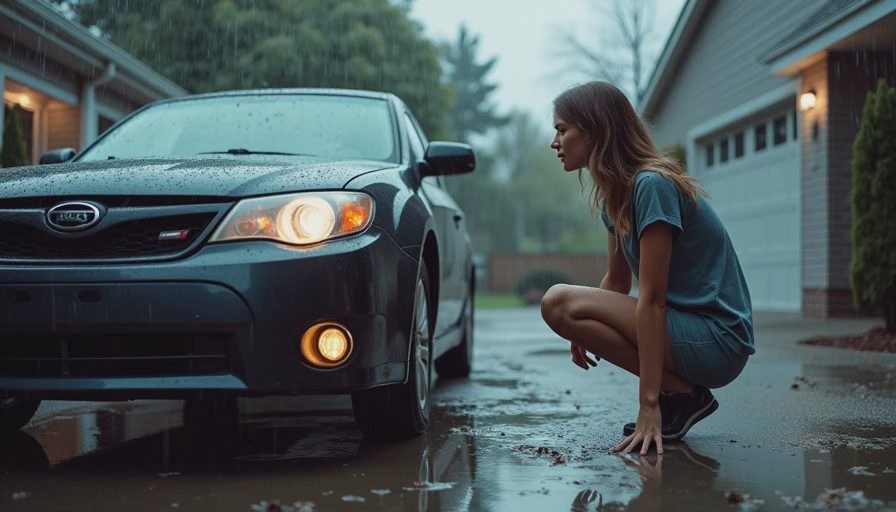
Where the puddle sits under the car tells an important story
The position of the puddle relative to the vehicle is often more useful than its size. Front-center puddles after rain are commonly from undertrays, radiator supports, or splash panels shedding stored water. Front passenger-side puddles can be normal HVAC condensate, especially in humid weather, even if it also rained. Puddles near each wheel may simply be runoff from fender liners and body cavities.
By contrast, a puddle directly under the engine oil pan, around a drain plug area, or beneath the transmission bellhousing deserves attention. That does not prove an active leak, but it does raise the odds that the fluid is not rainwater. The same goes for coolant collecting near the radiator, water pump area, or hose connections.
One practical method is to place clean cardboard under the parked car after the rain stops. Check where drops form over the next hour. Water from body drainage usually shows up in scattered spots. Mechanical leaks tend to create a more repeatable drip point. Read the spec, not the bottle, also applies here in spirit: read the pattern, not your first assumption.
When a rain puddle points to a clogged drain or maintenance issue
Sometimes the answer to **why is there a puddle under my car after rain** is still water, but not harmlessly managed water. Cars rely on drain paths staying open. Leaves, pollen sludge, road grit, and tree debris can clog cowl drains, sunroof drains, door drains, or evaporator drains. When that happens, water may overflow into places it should not be, including the cabin floor, spare tire well, or electronic module areas.
Signs of a drainage problem include musty interior odor, wet carpets, fogging windows, sloshing sounds in doors, or water appearing inside after storms. Those symptoms matter more than the outside puddle itself. A clogged evaporator drain can also cause water to back up and drip in odd locations.
The fix is usually straightforward: inspect and clear visible drains, remove debris from the cowl area, and confirm water exits where it should. Avoid poking aggressively into drains with metal tools, since that can damage grommets or hoses. A gentle plastic trimmer line or low-pressure air works better in many cases.

What this means for oil concerns and when to get the car checked
Because this blog lives in the lubrication world, I need to separate a rain puddle from an oil leak clearly. Rainwater under a car does not mean your engine oil is diluted, your viscosity grade is wrong, or your additive package failed. Those are different problems with different evidence. An oil leak shows up as dark residue around seals, the oil pan, filter housing, valve cover area, or drain plug. You may also see grime accumulation where oil has been collecting dust for weeks.
Check your oil level with the dipstick on level ground after the engine has sat a few minutes. If the level is stable and the puddle is clear water after storms, the issue is likely drainage, not lubrication failure. If the oil level keeps dropping, or you find fresh amber-to-black slick spots, inspect further.
When should you get professional help? Do it if the puddle is colored, oily, sweet-smelling, large enough to recur in dry weather, or paired with warning lights, overheating, low fluid levels, or interior water intrusion. A shop can use dye testing, pressure testing, or a lift inspection to separate body drainage from fluid leaks fast.
A simple checklist you can use after the next storm
If you're asking **why is there a puddle under my car after rain**, use this short process. First, inspect the puddle color in daylight. Second, touch it with a paper towel and look for oiliness or dye. Third, note where it sits under the vehicle. Fourth, check whether it dries like water or leaves residue. Fifth, look for related symptoms such as a sweet smell, low coolant, low oil, damp carpets, or repeated dripping in dry weather.
Most of the time, the explanation is boring in the best way: rainwater collected somewhere in the vehicle and drained out after parking. That is normal. The goal is not to ignore every puddle, but to classify it correctly. Once you do that, you avoid unnecessary worry and focus on the real problems when they actually appear.
You've probably heard that every puddle is bad news. Here's what the data actually shows: after rain, clear odorless water is usually just water. Colored, slick, or recurring puddles in dry weather are the ones that earn your attention.




No letters yet — pray write the first.