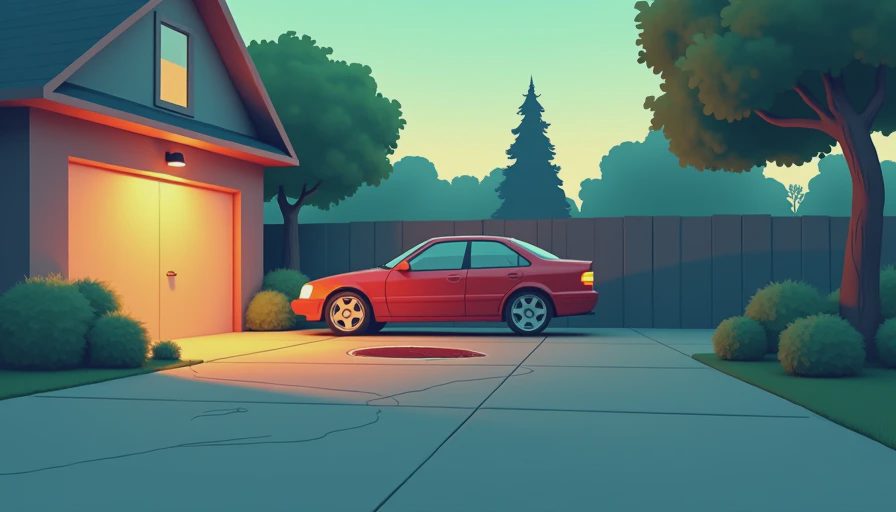
You've probably heard that any puddle under a vehicle means disaster. Here's what the data actually shows: some puddles are normal, some are early warnings, and a few mean you should stop driving now. If you're asking **why is there a puddle under my car**, the smart move is not guessing by smell alone. Look at color, location, thickness, and when it appears. A clear puddle after running the air conditioner is very different from a slick amber spot under the engine or a sweet-smelling green or pink leak near the radiator. The goal is to identify the fluid before a small problem turns into overheated bearings, low brake pressure, or transmission damage.
Start With the Simple Clues
The fastest way to answer **why is there a puddle under my car** is to collect a few basic observations. Slide a piece of cardboard under the vehicle overnight if the source is not obvious. In the morning, note where the drip landed: front center, passenger side, near a wheel, or under the middle of the car. Then check the fluid itself. Water feels thin and evaporates. Engine oil feels slippery and usually turns amber to brown to nearly black with age. Coolant often has a bright dye and a sweet odor. Transmission fluid is usually red to dark red, though older fluid can look brown. Brake fluid tends to be pale yellow to light brown and feels slick but less oily than engine oil.
Timing matters too. A puddle that appears only after using the A/C is commonly harmless condensation. A spot that grows after every drive points to an active leak under pressure or heat. If you remember one number from this post, make it this one: fluid level dropping on the dipstick or reservoir means the leak is real, even if the puddle looks small.
Water Is Common, but Not Every Clear Drip Is Innocent
The most common answer to **why is there a puddle under my car** is water from the air-conditioning evaporator drain. On a humid day, the A/C pulls moisture from cabin air, and that water drains under the passenger side area. It is clear, odorless, and not slippery. That is normal.
But clear fluid is not always harmless. Condensation should not be oily, colorful, or have a strong smell. A failing cooling system can also leak diluted coolant that looks almost clear at first, especially if road grime has washed away the dye. Windshield washer fluid may appear blue or green and can show up near the front bumper area.
**Science Corner:** Water and glycol-based fluids behave differently on cardboard. Plain water spreads fast and evaporates with little residue. Coolant, which usually contains ethylene glycol or propylene glycol plus corrosion inhibitors, leaves more residue and a slightly sticky feel after the water fraction flashes off.

If the puddle appears after rain, don't forget body drains. Sunroof drains, cowl drains, and door seals can route water to strange places. That is not a lubricant problem, but it can still cause mold or electrical trouble inside the cabin.
Engine Oil Leaks: Color, Viscosity, and Where They Land
When people ask **why is there a puddle under my car**, they often fear engine oil first, and that concern is fair. Engine oil leaks are common as gaskets age, seals harden, and plastic housings warp from heat cycles. Fresh engine oil usually looks amber. Used oil tends to darken from soot, oxidation byproducts, and detergent activity holding contaminants in suspension.
Location helps narrow it down. A puddle near the front center could come from the oil pan, drain plug, oil filter housing, valve cover area running downward, or front crank seal. A leak higher on the engine can travel along brackets and drip somewhere misleading. That is why a flashlight inspection from above and below matters.
**Science Corner:** Motor oil is not just "slippery liquid." Its viscosity grade, such as 5W-30, describes flow behavior at cold and hot conditions. As oil oxidizes and picks up contamination, its appearance changes more than its basic identity. Read the spec, not the bottle: API service category and the OEM-required viscosity matter more than marketing words if you need to top off after confirming the leak.
If the drip is active, check the dipstick before driving far. Low oil can starve bearings and timing components long before a warning light saves you.
Coolant, Transmission Fluid, and Brake Fluid Need Faster Action
Some fluids deserve more urgency than engine oil because failure escalates quickly. Coolant leaks can overheat an engine in one drive. If the puddle is green, orange, pink, or yellow and has a sweet smell, inspect the coolant reservoir, radiator end tanks, hose connections, water pump area, and heater hoses. White crusty residue around a fitting is a common clue.
Transmission fluid leaks are also serious. Automatic transmission fluid is often red when new and darker as it ages. It may drip near the transmission pan, cooler lines, axle seals, or the area between engine and transmission. Low ATF can cause slipping, delayed engagement, or internal wear.
Brake fluid is the one that should get your attention immediately. If you see a slick pale fluid near a wheel, under the master cylinder area, or notice a soft brake pedal, do not treat it as a routine nuisance. Brake fluid is hydraulic fluid; losing enough of it reduces braking force. A tow bill is cheaper than guessing wrong.
Power steering fluid can also leak on older hydraulic systems, often near the rack, pump, or hoses. On newer electric power steering setups, that category may not apply at all, so know which system your vehicle uses.
What to Do Next Without Making the Mess Worse
If you're still wondering **why is there a puddle under my car**, take a structured approach. First, confirm the fluid level tied to the suspected leak: engine oil dipstick, coolant reservoir when cool, brake fluid reservoir, transmission level if your vehicle provides a service method, and washer reservoir. Second, clean the area if accessible and safe. A dirty engine bay hides the true source because leaks travel.
Third, use cardboard or UV dye only if needed. Dye can help pinpoint slow leaks, but do not dump random additives into systems that have strict chemistry requirements. Coolant types differ, brake fluid has specific standards, and engine oil performance depends on the correct viscosity grade and API or OEM approval.
Here is the practical triage:
- Safe to monitor briefly: clear A/C water
- Schedule service soon: minor engine oil seep, washer fluid leak
- Address quickly: coolant leak, transmission leak, power steering leak
- Stop driving and tow if needed: brake fluid leak or severe oil loss
A puddle is a clue, not a diagnosis. The vehicle is telling you to identify the fluid, verify the level, and match the urgency to the system involved. That is the disciplined answer to **why is there a puddle under my car**: not panic, not denial, just good observation followed by the right repair.




No letters yet — pray write the first.