You've probably heard that any puddle under a vehicle means trouble. Here's what the data actually shows: a lot of drivers asking **why is there a puddle under my car but no leak** are looking at plain water, not engine oil, coolant, or transmission fluid. The trick is not guessing. The trick is identifying the fluid by location, feel, color, and timing. If you can separate normal condensation from an actual leak in five minutes, you avoid both panic and expensive parts-swapping.
The most common answer: air conditioner condensation
If the puddle appears after you have run the A/C, especially in hot and humid weather, the most likely source is evaporator condensation draining out of the HVAC case. That is normal. Your air conditioning system removes moisture from cabin air, and that water has to go somewhere. It exits through a drain tube and lands under the passenger-side area on many vehicles.
This is where observation beats rumor. Water from A/C condensation is usually clear, thin, odorless, and it evaporates quickly from warm pavement. You will often notice it after parking for a short trip with the air on max or after idling in summer traffic. A small puddle can be completely normal; even a surprising amount of water can be normal when humidity is high.
**Science Corner:** Condensation forms when humid air contacts the cold evaporator core. Once that metal surface drops below the dew point, moisture leaves the air and collects as liquid water. No lubricant chemistry mystery there; just phase change.
So if you're asking **why is there a puddle under my car but no leak**, start with the simplest explanation: clear water, near the passenger side, after using the A/C, is usually nothing to worry about.
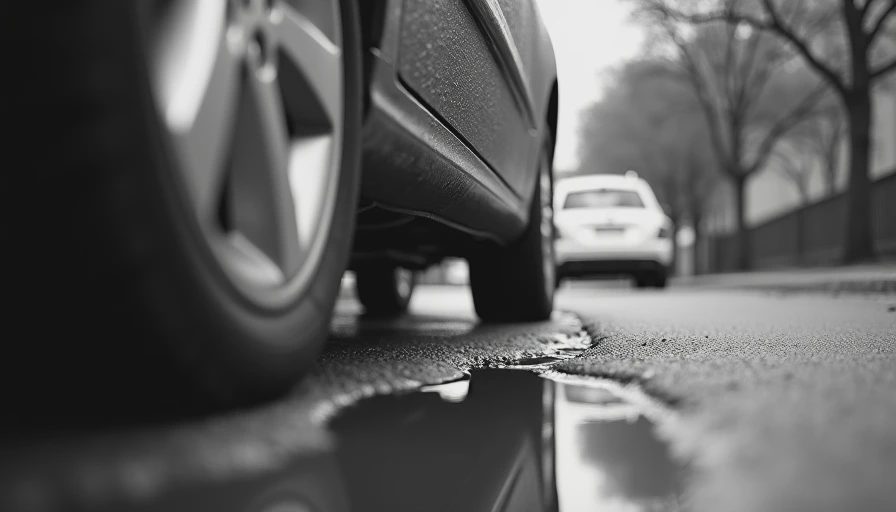
How to tell water from oil, coolant, or other automotive fluids
The fastest diagnostic tool is a white paper towel or cardboard placed under the drip. Water leaves almost no residue. Oil leaves a slick stain. Coolant often feels slightly slippery and can show color such as green, orange, yellow, pink, or blue depending on the formula. Transmission fluid is typically red to brown. Brake fluid feels slick but is usually light amber when fresh and darker when aged.
Location matters too. Front-center drips can be several things. Passenger-side firewall area often points to A/C condensation. Near a wheel could suggest brake fluid, a shock issue, or grease from a torn CV boot. Under the radiator area can suggest coolant. Under the engine oil pan area could be engine oil. Smell can help: coolant has a sweet odor, fuel is obvious, and engine oil smells oily or burnt.
If you remember one number from this post, make it this one: water should have roughly the viscosity of water. In other words, if it feels oily between your fingers, stop calling it harmless condensation.
When drivers search **why is there a puddle under my car but no leak**, they often mean they cannot find the source. That is different from there being no leak. A clean garage floor and a flashlight tell the truth faster than assumptions.
When a “puddle but no leak” can still point to a real problem
Not every intermittent puddle is harmless. Coolant leaks can be small enough to hide while hot and only drip after shutdown as pressure changes. A water pump, radiator seam, hose connection, heater hose, or thermostat housing can seep just enough to leave spots without creating a dramatic low-fluid warning right away.
Engine oil leaks can also play hide-and-seek. Oil from a valve cover gasket or timing cover may spread across surfaces before dripping from a completely different spot. Underbody panels make this more confusing by catching fluid and releasing it later. The same goes for transmission fluid and power steering fluid on older hydraulic systems.
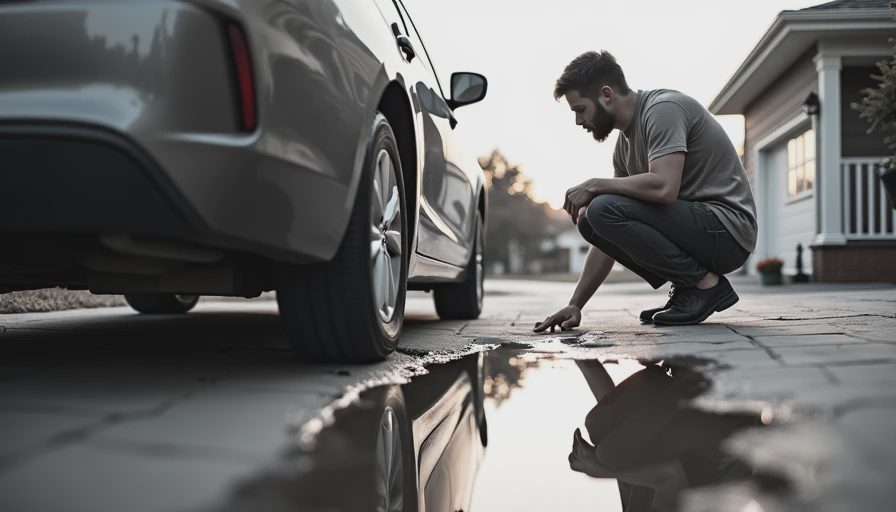
A simple test is to check fluid levels cold, then monitor them for a week. If coolant in the overflow bottle drops, or engine oil on the dipstick trends downward, the puddle deserves more attention. Also watch the temperature gauge, cabin heat performance, and any sweet smell after parking.
You've probably heard that a leak has to be large before it matters. Here's what the data actually shows: small leaks often become expensive leaks because they are ignored during the easy stage.
A practical driveway checklist you can do in 10 minutes
Start with a clean parking spot or slide clean cardboard under the engine bay overnight. In the morning, note exactly where the drip lands. Dab it with a paper towel. Is it clear? Colored? Slick? Does it evaporate in an hour? Then pop the hood and inspect the obvious points: coolant reservoir level, radiator hose connections, visible wetness around the valve cover, and the area around the water pump if accessible.
Next, think about timing. Did the puddle show up after running the A/C? After a long highway drive? After the engine cooled down? Patterns matter. If the car only leaves a puddle with the air conditioner on, that strongly supports condensation. If it appears after every trip regardless of weather, keep digging.
Read the spec, not the bottle. For fluids, that means knowing what belongs in your car and what color it typically is when fresh. OEM coolants vary. Engine oils meeting the right API service category and viscosity grade, like API SP in 0W-20 or 5W-30 where specified, do not all look the same once used, but they all leave residue unlike water.
When to stop diagnosing and get it inspected
If the puddle is anything other than clear water, do not let it drag on. Coolant leaks can lead to overheating. Brake fluid leaks are a safety issue immediately. Fuel leaks are urgent. Oil leaks near a hot exhaust can create smoke and odor, and while many start small, they are not something I would ignore for weeks.
A shop can usually pressure-test a cooling system, add UV dye to trace a stubborn leak, or inspect underbody panels that hide the source. Diagnostic time is often cheaper than replacing the wrong part. If you have been searching **why is there a puddle under my car but no leak**, the smart move is to identify the fluid first and only then decide whether it is normal condensation or a repair item.
Most of the time, the harmless answer is water from the A/C drain. But if the puddle is colored, oily, recurring in cool weather without A/C use, or paired with dropping fluid levels, treat it like real evidence. Good troubleshooting is not about fear. It is about pattern, chemistry, and a little patience.




No letters yet — pray write the first.