You've probably heard that any whine from the rear axle means the differential is finished. Here's what the data actually shows: differential bearing noise can come from a worn bearing, incorrect gear setup, low lubricant, or a sound being misidentified entirely. The useful first step is not pouring in a thicker oil. It is identifying when the noise occurs, how it changes with load, and what the lubricant reveals.
A differential is a gear system, not an engine. Its oil does not circulate through a filter or receive constant replenishment from combustion byproducts. It relies on the correct viscosity, extreme-pressure additive chemistry, and a stable film between heavily loaded gear teeth and bearing rollers. When that film fails, damage can progress quietly until a hum becomes a growl.
What differential bearing noise sounds like
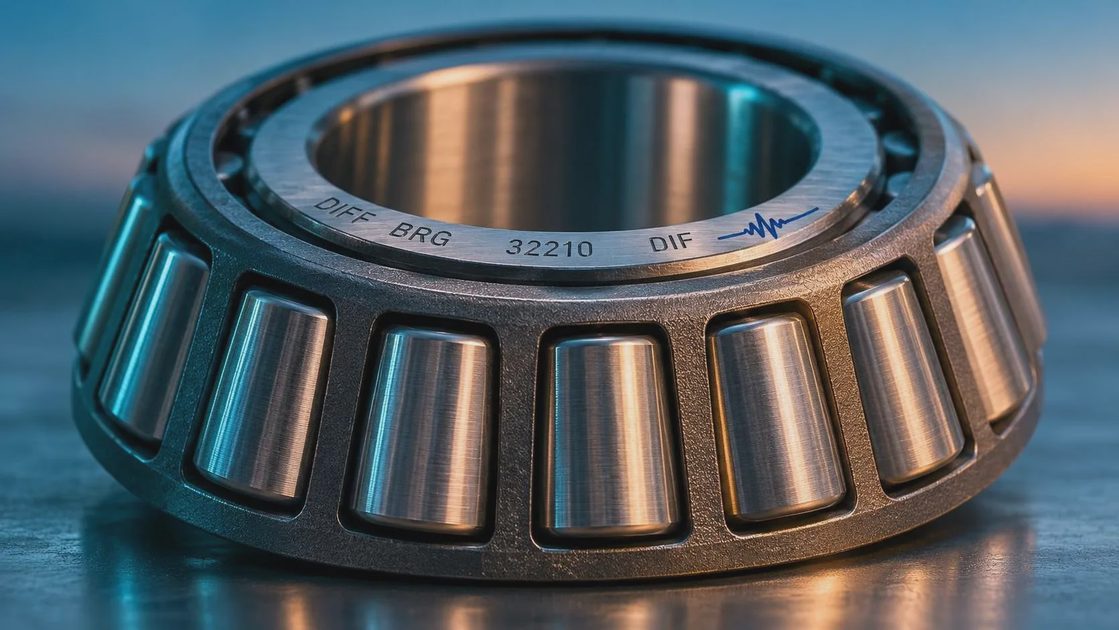
A pinion bearing often produces a steady whine or growl that changes with vehicle speed. If the noise is louder during acceleration, the pinion and ring gear are loading in one direction. If it becomes louder when you lift off the throttle, the opposite gear face and bearing load may be involved. A noise that follows road speed but not engine rpm is a strong reason to investigate the axle rather than the engine or transmission.
Wheel bearings can imitate differential bearing noise. A worn hub bearing commonly changes volume when you gently steer left or right, because cornering shifts the load from one side to the other. Tire cupping can also create a rhythmic hum. Make the same road test on smooth pavement, then compare the sound while coasting in neutral where safe. A differential-related noise usually responds to throttle load; a tire or hub problem often responds more directly to steering or pavement.
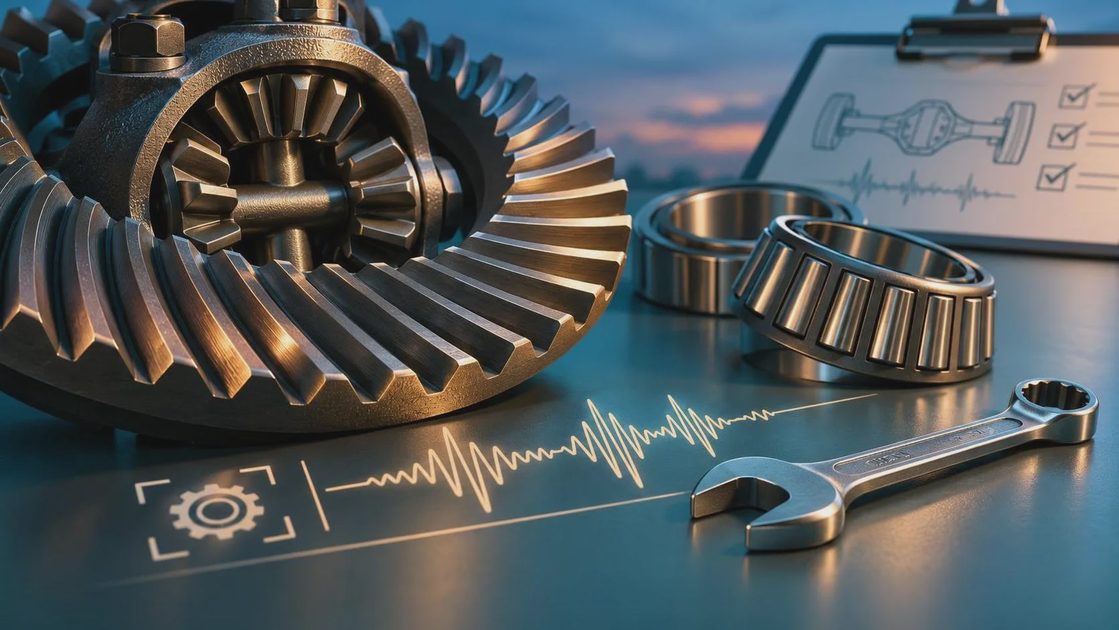
The location matters, but sound travels through an axle housing surprisingly well. A mechanic may use a chassis microphone or electronic stethoscope to compare the pinion housing, carrier bearing caps, and wheel ends. That is more reliable than putting a screwdriver against the housing and guessing from the loudest vibration.
How lubricant affects the diagnosis
Low differential oil can expose bearings and gear teeth to air, heat, and metal-to-metal contact. Before diagnosing differential bearing noise, inspect the fluid level on level ground and look for leaks around the pinion seal, axle seals, and cover or housing joints. A small leak can lower the oil level over thousands of miles without leaving a dramatic puddle in the driveway.
Science Corner: gear oil usually carries an API GL-5 service classification and a viscosity grade such as 75W-90 or 75W-140, but those labels are not interchangeable instructions. The vehicle manufacturer may require a particular friction-modifier package for a limited-slip differential. A thicker product can raise operating viscosity, yet it cannot repair a pitted bearing or restore damaged preload. It can also make cold flow worse in winter.
Drain the oil into a clean pan rather than merely checking its color. Fine gray paste on the magnetic drain plug can be normal wear debris, but flakes, needles, or shiny chunks indicate a more serious problem. A burnt odor suggests excessive temperature, while water contamination can make the oil cloudy or tan. If the replacement lubricant immediately turns glittery, the original source of the wear is still active.
Read the service manual for the specified grade and additive requirement. Do not assume that a motor-oil additive, molybdenum treatment, or generic limited-slip additive belongs in the axle. Differential lubrication depends on boundary-film chemistry and load-carrying additives designed for hypoid gears. The wrong chemistry can contribute to chatter, corrosion, seal problems, or accelerated wear without changing the noise overnight.
A practical garage diagnostic sequence
Start with a short drive and document the conditions. Note whether the sound appears under acceleration, deceleration, steady cruise, or turns. Record the approximate speed, because a noise at 25 mph and one at 65 mph can involve different rotating components. Then inspect tire tread, wheel play, fluid leaks, and driveshaft joints before opening the differential.
With the vehicle safely supported, rotate the wheels and check for roughness or looseness. Never rely on a jack alone. Inspect the driveshaft for excessive universal-joint movement and look for rust dust around the bearing caps. Check the pinion flange for play, but avoid forcing it hard enough to damage a seal. Any noticeable looseness deserves professional measurement because pinion preload is not set by simply tightening until the play disappears.
A shop can measure backlash between the ring and pinion gears, inspect tooth contact patterns, and check bearing preload with an inch-pound torque wrench. Those measurements distinguish setup errors from normal wear. Incorrect backlash can create a coast-side or drive-side whine even when the bearings themselves are not badly damaged. Differential bearing noise after a recent gear installation should prompt a review of setup records before buying parts.
Repair choices and realistic costs
A fluid service may cost roughly $100 to $250 at a repair shop, depending on access, lubricant capacity, and whether the cover uses a gasket or sealant. That service is worthwhile when the oil is low or contaminated, but it should not be sold as a cure for mechanical damage. New oil can sometimes make a marginal bearing quieter temporarily while leaving the worn surfaces unchanged.
Replacing one axle or carrier bearing may involve several hundred dollars in labor plus parts. A complete ring-and-pinion setup can move into the $1,500 to $3,000 range, especially when shims, seals, bearings, and precise measurements are required. A replacement used differential may be less expensive, but its history and gear ratio must match the vehicle. Compare the total installed cost with the vehicle's condition rather than choosing the cheapest part on a shelf.
If the differential bearing noise is accompanied by clunks, metal fragments, rising housing temperature, or visible gear damage, limit driving. A failing bearing can damage the ring and pinion, turn a contained repair into a full differential rebuild, or in extreme cases affect driveline reliability. Towing is usually cheaper than gambling on another hundred miles.
The oil specification that actually matters
If you remember one number from this post, make it this one: use the manufacturer's differential oil specification, not the viscosity printed in a forum comment. SAE 75W-90 and 75W-140 describe viscosity behavior, while API GL-5 describes a performance category. Neither label alone tells you whether a fluid contains the right limited-slip friction modifier or meets an OEM approval.
Brand loyalty is not a diagnostic method. Read the product data sheet for the API category, viscosity grade, OEM approvals, and limited-slip suitability. Confirm the fill quantity and change interval in the service information. For severe towing, off-road use, or repeated high-temperature operation, the manufacturer may specify a different service schedule, but a heavier grade remains a specification decision rather than a noise treatment.
Differential bearing noise is a mechanical clue, not an invitation to experiment with random additives. Identify the operating condition, verify the fluid level, inspect the drained oil, and measure the assembly when symptoms point inside the housing. Read the spec, not the bottle, and spend money on diagnosis before spending it on thicker lubricant.


No letters yet — pray write the first.