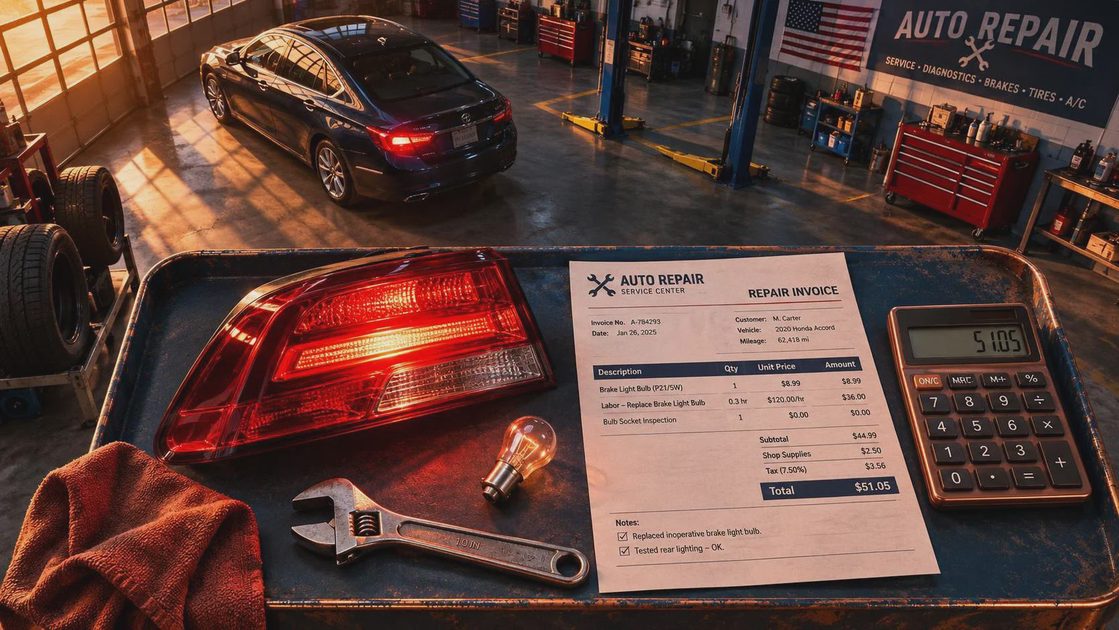
You’ve probably heard that a dead brake light always means an expensive repair. It doesn’t. A typical brake light change cost for a replaceable bulb is roughly $10 to $30 if you do it yourself, or about $40 to $100 at a shop. A sealed LED lamp assembly can run several hundred dollars or more installed. Those are planning ranges, not quotes: vehicle design, local labor rates, and the actual fault make the difference.
The first question is whether your vehicle has a replaceable bulb or an integrated LED assembly. The second is whether the light itself has failed at all. A damaged socket, blown fuse, wiring problem, or brake pedal switch can produce similar symptoms. Paying for a diagnosis before replacing an expensive assembly can be money well spent.
What goes into brake light change cost?
For a conventional bulb, the part itself is often only a few dollars, though specialty bulbs and multipacks cost more. The shop bill also includes labor, which may be based on a minimum charge rather than the few minutes it takes to turn a socket. Taxes, shop fees, and local rates can push the total above the rough range.
Access matters. Some bulbs are reached through a small panel inside the trunk or cargo area. Others require removal of the lamp housing or interior trim. A high-mounted center brake light can have a different access procedure from the lamps at the rear corners. Ask the shop which light is being replaced and whether the estimate covers one bulb or the whole assembly.
For an integrated LED unit, the light source may not be separately serviceable according to the manufacturer’s repair procedure. The replacement can include a substantial housing, and the part price varies widely. Used or aftermarket assemblies may be available for some vehicles, but fit, condition, sealing, and lighting compliance deserve scrutiny. Confirm what is included and what warranty applies before approving one.
Check the symptom before buying parts
Start with the vehicle parked safely. Have a helper press the brake pedal while you observe both rear brake lights and the center light. If you are alone, a phone recording can show which lamps illuminate. A parking-light glow is not proof the brake light works: some lamps use separate circuits or a dual-function bulb for the two jobs.
If only one side is out and the other brake lamps work, a bulb, socket, connection, or lamp assembly on that side is a reasonable place to investigate. It is not a guaranteed diagnosis. If all brake lights are out, a shared fuse, switch, power supply, or wiring fault becomes more plausible. Consult the owner’s manual for the correct fuse location and rating; fuse layouts differ by vehicle.
Check whether the light is dim, intermittent, or visibly wet inside. An intermittent lamp may point to a loose connection or corrosion, while moisture can damage a socket or electronics. Replacing a bulb without addressing the leak may leave you with the same problem again. Do not substitute a higher-rated fuse to stop repeated blowing; that can leave the circuit inadequately protected.
DIY replacement: straightforward, with limits
If the manual identifies a serviceable bulb, match its specified type and follow the removal instructions. Turn the lights and ignition off, let a hot bulb cool, and use the access panel or remove the housing as directed. Some bulb sockets twist out; others use different retainers. Forcing a stubborn plastic tab is an efficient way to turn a cheap job into a housing purchase.
Inspect the old bulb and socket. Darkened glass or a broken filament can indicate a failed incandescent bulb, but a bulb can fail without an obvious visual clue. Green or white deposits, melting, or damaged terminals call for further inspection rather than simply installing another bulb. Avoid touching the glass if the replacement instructions say not to.
Reinstall the socket and any seals properly, then check the brake lights, parking lights, and turn signals. These functions may share a housing, and an incorrectly seated socket can create a new problem. If the repair requires disconnecting wiring or removing substantial trim, follow the vehicle-specific procedure rather than guessing.
Science Corner: why a working bulb can still go dark
An incandescent bulb makes light when current heats its filament. A poor connection adds electrical resistance at the socket; that can reduce the voltage reaching the bulb and may produce heat at the connection itself. Corrosion or a loose terminal can therefore cause a dim or intermittent light even when the filament is intact.
LED lamps operate differently and generally rely on electronic circuitry to control current. A failed LED assembly is not automatically a failed LED element: the fault could be in its electronics, connector, or power supply. That distinction matters because swapping an expensive housing will not fix a damaged wire upstream.
A technician can check for power and ground at the appropriate connector using the vehicle’s wiring information. Modern lighting circuits can be more complicated than a simple battery-and-bulb circuit, so probing unfamiliar terminals or applying power at random is a poor shortcut.
What to ask a repair shop
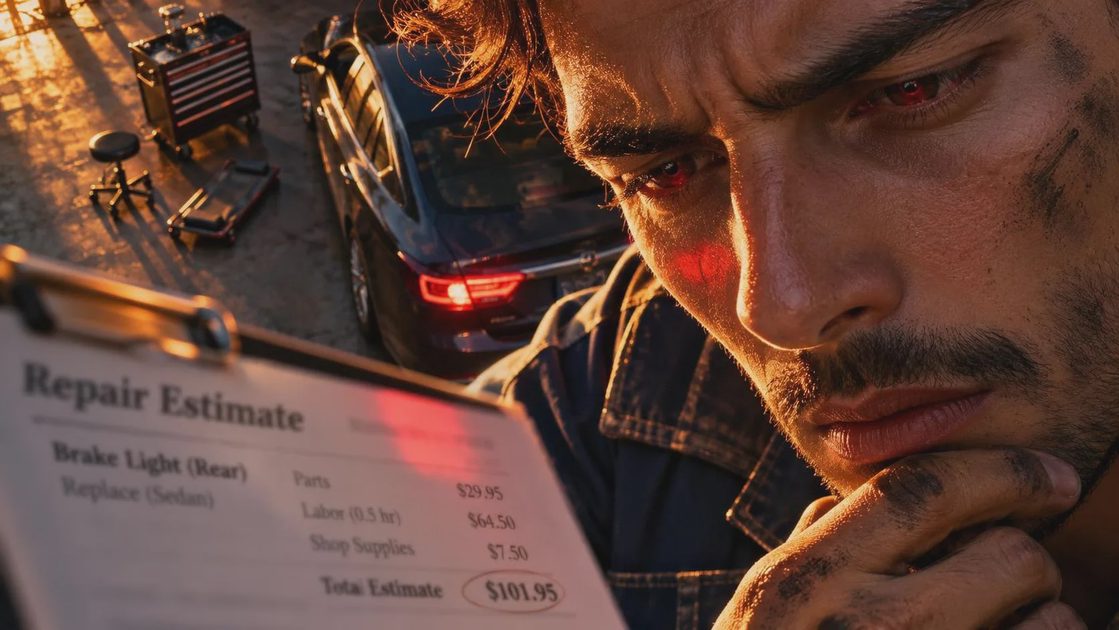
Request an itemized estimate showing the part, labor, and any diagnostic charge. Ask whether the diagnosis fee is separate from the repair and whether the replacement is a bulb, socket, or complete lamp. If the quote involves an assembly, ask why it is needed and whether the old unit showed moisture, physical damage, or a confirmed electrical fault.
A low quote is useful only if it fixes the right problem. For example, a socket repair may cost more than a bulb replacement but less than a complete lamp, and it addresses the actual fault when the contacts are damaged. Conversely, an assembly replacement may be appropriate when the integrated electronics have failed and no individual component is serviceable.
Do not put off a confirmed failure: other drivers need to see when you are slowing, and a nonworking brake light can also lead to a traffic stop. If several brake lights are out, arrange repair promptly and avoid driving until they are working. The economical move is simple: identify the failed component first, then pay for that repair—not for the most expensive possibility.

No letters yet — pray write the first.