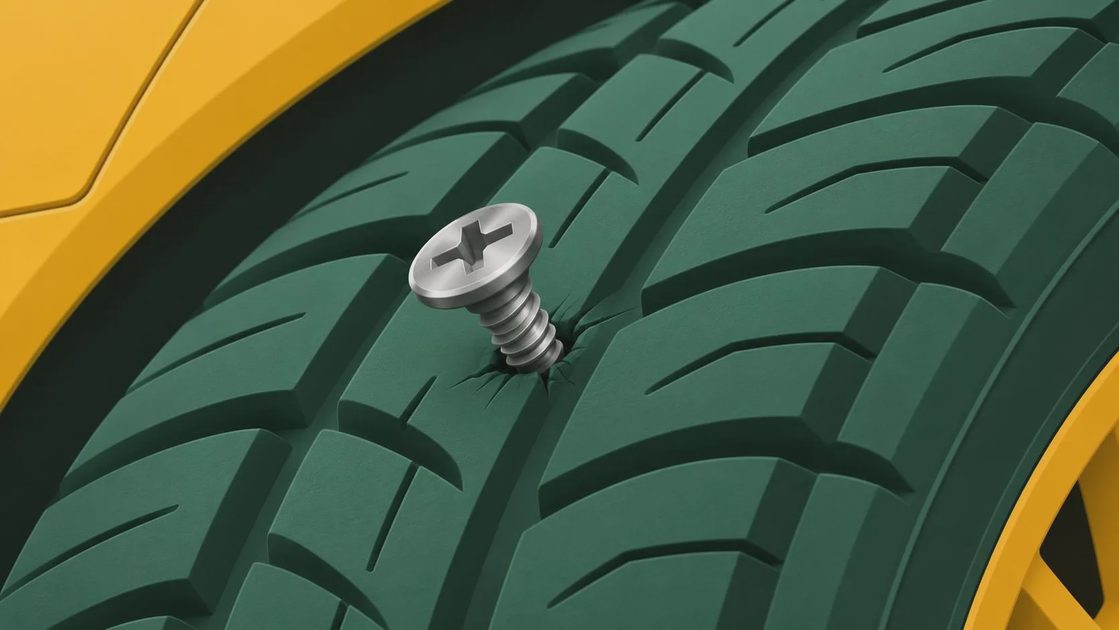
You've probably heard that a screw in car tire tread is harmless as long as the tire still looks inflated. Not necessarily. The screw may be slowing an air leak, or it may not have penetrated the tire at all. Leave it in place, check the tire's pressure when it's safe to do so, and arrange a professional inspection. If the tire is visibly low, rapidly losing air, or the screw is in the sidewall, don't drive on it; use a properly installed spare or call for assistance.
First, decide whether the car can move safely
Pull over somewhere away from traffic. If you're on a highway shoulder or another dangerous spot, prioritize getting yourself to safety and call roadside assistance rather than inspecting the tire beside moving vehicles. Don't crawl under the car or change a tire where traffic puts you at risk.
A flat tire, a pronounced bulge, a damaged sidewall, or audible air escaping calls for a spare or a tow. Driving on an underinflated tire can damage its internal structure, even over a short distance. That damage may make a puncture that was otherwise repairable into a tire replacement.
If the tire looks normal, use a pressure gauge rather than relying on appearance. Compare the reading with the cold-tire pressure on the driver's door-jamb label, not the maximum pressure molded into the tire sidewall. A low reading can indicate a leak, though a normal reading does not prove the tire is sound. Tires warm up as you drive, so a warm reading is not directly comparable to the cold-pressure recommendation.
A screw in car tire tread that is holding pressure still needs prompt attention. If you're unsure whether it's safe to reach a nearby shop, have the vehicle towed. A shop can advise you based on the pressure, damage, distance, and vehicle instructions; there is no universal safe number of miles to drive on a puncture.
Why leaving the screw alone matters
Don't pull the screw out to see what happens. If it has pierced the inner liner, removing it can let air escape faster. A repair technician can remove it after the tire is off the wheel and the damage is ready to be assessed.
Science Corner: A tire's rubber compound is elastic, but a steel screw does not create a reliable seal. Its threads and the distorted rubber around it can leave pathways for pressurized air to escape. Heat, flexing, and movement can change those pathways as the tire rolls. The visible screw head tells you very little about the size or direction of any internal injury.
You can apply soapy water around the screw and look for growing bubbles if the car is safely parked. Bubbles indicate escaping air; no bubbles do not guarantee there is no leak or internal damage. Avoid digging around the object or coating the area with oil or lubricant. Neither will repair a puncture, and contamination can complicate a proper repair.
Can a screw in car tire tread be repaired?
Often, yes—but only after the tire is removed from the wheel and inspected inside and out. A typical industry repair limit for a passenger-tire puncture is 1/4 inch in diameter in the repairable tread area. If you remember one number, make it that one. It's a maximum, not a promise: the tire maker's instructions and the condition of the tire still govern.
The location matters just as much as the size. The sidewall and shoulder—the transition between the tread face and sidewall—flex heavily and generally aren't repairable. A screw near the edge of the tread deserves particular scrutiny; don't assume it's safe because you can still see tread grooves around it.
A shop should also check for damage caused by running underinflated, including internal abrasion or separation. A small hole can still mean replacement if the casing is damaged, the puncture is too large or angled unfavorably, or an existing repair interferes. Multiple punctures and run-flat tires require particular attention to the tire manufacturer's repair limits. A run-flat tire is not automatically repairable just because it kept moving after pressure loss.
What a proper repair involves
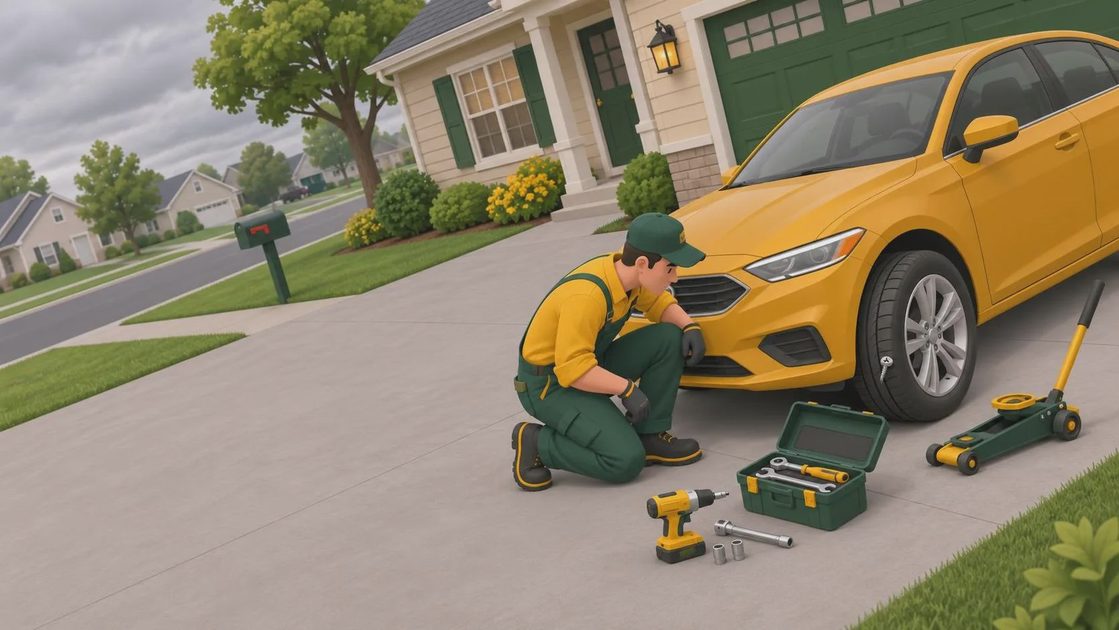
For an eligible puncture, the technician removes the tire, inspects the inner liner and casing, and repairs the injury using a suitable patch-and-stem combination or equivalent two-piece repair. The stem fills the puncture channel; the patch seals the inner liner. The technician then remounts the tire and checks for leaks.
An externally installed string plug alone is not the same as an internal inspection and permanent repair. A roadside plug may help in an emergency, but it cannot reveal whether the tire was damaged inside. Follow the repair product's directions and have the tire inspected by a professional as soon as possible; don't treat an emergency fix as proof that the tire is fit for normal service.
Sealant can also be a temporary measure, depending on the product and vehicle. Tell the shop if you've used it, and check the vehicle and sealant instructions for any restrictions involving tire-pressure sensors. Sealant cannot make a damaged sidewall or an overheated casing safe.
What to ask the tire shop
Describe where you found the object, whether the pressure warning came on, and whether the vehicle was driven while the tire was low. That history helps the technician look for damage that isn't visible from outside. Ask whether the tire was removed for inspection and whether the injury falls within the tire maker's repair guidelines.
If replacement is necessary, ask how the replacement will match the other tires in size, load rating, speed rating, and tread depth. On some all-wheel-drive vehicles, differences in tire circumference can matter to the drivetrain. The owner's manual or vehicle manufacturer can specify the acceptable difference and whether more than one tire needs replacement; it isn't an automatic rule for every vehicle.
Finally, check the pressure after the work and restore the spare and tools if you used them. A screw in car tire rubber is a small object, but the decision depends on the condition of the entire tire—not the size of the screw head you can see.



No letters yet — pray write the first.