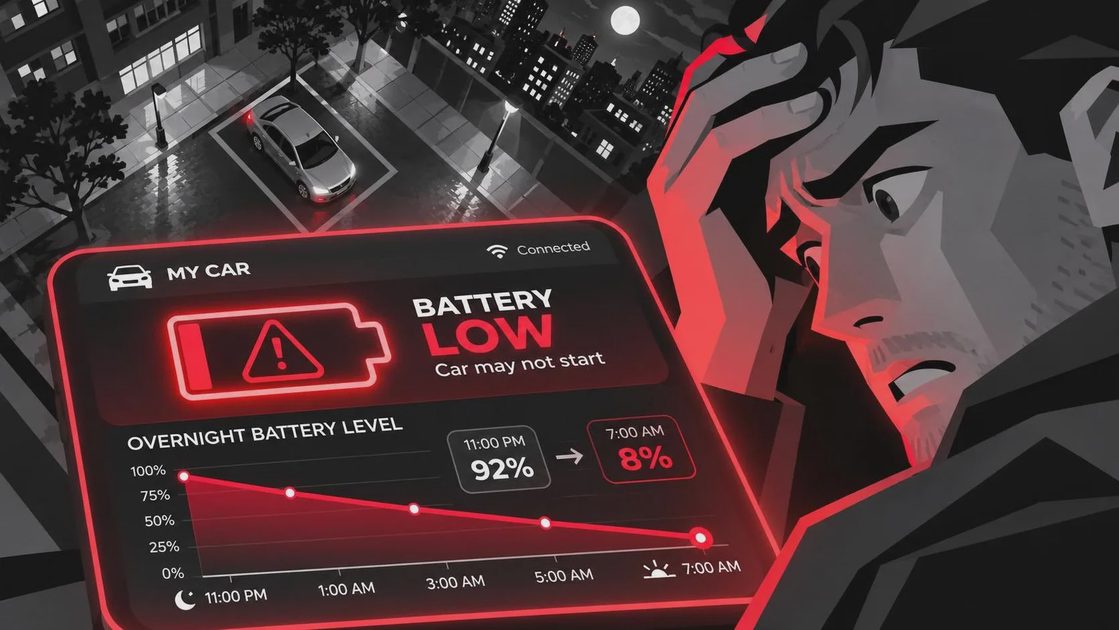
You've probably heard that a dead battery always means you need a new one. Here's what the data actually shows: a battery draining car overnight can point to an electrical load left on, a weak battery, a charging problem, or an accessory that stays awake. Start by fully charging and testing the battery, then check the charging system and look for an abnormal key-off draw. Replacing parts before those checks can leave you with the same no-start and a smaller bank balance.
Start with the symptoms and a battery check
A slow crank after the car sits for several days suggests a different problem from a battery warning light that comes on while driving. The warning light can indicate a charging-system fault; if it stays on, turn off unnecessary electrical loads and get the vehicle checked promptly. The engine may eventually stop when the battery can no longer support it.
If the battery draining car problem appears after one cold night, battery condition matters. Cold temperatures reduce a battery's ability to deliver starting current, while the starter may need more effort to turn the engine. Short trips can also leave insufficient time to replace the energy used during starting, particularly with lights, defrosters, and seat heaters running.
Look for loose terminals, damaged cables, and corrosion around the connections. Don't touch corrosion with bare hands. Wear eye protection, and follow the vehicle and charger instructions before disconnecting or charging anything. A swollen, cracked, leaking, or frozen battery is not a DIY charging project; have it inspected professionally.
A shop can charge the battery and perform a load or conductance test. Ask for the result and the battery's rated cold cranking amps, not just a verbal diagnosis. A voltage reading alone can't establish whether a battery can deliver enough current to start an engine.
Science Corner: what voltage can and cannot tell you
A conventional 12-volt lead-acid battery contains six cells. During discharge, chemical reactions convert active material in both plates toward lead sulfate while sulfuric acid is consumed. Charging reverses much of that reaction. Extended time at a low state of charge can encourage sulfation that becomes difficult to reverse, reducing usable capacity.
After a fully charged battery has rested with the engine off, roughly 12.6 to 12.8 volts is a useful ballpark for many lead-acid batteries. Around 12.2 volts generally indicates a substantially discharged battery. Temperature, battery design, and recent charging affect the reading, so consult the battery maker's guidance rather than treating either number as a pass-or-fail test.
If you remember one number from this post, make it this one: 12.2 volts is a reason to charge and investigate, not proof that the battery is ruined. A battery draining car may have a healthy battery that's repeatedly being discharged by another fault.
Check whether the car is charging
With the engine running, many conventional systems show voltage somewhere around 13.5 to 14.8 volts across the battery terminals. That's a rough diagnostic range, not a universal specification. Modern smart charging systems may deliberately vary voltage with temperature, battery condition, and electrical demand, so a reading outside that range at one moment doesn't automatically condemn the alternator.
If voltage remains low, the warning light is on, or the battery repeatedly goes flat despite regular driving, have the charging system tested under the manufacturer's procedure. The alternator, drive belt, wiring, connections, and battery sensor can all matter. A faulty alternator diode can sometimes cause a key-off drain as well as a charging problem.
Never disconnect a battery cable with the engine running to test an alternator. The voltage disturbance can damage electronics, and it isn't a reliable diagnostic method.
Find a key-off draw safely
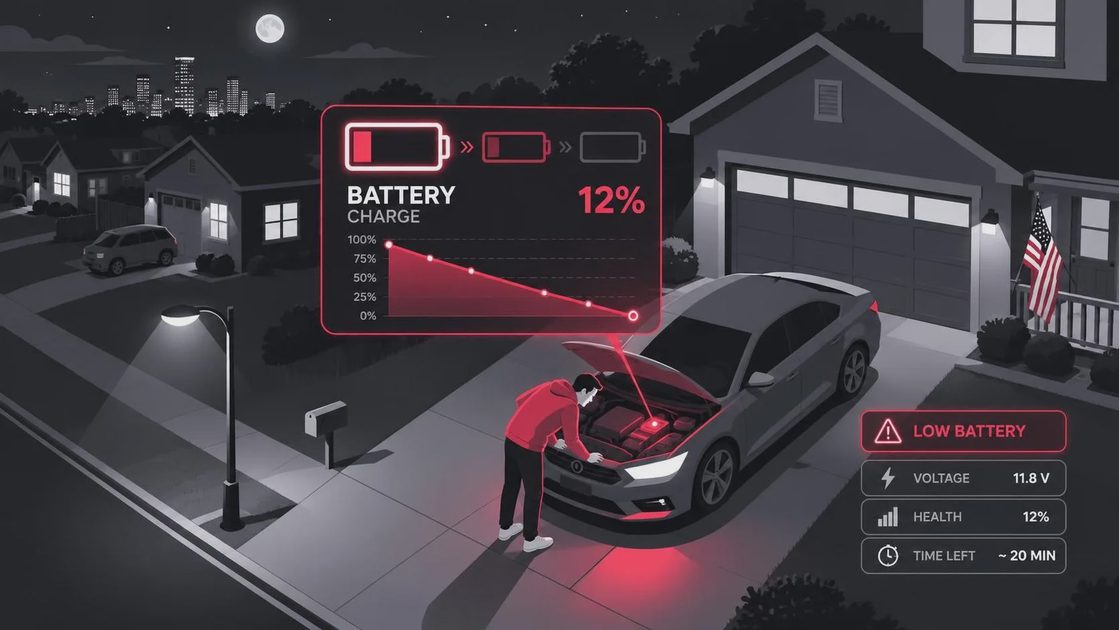
Some electrical draw is normal when a vehicle is parked: modules, clocks, and security systems need power. The useful question is whether the current drops to the manufacturer's specified sleep-mode range after the vehicle has had enough time to shut down its modules. Sleep time and acceptable draw vary by vehicle and equipment.
Before reaching for a meter, check the simple causes of a battery draining car: a cargo-area or glove-box light that stays on, an interior light switched on, and accessories plugged into a socket that remains powered. A dash camera's parking mode or an aftermarket alarm can draw power even when the ignition is off. Disconnect an accessory only if doing so is safe and won't interfere with required equipment, then see whether the problem changes.
A parasitic-draw test measures current with the vehicle off. It requires the correct meter range and fuse, a safe connection method, and patience while modules go to sleep. Opening a door or reconnecting a circuit can wake them and spoil the reading. Trying to start the engine with a meter connected for a low-current test can blow the meter fuse or damage the meter.
Because procedures vary, use the service information for the specific vehicle or leave this test to a technician. If an excessive draw is confirmed, the technician can isolate circuits and investigate the component keeping a circuit active. Simply pulling fuses at random can wake modules or erase useful clues.
Know when the battery needs replacement
A properly charged battery that fails a valid load or conductance test is a reasonable replacement candidate. So is one with physical damage. But if it tests healthy and the charging system checks out, replacing it won't fix a lamp, module, or accessory drawing excessive current while parked.
For a battery draining car after a recent replacement, check the installation details too. Some vehicles require a replacement battery to be registered or configured in the vehicle's battery-management system. The correct battery type, capacity, and terminal arrangement matter; follow the owner's manual and service procedure. That's the same principle I apply to oil specifications: read the requirement before buying the part.



No letters yet — pray write the first.