You've probably heard that a broken coil spring is just a noisy suspension nuisance. Here's what the data actually shows: when a coil spring broken condition changes ride height or allows metal to move against a tire, the problem can become a handling and safety issue. A spring supports part of the vehicle's weight, helps maintain suspension geometry, and works with the shock absorber to keep the tires in contact with the road. If you suspect a coil spring broken on your car, do not treat it like an oil-change reminder. Have the vehicle inspected before normal driving continues.
What a broken coil spring looks and sounds like
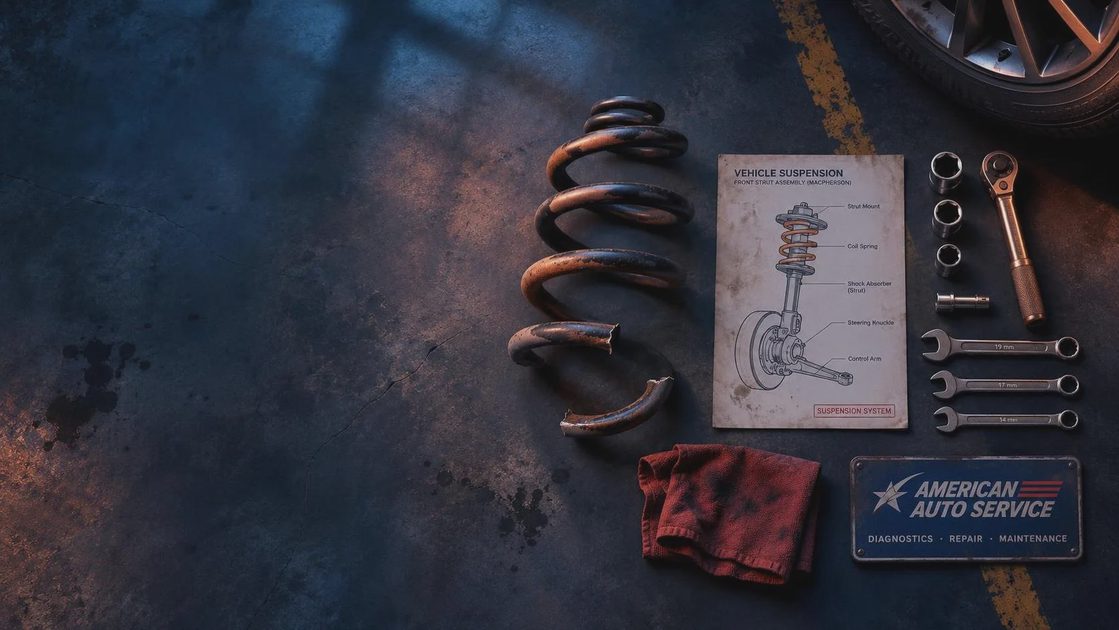
The first clue may be a sharp metallic snap from one corner of the vehicle. A driver might then notice that one side sits lower, the steering wheel is no longer centered, or the car pulls during braking. Other symptoms include a clunk over speed bumps, a scraping sound near the wheel, unusual tire wear, and a ride that feels harsher on one side. Sometimes the end of a spring breaks cleanly and remains hidden behind the tire, so a visual check from above is not enough.
Park on level pavement and compare the distance between each wheel arch and tire, but do not crawl underneath a vehicle supported only by a jack. Look through the wheel opening for a snapped coil, a displaced spring end, or fresh marks where metal has contacted another component. A broken spring can also damage a tire sidewall, brake hose, strut, or wiring. Those secondary problems can cost more than the original suspension repair.
A broken spring does not always cause dramatic symptoms immediately. Cold weather, corrosion, repeated heavy loads, and fatigue can weaken steel over time. The final break may happen when the suspension compresses over a pothole, even though the underlying damage developed for months.
Is it safe to drive with a coil spring broken?
Usually, no. A short trip at low speed to a repair shop might be possible if the spring remains securely positioned and no tire, brake, or steering part is contacting it, but that decision belongs to a qualified technician. Driving at highway speed adds suspension movement and impact loads that can turn a loose spring end into a tire puncture or loss of control.
A coil spring broken at the lower or upper seat can change camber and toe angles. That means the tire may not meet the road evenly, reducing grip and wearing the tread quickly. The vehicle may also bottom out over dips, causing the suspension to transfer shock into the strut mount, control arm, or chassis. If the tire is rubbing, the vehicle leans sharply, steering feels abnormal, or a spring fragment is loose, use a tow truck rather than driving it.
Do not attempt to cut, heat, clamp, or weld a suspension spring. Spring steel stores substantial energy, and improvised repairs can fail without warning. A professional shop uses a proper spring compressor and follows the vehicle manufacturer's service procedure. This is one of those repairs where saving a towing fee is not worth gambling with a tire and steering system.
Why the spring failed
Rust is a common cause, especially where road salt and moisture collect in the lower spring seat. Corrosion creates pits that concentrate stress in the steel. A spring can also fail from fatigue after thousands of compression cycles, from overloading the vehicle, or from impact damage caused by a severe pothole. The vehicle may have no single dramatic event that explains the break.
Science Corner: the spring is not merely a piece of flexible metal. Its rate depends on wire diameter, coil diameter, active coil count, and steel properties. As corrosion removes material, the local stress rises. That explains why a small rust pit can eventually produce a complete fracture. The shock absorber controls motion, but it does not carry the vehicle's static weight in place of the spring.
If one spring has failed from age or corrosion, the matching spring on the same axle deserves close inspection. Replacing only the damaged side can leave different ride heights and different spring rates. Many technicians recommend replacing springs in axle pairs, particularly on older vehicles, while checking struts, mounts, isolators, bump stops, and control-arm components at the same time.
Repair choices and realistic costs
The price for a coil spring broken repair depends on vehicle design, labor rates, rust, and the parts replaced. A basic spring replacement may run roughly $250 to $700 for one axle at an independent shop. Strut assemblies, seized hardware, premium suspension parts, or extensive corrosion can push the total toward $1,000 to $1,800 or more. A complete inspection and alignment can add another $100 to $250 in many markets.
A shop may quote separate prices for the spring, spring seat, strut mount, labor, and wheel alignment. Ask whether the estimate includes both sides of the axle and whether the technician found tire or brake damage. A low quote that replaces one spring but ignores a cracked mount is not necessarily a bargain. On the other hand, replacing every suspension component without evidence is not automatically good maintenance.
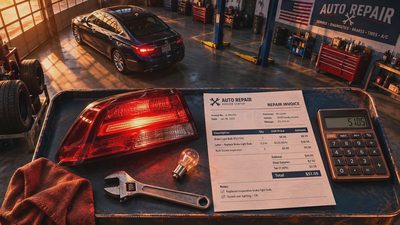
Request a written estimate with part numbers, labor hours, alignment charges, and warranty terms. Original-equipment-style parts and reputable aftermarket parts can both be reasonable when they match the vehicle's required dimensions and load rating. Read the parts specification, not the marketing label.

Will car insurance cover a broken spring?
A typical auto policy generally does not cover a spring that fails because of normal wear, corrosion, age, or a mechanical defect. Comprehensive coverage is designed for non-collision events such as theft, hail, falling objects, or certain animal impacts, not routine suspension fatigue. Collision coverage may apply if the spring damage directly resulted from a covered crash or qualifying impact, subject to the deductible.
For example, if a pothole impact clearly breaks the spring and your policy treats that event as covered collision damage, an adjuster could review the claim. If a rusted spring finally snaps while the vehicle is parked, insurance usually treats the repair as maintenance. Coverage rules and deductibles differ, so document the event with photographs, the repair diagnosis, and any road-hazard evidence before authorizing major work.
Do not report ordinary wear as a collision. That can create claim complications and does not change the mechanical cause. If another driver's crash damaged your suspension, the other driver's liability coverage could be relevant, depending on fault and state rules. Ask your insurer how the deductible compares with the repair estimate before filing a small claim.
What to do after finding the damage
Start by stopping in a safe location and checking whether the tire is rubbing. Photograph the affected corner, ride-height difference, tire sidewall, and any visible fracture. Avoid loading passengers or cargo into the vehicle. Call a repair shop and describe the exact symptoms rather than simply requesting a spring; a full suspension inspection matters.
When the vehicle arrives, ask the technician to inspect both springs on the axle, the strut or shock, upper and lower seats, bump stop, brake hose, ABS wire, tire, and alignment. After replacement, confirm that the steering wheel is centered and that the shop performed an alignment when required. Keep the invoice and photographs if you plan to discuss an insurance claim or a warranty question.
A coil spring broken failure is inconvenient, but it is usually a manageable repair when handled promptly. The safest path is diagnosis first, proper spring replacement, and an alignment check afterward. Compare estimates using the actual parts and labor listed, not just the final number. Read the spec, not the sales pitch, and get the suspension back to the ride height and geometry the vehicle was designed to use.



No letters yet — pray write the first.