You've probably heard that replacing a brake rotor is a simple, inexpensive job. Here's what the data actually shows: the rotor itself is often affordable, but labor, brake pads, vehicle design, and related hardware can change the final bill quickly. If you are asking how much does a rotor cost for a car, expect roughly $40 to $180 for one replacement rotor and about $250 to $700 for a typical axle service at a repair shop.
That range is broad because a rotor is not a universal part. A compact sedan with solid rear rotors is a different job from a heavy SUV with ventilated, coated, or performance rotors. The safest estimate starts with the vehicle's year, make, model, engine, and whether you need one rotor or both rotors on an axle.
What the rotor price usually includes
For many mainstream cars, an economy aftermarket rotor costs approximately $40 to $90. A mid-grade rotor with better corrosion protection or tighter manufacturing tolerances may run $80 to $150. Premium applications, including large trucks, European vehicles, and performance cars, can reach $150 to $350 per rotor. Dealer parts are often higher, sometimes adding $30 to $100 over an equivalent aftermarket option.
When considering how much does a rotor cost for a car, remember that shops normally recommend replacing rotors in pairs on the same axle. Braking balance matters, and installing one new rotor beside a heavily worn rotor can produce uneven friction and pedal feel. The parts portion for two ordinary rotors might therefore be $100 to $300 before pads, labor, shop supplies, and taxes.
A rotor is also only one part of the friction system. Brake pads press against its faces, calipers apply the clamping force, and hardware keeps the assembly aligned. If the old pads are deeply grooved or contaminated, new rotors alone are a poor repair. A quote that includes pads may look expensive but can be mechanically more sensible than a rotor-only replacement.
Why labor changes the final bill
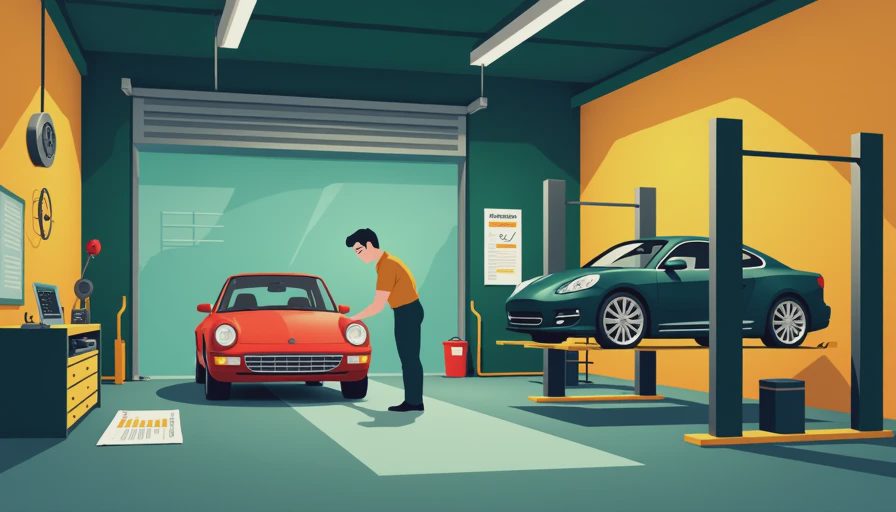
Labor commonly adds $100 to $300 per axle, depending on local rates and access to the brake assembly. An independent shop in a lower-cost market may charge $90 to $140 per hour, while a dealership or high-overhead urban facility can exceed $180 per hour. Most straightforward front-brake jobs take about one to two hours, although seized fasteners, electronic parking brakes, and rust can add time.
This explains why how much does a rotor cost for a car has two different answers. Online parts pricing describes the component. A repair estimate describes a complete service. A $70 rotor can become a $450 invoice after two rotors, pads, labor, hardware, cleaning, and shop fees are included.
Ask whether the quote covers both sides of the axle, new pads, brake cleaner, replacement clips, caliper inspection, and disposal fees. Also ask whether the shop measured rotor thickness and runout or simply replaced parts based on appearance. A professional estimate should identify the symptom and the measurement that supports the repair.
When a rotor really needs replacement
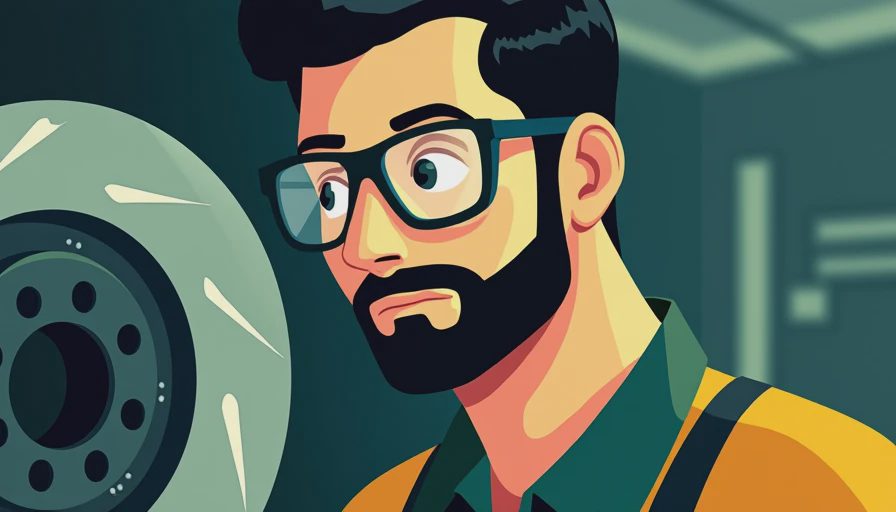
Rotors wear gradually, but they do not always need replacement at every pad change. The key measurements are thickness, lateral runout, and surface condition. The minimum allowable thickness is usually stamped on the rotor hat or listed in the service information. If machining would take the rotor below that limit, replacement is required.
Visible blue spots can indicate excessive heat, but color alone does not prove a rotor is ruined. Light surface rust after rain is normal and usually disappears after several controlled stops. Deep grooves, cracks, severe pitting, a pronounced lip, or a brake pedal pulsation linked to excessive runout are stronger reasons for replacement.
Science Corner: pedal pulsation is often blamed on a rotor being “warped.” In many cases, the issue is uneven friction material transfer or thickness variation. Heat, improper bedding, or holding the pedal firmly after a high-temperature stop can create uneven deposits. That does not make the symptom imaginary; it means diagnosis should include measurement instead of relying on a visual guess.
Front versus rear brake costs
Front rotors commonly cost more because front brakes handle a larger share of a vehicle's stopping work. A typical front axle service may total $300 to $650, while a rear service may fall between $250 and $550. Trucks, crossovers, and vehicles with electronic rear parking brakes can sit above those ranges.
If you are comparing how much does a rotor cost for a car across online listings, confirm the axle position. Front and rear rotors may have different diameters, thicknesses, venting, bolt patterns, and parking-brake arrangements. Some rear rotors also contain a drum-style parking-brake surface inside the rotor hat, increasing labor if that mechanism is rusted or misadjusted.
Performance rotors are another area where marketing can blur the price difference. Cross-drilled and slotted designs are not automatically better for a daily commuter. They can be useful in specific heat and pad combinations, but a correctly sized plain or coated rotor is often the sensible choice for normal street driving. Read the vehicle specification, not the most dramatic box copy.
Can insurance pay for brake rotors?
Routine rotor wear is maintenance, so collision and comprehensive auto insurance generally do not pay for it. Brake components gradually consumed through normal driving are the owner's responsibility. A policy might respond when a rotor is damaged as part of a covered collision, subject to the deductible and the claim terms. If the repair is $450 and the deductible is $500, filing a claim would not make financial sense.
This distinction matters when estimating how much does a rotor cost for a car after an incident. Ask the repair facility to separate accident-related damage from ordinary pad and rotor wear. An insurer may evaluate the covered damage, while maintenance items remain outside the claim. Keeping inspection photos and the written estimate can help clarify that separation.
How to control the repair bill
Start by getting two written estimates that identify the exact part numbers and labor hours. Compare the warranty, rotor thickness, corrosion protection, and pad formulation rather than choosing only the lowest dollar figure. A reputable aftermarket part from a recognized supplier can be appropriate, but the critical match is the vehicle specification and friction-system compatibility.
Second, ask for measurements. You want the rotor thickness, any runout reading, pad thickness, and an explanation of noise or vibration. Third, replace both rotors on the affected axle when the design and condition call for it. Fourth, ask whether caliper slides move freely and whether the brake hose shows damage. A new rotor cannot correct a sticking caliper.
Finally, ask how the brakes will be bedded after installation. Proper bedding establishes an even transfer layer between pad and rotor. Hard repeated stops immediately after installation can create unnecessary heat and uneven deposits. If you are still wondering how much does a rotor cost for a car, the most useful answer is the one tied to measurements, complete parts, and honest labor—not a tempting price for an unspecified single component.
A sensible budget for a standard car is $300 to $600 per axle at an independent shop. Save the estimate, service records, and part details for future maintenance. Read the spec, not the bottle—and for brakes, read the measurements, not just the invoice.

No letters yet — pray write the first.