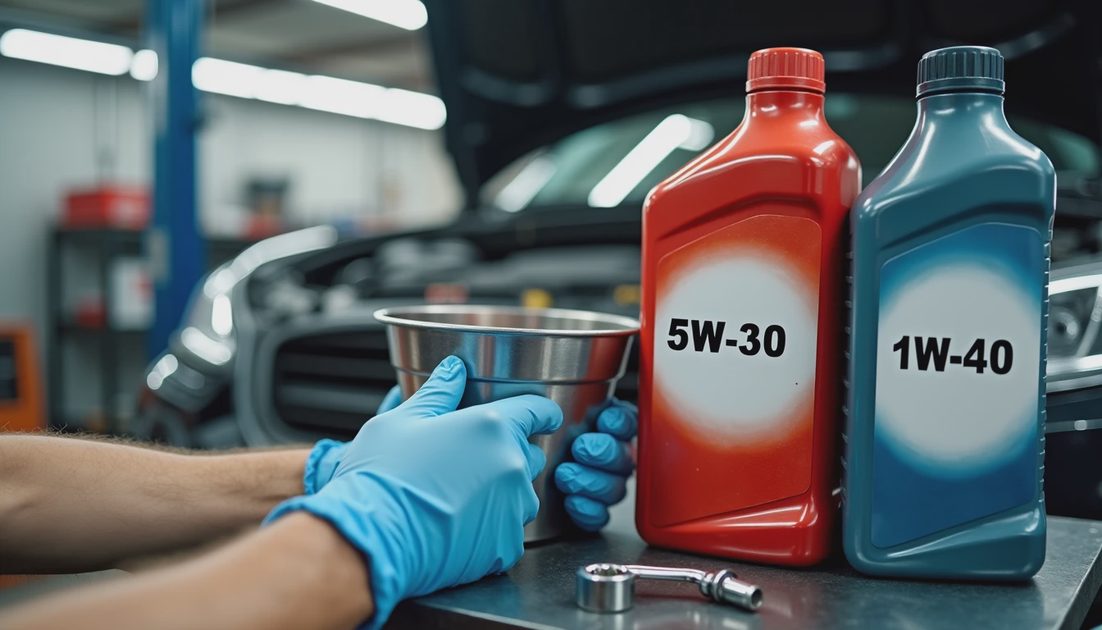
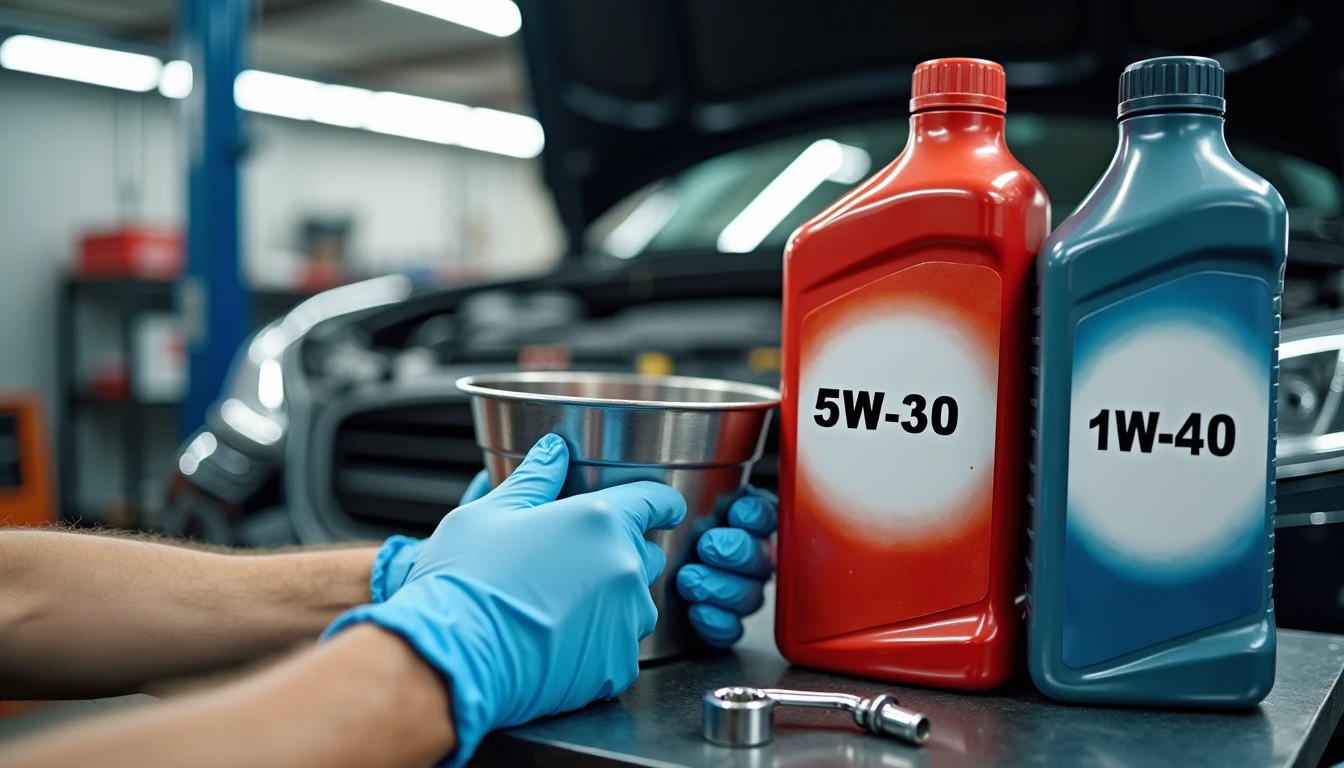
Pick 5W-30 vs 10W-40 the right way to avoid cold-start wear and unnecessary drag
Why This Matters (cost/safety/longevity payoff)
You’ve probably heard that “thicker oil always protects better.” Here’s what the data actually shows: the wrong viscosity (how thick the oil is at a given temperature) can either starve your engine on cold starts or waste power and fuel once it’s hot—and both situations increase wear over time.
Engine oil doesn’t just “lubricate.” It has to flow fast enough to reach bearings and valvetrain parts right after startup, then stay thick enough under heat and load to keep a protective film between metal surfaces. Choosing between 5W-30 and 10W-40 is mainly a decision about those two moments:
- First 10 seconds after a cold start (most wear-sensitive time)
- Sustained hot operation (where oil film thickness matters)
Done right, this is one of the highest-impact, lowest-cost decisions you make for engine life.
What You Need to Know (specs, types, intervals)
The viscosity grade printed on the bottle—like 5W-30 or 10W-40—is defined by SAE J300, the international standard for engine oil viscosity grades. That standard sets test methods and viscosity limits.
What “5W-30” means under SAE J300
- “5W”: the winter (low-temperature) grade. It specifies the oil’s maximum allowable cold viscosity (measured by cold-cranking simulator and pumping tests) so the oil can still be pumped and the engine can crank at low ambient temperatures.
Lower W number = better cold-start flow.
- “30”: the oil’s kinematic viscosity band at 100 C (roughly operating temperature) and an implied HTHS floor.
SAE 30 kinematic viscosity at 100 C: about 9.3–12.5 cSt.
What “10W-40” means under SAE J300
- “10W”: thicker than 5W at low temperatures and passes the cold tests at a warmer temperature than 5W oils.
- “40”: higher kinematic viscosity at 100 C and usually a higher HTHS floor in practice.
SAE 40 kinematic viscosity at 100 C: about 12.5–16.3 cSt.
Practical translation:
- The first number + W controls cold-start behavior.
- The second number tells you how thick the oil is at running temperature.
How It Works (what actually happens inside your engine)
Let me show you what actually happens inside your engine, without the marketing fog.
Step 1: Cold start is a flow problem before it’s a protection problem
At startup, especially when the engine is cold, the oil is thicker and slower to move. Your goal is to build a protective oil film quickly.
- 5W-30 flows more easily at low ambient temperatures than 10W-40.
That means:
- Less crank resistance
- Faster oil circulation to bearings
- Less wear caused by delayed oil film formation in the first seconds
Shop-teacher analogy: think syrup vs runny honey. In the fridge, syrup moves slow; runny honey starts moving sooner. The W number tells you which one “pours” sooner when it’s cold.
Step 2: At operating temperature, film thickness and drag trade off
Once the engine is hot, you’re balancing two realities:
- Thicker oil (higher kinematic viscosity and often higher HTHS) can maintain a stronger hydrodynamic film—that’s the load-bearing oil wedge separating parts like crankshaft journals and bearings.
- But thicker oil also increases viscous drag, which can cost power and fuel.
10W-40 stays thicker at 100 C than 5W-30, because its SAE 40 viscosity band is higher than SAE 30.
Step 3: High heat and long runs introduce shear and oxidation
Under prolonged, high-temperature use, oils can lose effective viscosity in two major ways:
- Shear: mechanical breakdown of viscosity-index improvers (polymers) used to make multi-grade oils. When these polymers shear, the oil can behave like a thinner grade than intended.
- Oxidation: chemical breakdown accelerated by heat, which can thicken oil, create deposits, and contribute to sludge.
The key point from the data: thicker doesn’t automatically mean more stable. Formulation matters.
Science Corner: the chemistry behind “thicker protects better”
- Hydrodynamic film: A thicker oil (higher kinematic viscosity at 100 C and higher HTHS, meaning high-temperature high-shear viscosity) generally builds a thicker separating film under load. That can reduce metal-to-metal contact when things are hot and stressed.
- Viscosity-index improvers (polymers): Multi-grade oils use these to behave like a lower-viscosity oil when cold and a higher-viscosity oil when hot. Under stress, those polymers can shear and permanently reduce viscosity.
- Oxidation control: Additive packages (antioxidants, detergents, dispersants) and base oil quality control oxidation and deposits. A thicker grade doesn’t automatically resist oxidation better—the additive package and base oil do the heavy lifting.
Common Mistakes (myths, pitfalls, warnings)
Myth: “10W-40 always protects better because it’s thicker”
Reality: 10W-40 generally provides a stronger film at operating temperature, but it’s also slower to flow cold than 5W-30. If your engine sees a lot of cold starts, that cold-flow penalty matters.
Myth: “Any 10W-40 beats any 5W-30”
Reality: Shear stability and oxidation resistance are formulation-dependent. The source point is dead-on: a well-formulated synthetic 5W-30 can be very shear-stable, and a poorly formulated 10W-40 could shear down more.
Pro Tip: If you’re comparing oils, don’t guess—check the product technical data sheet and look specifically for HTHS values and any published viscosity data. (The source explicitly recommends checking HTHS numbers and the technical data sheet.)
Mistake: Ignoring how you actually use the vehicle
- Lots of short trips + cold mornings? Cold flow becomes priority → the W rating matters more.
- Sustained high heat/high load? Hot viscosity margin matters → the second number matters more.
Bottom Line (summary, recommended action)
You’ve probably heard that the second number is all that matters. Here’s what the data actually shows: 5W-30 buys you better cold-start flow, while 10W-40 buys you more thickness at operating temperature (SAE 40 is about 12.5–16.3 cSt at 100 C vs SAE 30 at ~9.3–12.5 cSt).
Use this framework:
- Prioritize the W number if cold starts and fast oil circulation are your main risk.
- Prioritize the hot grade (30 vs 40) if sustained heat and load are your main risk.
- And don’t assume grade alone tells the whole story—shear stability, oxidation resistance, and HTHS depend on the formulation, so verify with the technical data sheet when possible.