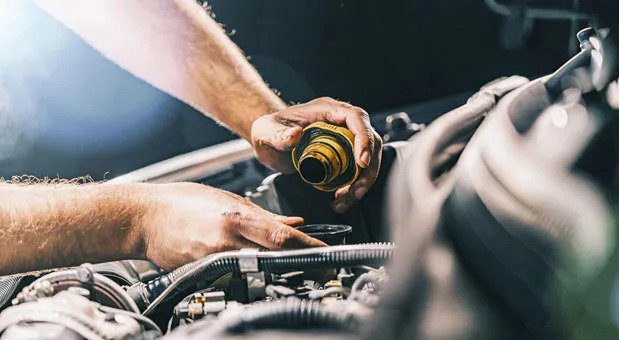
Excessive oil burning is a widespread issue that machinery and equipment owners are likely to encounter at some point. Since oil serves as the primary means of lubricating and protecting the engine, consuming too much of it exposes both the engine and the owner to significant performance and financial consequences.
Multiple factors can contribute to this engine condition — ranging from using an incorrect oil viscosity to clogged or deteriorated compression or oil rings. Additionally, the engine's design and its operating conditions play a role in these occurrences.
In most cases, excessive oil burning happens inside the engine's combustion chamber. It can occur either downward through the valves, or upward once oil passes beyond the piston ring-pack.
Each of these pathways can lead to serious machinery problems. For this reason, understanding both the causes of engine oil burning and how to stop it is essential. Doing so not only allows you to address the root cause but also helps ensure the machinery continues to perform at its best.
Let's examine this more closely.
It is worth noting that engines are engineered to consume a certain amount of oil as part of their normal operation. This means that not every instance of elevated oil consumption signals a malfunction. Engine manufacturers specify the acceptable level of oil consumption under defined conditions. Before treating oil burning as a problem, always refer to the engine manufacturer's guidelines.
That said, when increased oil burning falls outside the equipment's normal work cycle, it may stem from one or more of the following causes.
Oil naturally burns and evaporates when subjected to high temperatures. This is precisely why selecting an oil with the appropriate viscosity for the application is critical. Using the wrong viscosity will cause oil to burn at a significantly faster rate, requiring more frequent replacement to keep the equipment adequately protected.
One approach is to switch to an oil with a higher operating temperature viscosity. However, it is absolutely essential to verify that the heavier oil still satisfies the engine manufacturer's specifications.
Low-quality engine oil poses a genuine threat to the engine and its components. Such oils typically feature inferior additive systems, including substandard anti-wear additives and detergents. The consequences can be severe and sometimes irreversible. Low-quality oils tend to degrade rapidly at high operating temperatures. Once viscosity breaks down, the oil film thickness decreases, causing friction and wear to escalate. This triggers oil oxidation, which leads to further deterioration of the oil.
Closely tied to the previous cause is the degradation or wear of piston rings. The function of piston rings is to seal the combustion side of the piston so that all generated energy drives the piston downward rather than escaping into the crankcase.
When operating temperatures climb too high, low-quality oil begins to decompose, combust, and form carbon deposits on the piston rings. At that point, both the compression rings and especially the oil control rings can no longer fulfill their purpose. In practical terms, they lose their ability to scrape oil from the cylinder wall as the piston travels downward — a process that should keep oil on the lower side of the piston from migrating upward where it would combust or burn.
Another failure point is found in the cylinder head, specifically at the valve stem seals. As an engine accumulates hours and miles, these seals deteriorate and begin leaking, saturating the valve with oil. That oil eventually seeps down into the lower part of the engine or the combustion chamber, settling on top of the piston — where it burns. In passenger cars, a telltale sign of this problem is bluish-black smoke exiting the exhaust pipe.
If engine oil burning goes unaddressed, it can trigger a range of additional problems, including:
An engine that burns oil signals underlying machinery issues capable of seriously undermining overall performance. Several potential causes exist, and identifying the correct one can prevent far more serious damage down the road. Whether the issue lies with the engine oil selection or with a mechanical component, resolving it provides assurance that your engine is operating at peak efficiency. Furthermore, it extends the service life of your machinery, improves equipment reliability, and by managing oil consumption, saves both time and money — ultimately improving total cost of ownership and profitability.
Valvoline™ offers a comprehensive lineup of high-quality engine oils engineered to support any industrial and heavy-duty application. With more than 150 years of expertise and innovation in lubrication technology and products, Valvoline has earned the confidence of millions of customers who continue to choose Valvoline to keep vehicles and equipment moving across the world.


No letters yet — pray write the first.