You've probably heard that any puddle under a car means trouble. Here's what the data actually shows. In the oil puddle vs water puddle question, the biggest mistake I see is assuming every spot on the driveway is engine oil. A lot of the time, it's just water from air conditioner condensate. But sometimes that dark spot really is a lubricant leak, and catching it early can save an engine, alternator, belt, or a whole lot of cleanup. The trick is to stop guessing and use a few basic observations: color, feel, spread pattern, smell, and where the puddle forms under the vehicle.
Start With Location, Color, and Timing
The fastest way to sort out oil puddle vs water puddle is to look at where the fluid lands and when it appears. Water from the A/C usually drips near the passenger-side firewall area after the air conditioner has been running, especially on hot, humid days. It tends to form a small clear puddle that evaporates over time. If you park after a summer drive and see a clean wet spot that disappears later, that is often normal condensate, not a leak.
Oil behaves differently. Engine oil, transmission fluid, and other lubricants do not evaporate like water. They leave a persistent stain. Fresh engine oil is usually amber to brown; used oil trends dark brown to black. It also shows up closer to the oil pan, drain plug, filter, valve cover leak path, or wherever airflow pushes it rearward. If the spot is still there the next morning and feels slick, move leak diagnosis higher on your list.
One more useful clue: water spreads fast into the concrete and leaves a damp edge. Oil tends to sit on top longer, with a denser center and a greasy outline.

Touch and Smell Tell You More Than Color Alone
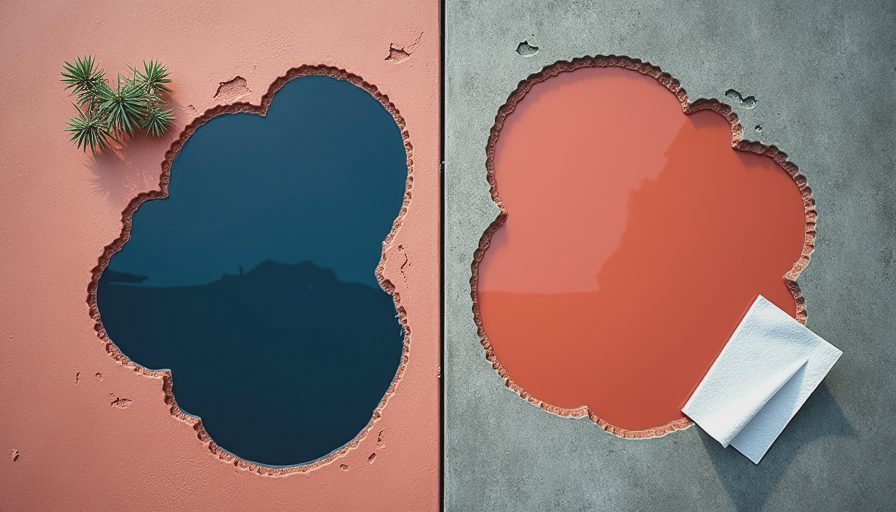
Color can fool you because dirty water on asphalt can look dark, and clean synthetic oil can look surprisingly light. That is why I tell readers to use a white paper towel or cardboard test. Blot a little of the puddle. Water will soak in and dry with little residue. Oil will leave a translucent greasy halo that stays behind.
Then use your fingers carefully. Water feels thin and disappears as it evaporates. Oil feels slippery and persistent. Even a small amount of engine oil contains base oil plus an additive package, so it has more body than water. Those additives include detergents, dispersants, anti-wear chemistry, antioxidants, and viscosity modifiers, and they affect how the fluid films on your skin or on paper.
Science Corner:
Water is a polar molecule. Motor oil is a nonpolar hydrocarbon mixture with additives dissolved or suspended in it. That chemistry difference is why water beads, evaporates, and absorbs into paper differently, while oil creates a lasting slick film.
Smell helps too. Water from A/C condensate is mostly odorless. Oil may smell petroleum-like, burnt, or slightly sharp if it has spent time in a hot engine.
Common Fluids People Mistake for Oil
Not every oily-looking puddle is engine oil. In any honest oil puddle vs water puddle check, you should also keep other automotive fluids in mind. Coolant can look green, orange, pink, blue, or even nearly clear depending on formula and age. It feels slightly slippery but thinner than motor oil, and it often has a sweet smell. Brake fluid is slick and clear to amber, but it can damage paint and should be treated seriously. Power steering fluid and automatic transmission fluid may look red, red-brown, or dark if aged.
If you remember one number from this post, make it this one: water evaporates, oil stains. That simple rule will correctly sort a lot of driveway mysteries.
Still, location matters. A puddle near the middle front of the car may be engine oil. One farther back could be transmission-related. A spot directly under the radiator area might suggest coolant. Read the pattern before you read the panic.
Also remember that modern undertrays can move fluid. A valve cover seep can travel before it drips, so the puddle location is a clue, not a verdict.
A Simple At-Home Test You Can Do in Two Minutes
If you suspect a leak, slide a clean sheet of cardboard under the car overnight. In the morning, note where the drops landed and what they look like. This is one of the cheapest diagnostic tools in the garage. Water spots will usually be clear, spread quickly, and begin drying at the edges. Oil spots stay glossy longer and develop that classic greasy feel.
Next, compare the puddle with fluids already in the vehicle. Check engine oil on the dipstick. If the color and texture are similar, that is useful evidence. Do the same visually with coolant in the overflow tank, but never open a hot cooling system. If your oil level is falling between checks, the puddle deserves attention.
For DIY owners, a flashlight inspection around the oil pan gasket, drain plug, filter housing, valve cover, and timing cover can reveal wet areas. Dust stuck to oily residue is a giveaway. You do not need a lab to identify a leak path; you just need patience and decent lighting.
When a Puddle Is Normal and When to Act Fast
In the oil puddle vs water puddle decision, normal is usually limited to A/C water and, in cold weather, plain condensation from the exhaust system. Those are not lubrication failures. They are part of how the vehicle operates.
Act fast if the puddle is oily, growing, or accompanied by warning lights, smoke, burnt-oil smell, or a dropping dipstick level. An engine can survive a minor seep for a while, but a pressurized leak from a filter seal, cooler line, or drain plug problem can turn expensive quickly. Oil on belts or hot exhaust parts also creates secondary problems beyond simple fluid loss.
My rule is straightforward: if the spot dries away, monitor it; if it leaves a slick stain, diagnose it. Read the spec, not the bottle, and in this case read the evidence, not the assumption. A driveway puddle is not a mystery once you know how fluids behave.
If you're trying to protect your engine, checking a suspicious puddle early is a lot cheaper than ignoring it. A minute with cardboard and a flashlight beats guessing every time.




No letters yet — pray write the first.