You've probably heard that brake rotors are expensive because they are safety-critical parts. Here's what the data actually shows: how expensive are brake rotors depends less on the shiny disc itself than on vehicle design, rotor quality, labor time, and whether related brake parts also need attention. On many everyday vehicles, replacing one axle's rotors and pads lands somewhere between $300 and $800 at an independent shop. Performance, luxury, or heavy-duty applications can push that total beyond $1,200.
What brake rotors do and why prices vary
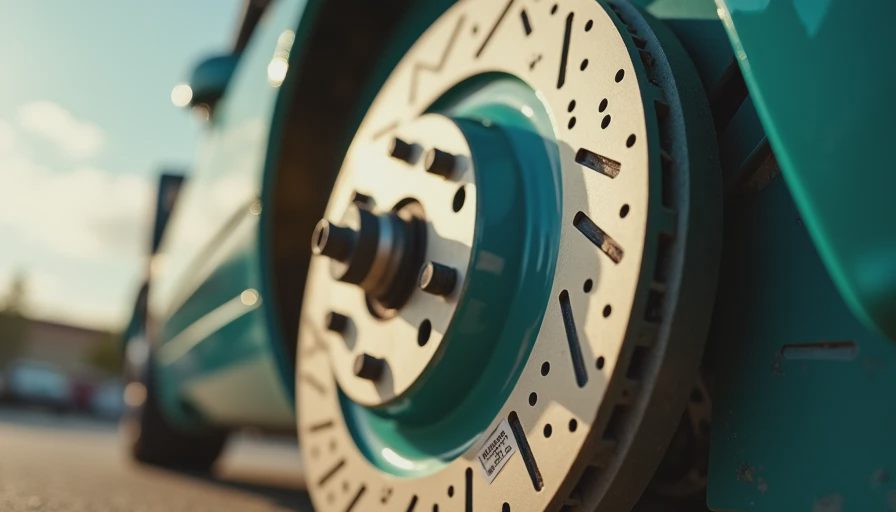
A brake rotor is the disc clamped by the brake pads when you press the pedal. Friction converts the vehicle's motion into heat, and the rotor must absorb and release that heat without excessive distortion. A basic solid rotor for a compact sedan might cost $40 to $90 each. A vented rotor for a midsize SUV commonly costs $70 to $180 each. Larger two-piece, slotted, or high-performance rotors can run $250 to $600 each before installation.
The price difference is not automatically marketing fluff. Rotor diameter, thickness, metallurgy, cooling vanes, coating, and manufacturing tolerances all affect cost. A heavier rotor generally contains more iron and takes more material and energy to produce. Some vehicles use an integrated parking-brake drum inside the rear rotor, which adds manufacturing complexity. Others use electronic parking brakes that require a service procedure before the caliper can be retracted.
Vehicle packaging matters, too. A four-cylinder commuter with common 16-inch wheels usually has inexpensive, widely available parts. A European sedan with large wheels, electronic wear sensors, and tightly packed suspension components can require more expensive hardware and additional labor. That is why a quote should identify the exact part numbers, not merely say “new brakes.”
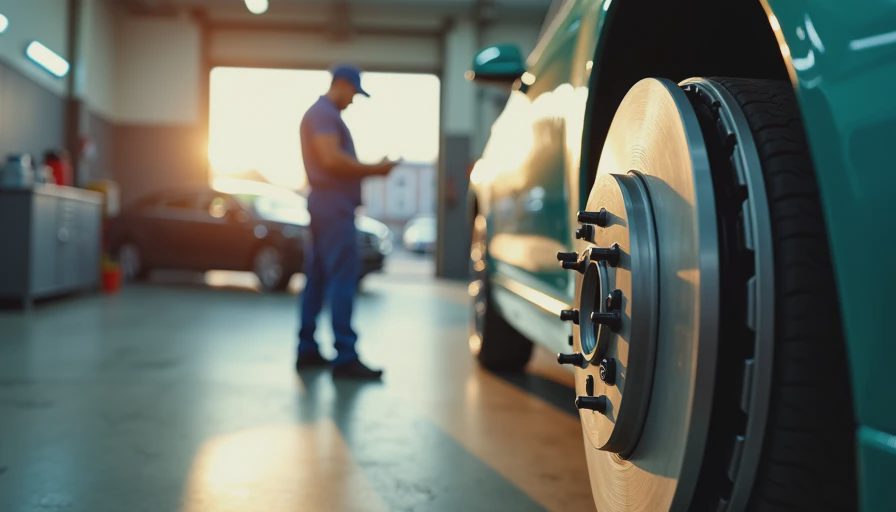
How expensive are brake rotors at a shop?
When people ask how expensive are brake rotors, they often mean the complete repair rather than the bare parts. Shops usually recommend replacing pads and rotors together on the same axle. New pads need a reasonably smooth friction surface, and installing fresh pads against deeply grooved or heat-damaged rotors can produce noise, uneven bedding, or poor pedal feel.
For a typical front-axle job, parts may total $140 to $350, while labor may add $150 to $400. A rear-axle job can be similar, although some vehicles have smaller rear brakes. Dealership pricing is often higher because of labor rates and original-equipment parts, while a mobile mechanic or independent garage may quote less. A low price is not useful if it excludes hardware, shop supplies, taxes, or a required electronic parking-brake reset.
Ask for an itemized estimate that separates rotors, pads, caliper hardware, labor, and any diagnostic charge. If a shop quotes $1,000 for one axle on an ordinary commuter, ask what makes the application unusual. If another quote is $180, ask whether it includes both rotors, both pads, installation, and proper inspection. Comparing line items is more informative than comparing the final number alone.
Science Corner: heat, friction, and rotor wear
Rotors do not wear in exactly the same way engine oil wears. A brake rotor loses material through pad contact, corrosion, and repeated thermal cycling. Every stop creates a temperature gradient between the hot friction surface and the cooler interior. Repeated hard stops can produce heat checking, blue discoloration, or thickness variation. A rotor can still look acceptable through a wheel opening while measuring below the manufacturer's minimum thickness.
The minimum thickness is often cast or stamped on the rotor, or listed in a service manual. A micrometer measurement at several points is better than a visual guess. If the thickness varies around the disc, the driver may feel pedal pulsation or steering-wheel shake during braking. The cause is not always a “warped” rotor; uneven pad deposits, hub runout, or installation debris can create similar symptoms.
If you remember one number from this post, make it the specified minimum thickness, not a universal dollar amount. The correct measurement determines whether resurfacing or continued use is safe. Many modern rotors have too little usable material for resurfacing, so replacement is often the more practical repair.
When replacement is urgent
Noise alone does not prove a rotor is ruined. A light scrape after rain can be surface rust, and many pads use a wear indicator that creates a high-pitched warning sound. However, grinding, severe vibration, a burning smell, pulling during braking, or a pedal that feels unusually soft deserves prompt inspection. Grinding can mean the friction material is gone and the backing plate is cutting into the rotor.
A visible ridge around the outside edge is another reason to measure rather than guess. Cracks, deep grooves, heavy rust on the braking surface, and blue heat spots are stronger evidence of damage. On vehicles that sit outside in salty or humid conditions, corrosion can reduce braking performance even when mileage is low.
Do not replace only the visibly damaged side of an axle unless a qualified technician has a specific reason. Braking components are normally serviced in pairs so stopping force remains balanced from left to right. The caliper should also slide correctly, and its piston and rubber boot should be checked. A sticking caliper can destroy new pads and rotors in a short time.
How to reduce the total repair cost
The safest savings usually come from preparation, not the cheapest available rotor. Use the vehicle identification number to confirm fitment, rotor diameter, thickness, and parking-brake design. Read the service information for torque specifications and bedding instructions. Parts-store listings can contain multiple options that appear compatible but differ in dimensions or sensor provisions.
You do not need a premium rotor for every car. A properly dimensioned, corrosion-resistant replacement from a reputable manufacturer can be sensible for normal commuting. Slotted or drilled designs are not automatically better for a quiet daily driver. They can change noise, pad wear, and cost without solving a real problem. Read the specification sheet, not the marketing slogan.
If you perform the work yourself, budget for a torque wrench, brake cleaner, a safe lifting method, and time to clean the hub face. Rust between the hub and rotor can create runout. Never rely on a jack alone, and never allow a brake caliper to hang from its flexible hose. Those safety details matter more than saving $80 in labor.
A sensible brake estimate
So, how expensive are brake rotors in practical terms? For a common sedan, expect roughly $300 to $800 for pads and rotors on one axle. For a crossover or truck, $450 to $1,000 is a realistic planning range. Specialty vehicles can exceed those figures because of larger components and higher labor requirements. The estimate should explain the difference.
Before approving work, confirm whether the quote covers one axle or all four corners, whether the pads are included, and whether the technician measured rotor thickness and checked caliper operation. Ask about the warranty on parts and labor. A clear invoice makes it easier to compare a dealer, independent shop, and do-it-yourself parts purchase.
The answer to how expensive are brake rotors is therefore not one universal price. It is a combination of engineering requirements and repair scope. Measure the parts, identify the real symptom, compare complete estimates, and choose components by documented specifications. That approach protects both your stopping distance and your wallet.

No letters yet — pray write the first.