You've probably heard that an **oil puddle under car after oil change** automatically means the new oil itself is faulty or the engine suddenly developed a major leak. Here's what the data actually shows. In most cases, a fresh puddle right after service is simpler than that: spilled oil left on the splash shield, a loose drain plug, a damaged crush washer, or an oil filter sealing problem. The good news is that the first few checks are quick and logical. The bad news is that ignoring the puddle can turn a minor sealing mistake into a low-oil event, and that is where expensive damage starts.
Start with the simple explanation before assuming the worst
When I see an oil puddle show up immediately after service, I do not start by blaming viscosity grade, synthetic oil chemistry, or some dramatic engine failure. I start with the service points that were touched. An oil change opens two common leak paths: the drain plug at the oil pan and the oil filter seal. If the plug is under-torqued, cross-threaded, or missing the correct washer, oil can drip steadily. If the filter gasket is dry, pinched, double-stacked, or the filter is not tightened correctly, the leak can be surprisingly fast.
Also check for simple spillover. A few ounces of oil spilled during filling can run down the valve cover, onto the exhaust shield, or into the undertray. Then it drips later and looks worse than it is. That is why location matters. A puddle near the centerline of the car often points toward the drain area. A puddle farther forward or near the filter location can suggest a filter issue. Look before you panic.
The drain plug and washer are the first hard checks
If there is an **oil puddle under car after oil change**, the drain plug deserves inspection first because it is both easy to disturb and easy to get wrong. Many oil pans use a crush washer or sealing washer designed to deform once and create a seal. Reusing a flattened washer is a common cause of drips. Over-tightening is not better. It can distort the washer, strip threads, or crack a softer pan.
Get the vehicle safely raised and use a light. You are looking for fresh wet oil right at the drain plug head and around the sealing surface. If oil beads there, the leak source is likely confirmed. If the area above the plug is dry but the plug itself is oily, that still strongly suggests the seal is not doing its job. On many vehicles, the correct fix is simply the right washer and the right torque, using the manufacturer spec instead of guessing.
Science Corner: A drain plug seal is mechanical, not magical. It depends on surface finish, clamp load, and gasket deformation. Oil viscosity grade like 0W-20 versus 5W-30 usually does not create a brand-new leak by itself right after an oil change. A disturbed seal does.
Oil filter leaks can range from a drip to a rapid loss
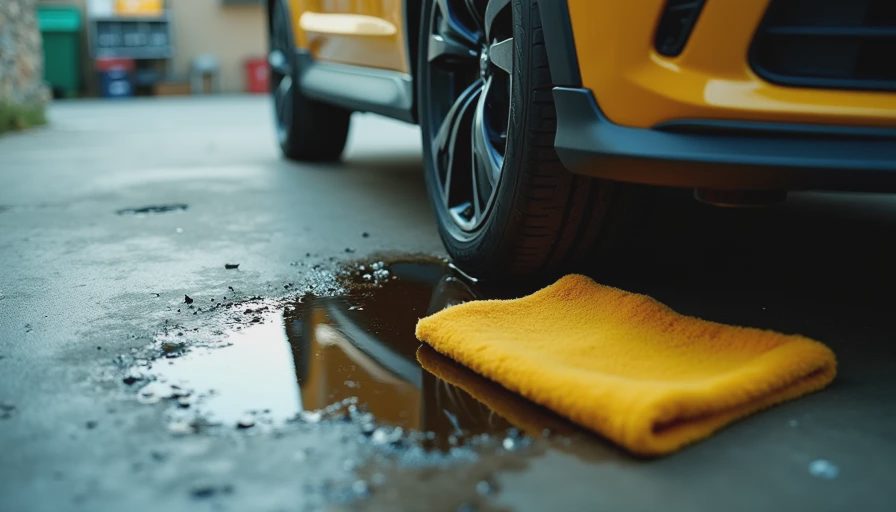
The second big suspect behind an **oil puddle under car after oil change** is the filter. Spin-on filters rely on a rubber gasket sealing against a clean mounting pad. If the old gasket sticks to the engine and the new filter goes on top of it, you get a double-gasket condition. That can leak badly, sometimes within minutes of startup. Even without that mistake, a filter installed crooked or tightened poorly can weep.
Check the filter body and the mounting base. If oil appears above the filter or tracks around its perimeter, stop running the engine until you know why. A filter leak can dump oil faster than many drivers expect. Prefilling the filter is not the issue here; gasket seating is. Lightly oiling the new gasket helps it slide and compress evenly. Then tighten to the filter maker's installation guidance, usually hand-tight plus a fraction of a turn, not gorilla-tight with a wrench unless the design specifically requires a tool.
If you remember one number from this post, make it this one: verify oil level on the dipstick before and after any leak check. A small stain on cardboard can represent less oil than it looks like, but a real filter leak can drop the sump quickly.
Not every puddle is engine oil, so identify the fluid correctly
A lot of people are certain they have engine oil on the ground when the fluid is actually old residue, transmission fluid, or even water from the air conditioner. Before you chase the wrong problem, inspect the fluid. Fresh engine oil is usually amber to brown, depending on the product and engine condition. Used oil darkens quickly because detergents and dispersants hold soot and oxidation products in suspension. That dark color alone does not prove a crisis.
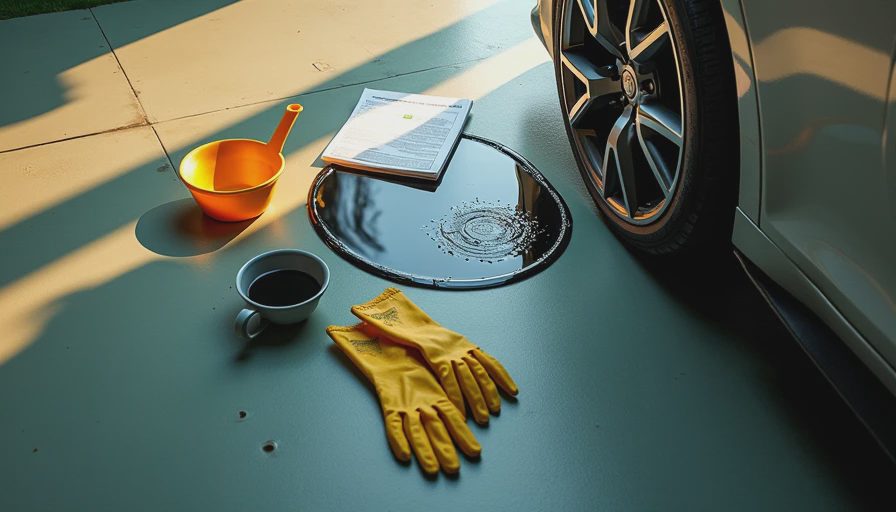
Rub a small drop between gloved fingers or dab it on a white paper towel. Engine oil feels slick and leaves a translucent stain. If it smells sharply burnt, it may have hit a hot exhaust part. If the puddle is reddish, very thin, or appears nowhere near the oil service points, broaden the diagnosis. The phrase **oil puddle under car after oil change** can send you toward the wrong system if you never confirm the fluid.
Read the spec, not the bottle. API SP, the correct SAE viscosity grade, and the additive package matter for engine protection, but they do not excuse a leak caused by poor sealing practice.
When oil type gets blamed, the chemistry usually tells a different story
You've probably heard that synthetic oil is "too thin" and causes leaks after service. Here's what the data actually shows. Fresh oil that meets the required viscosity grade is not suddenly escaping because it is synthetic. If a leak appears right after a change, the timing points first to a disturbed gasket, damaged O-ring, incorrect filter fitment, or pre-existing sludge that had been masking a weak seal.
Science Corner: Motor oil contains base oils plus an additive package that includes detergents, dispersants, anti-wear agents, antioxidants, and more. Detergent chemistry can clean deposits over time, but it does not instantly create a puddle in the driveway ten minutes after service. A leak that shows up immediately is almost always mechanical. This is why I focus on the filter gasket, drain plug washer, and housing cap O-ring on cartridge systems before discussing chemistry.
On cartridge filter housings, the same rule applies. An O-ring in the wrong groove, nicked during installation, or tightened off-spec can leak. Many modern housings are plastic, and over-torque can damage them.
What to do next and when to stop driving
If you find an **oil puddle under car after oil change**, do not keep driving and hope it burns off unless you have positively confirmed it was only spilled oil residue. First, check the dipstick on level ground. If the oil level is below the safe range, top up with the correct viscosity and API rating before doing anything else. Second, inspect the drain plug, filter, and surrounding surfaces after wiping them clean. Then run the engine briefly and watch for fresh oil.
If the leak is active from the filter or drain area, the fix is usually immediate: reseal, replace the washer or O-ring, or reinstall the correct filter properly. If threads are damaged, the repair gets more serious and should not be delayed. If oil is dripping onto the exhaust, stop driving until it is corrected because smoke and odor are the mild outcome; fire risk is the one you do not want to test.
Most importantly, do not let embarrassment delay action if the oil change was DIY or shop-performed. Leaks after service are common enough that a careful reinspection solves many of them quickly. The engine does not care who made the mistake. It only cares whether it keeps its oil.




No letters yet — pray write the first.