You've probably heard that used tires are automatically dangerous. Here's what the data actually shows: are used tires good depends less on the fact that they were previously mounted and more on their age, condition, storage history, repairs, and remaining tread. A carefully inspected tire with plenty of usable life can be a sensible way to reduce replacement costs. A cheap tire with hidden damage can be a serious gamble.
I have spent years evaluating fluids, materials, and failure modes in the lab, and tires follow the same basic rule as motor oil: read the specification and inspect the evidence, not the sales pitch. A tire's history matters, but the sidewall and tread can reveal a great deal.
When are used tires good value?
Used tires can make financial sense when you need a temporary replacement, are selling a vehicle soon, drive relatively few miles, or want matching tires for a car that has one damaged tire. A lightly worn tire from a recent production year may cost 40% to 60% less than a comparable new tire. That discount is meaningful when a full set would otherwise cost $500 to $900 before mounting and balancing.
The strongest candidates have even wear, no visible cracking, a clean sidewall, and at least 6/32 inch of tread remaining. New passenger-car tires often start around 10/32 or 11/32 inch, although the original depth varies by design. At 4/32 inch, wet-weather performance is becoming a concern; at 2/32 inch, the legal replacement threshold in many situations is approaching. Legal tread is not the same as comfortable safety margin.
Are used tires good for a long-term daily driver? Sometimes, but I would want a clear date code, known brand and model, consistent wear, and a professional inspection before treating them as a dependable set.
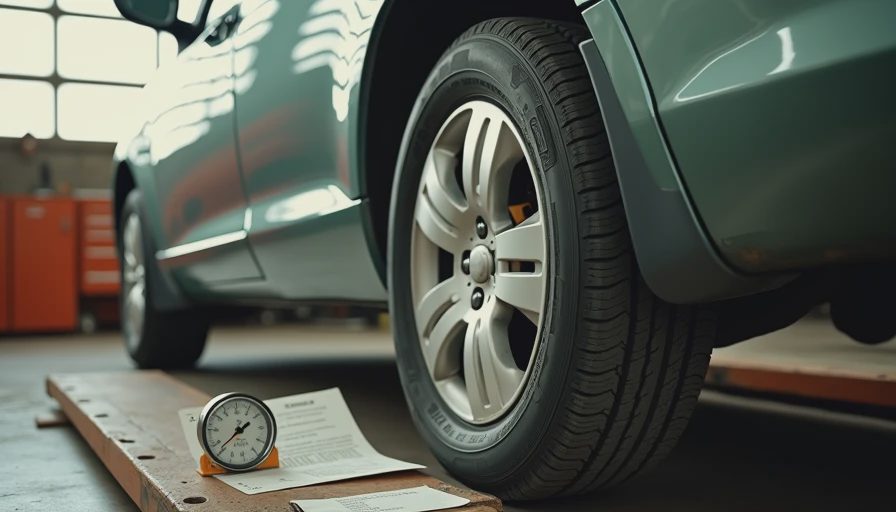
Inspect the DOT date code before the tread
The date code is one of the most important checks. On the tire sidewall, look for the letters DOT followed by a series of characters. The final four digits identify the production week and year. For example, 2319 means the tire was manufactured in the 23rd week of 2019.
Rubber compounds age even when a tire sits unused. Heat, oxygen, ultraviolet exposure, and ozone gradually change the polymer structure. A tire stored outdoors in a hot climate can age differently from one stored indoors, and a tread that looks deep does not prove the casing is healthy. I become cautious with tires around six years old and would not install an unknown-history tire near or beyond the commonly cited ten-year maximum service guidance used by several tire manufacturers.
Check all four tires, not just the best-looking one. A seller may show the outer shoulder while hiding the date code on the inner sidewall. If the code is missing, scraped away, or impossible to read, that uncertainty should reduce the price substantially or end the conversation.
Science Corner: tread depth measures remaining rubber, while tire age reflects the condition of the entire rubber-and-cord structure. Those are related, but they are not interchangeable measurements.
Look for damage that tread depth misses
A good inspection uses more than a penny. Run your hand across the tread and feel for cupping, scalloping, or a sawtooth pattern. These signs can point to worn shocks, poor alignment, or neglected rotations. Uneven wear often creates noise and may return quickly after installation if the vehicle problem remains.
Inspect both sidewalls for bulges, cuts, deep scratches, exposed cords, and weather checking. A bulge usually indicates damaged internal cords, often from a pothole or curb impact. That tire should not be used. Fine surface lines are also a reason for caution when they are widespread, deep, or located in the sidewall flex area.
Ask whether the tire has been repaired. A professional puncture repair in the tread's repairable area can be acceptable when performed correctly with a plug-patch combination after removing the tire for inspection. A rope plug installed from the outside is not proof of a permanent repair. Repairs in the shoulder or sidewall are generally not considered safe. If the seller cannot explain the repair, assume the risk is yours.
Are used tires good after a plug repair? The answer depends on location, method, and inspection. Do not let a low price replace a proper internal examination.

Match the tire to your vehicle
Even an undamaged tire can be wrong for the application. Match the size shown on the driver's door-jamb placard or owner's manual, not merely the size of the tire currently installed. Confirm the load index and speed rating as well. A tire marked 215/55R17 94V has a 215-millimeter width, a 55-series aspect ratio, a 17-inch wheel diameter, a load index of 94, and a V speed rating.
For vehicles with all-wheel drive, matching circumference is especially important. Replacing one tire with a model that has substantially more tread than the others can create rolling-radius differences. Some manufacturers require very close matching, while others specify a tolerance. Read the vehicle manual before buying one used tire for an AWD system.
Run-flat construction, winter tires, all-season tires, and performance tires also have different tradeoffs. A used winter tire with shallow remaining tread may lose the snow traction that made it valuable. Four worn matching all-season tires can be more predictable than a mismatched collection of bargain tires.
Compare the real cost, not the sticker price
A used tire listed at $45 may become a $90 purchase after mounting, balancing, disposal fees, and a valve stem. Some shops charge extra for difficult mounting or refuse tires with questionable repairs. Ask for the complete installed price before agreeing.
Compare that total with a new tire carrying a current date code and a warranty. If the used option saves only $20 per tire but has half the remaining tread and no protection against defects, the economics are weak. On the other hand, a set of four recent tires with 8/32 inch remaining tread can be attractive if inspection and installation are included.
Brand name alone does not settle the question. Compare the tire's original performance category, traction rating where provided, load index, speed rating, and measured tread. Read the spec, not the bottle; in this case, read the sidewall, not the seller's description.
A simple buying procedure
Before paying, photograph each sidewall and record the four-digit date code. Measure tread in several grooves across each tire, then look for uneven wear and embedded objects. Ask directly about punctures, accidents, storage, and previous use. Have an independent tire shop inspect the tires before mounting if the seller allows it.
If the seller pressures you to decide immediately, cannot provide the size or date, or offers a tire with a bulge, sidewall repair, exposed cord, or severe cracking, walk away. A tire failure can cause vehicle damage, loss of control, towing costs, and a far larger bill than the money saved.
So, are used tires good? They can be, when their age, structure, tread, specifications, and history all check out. They are not automatically bad, and they are not automatically a bargain. My practical standard is simple: buy documented condition, not hope. If the inspection raises one major safety question, spend the money on a known, properly matched tire instead.



No letters yet — pray write the first.