You've probably heard that you need to change your oil every 3,000 miles. Here's what the data actually shows: modern engines and oils can often go much longer. The right oil change frequency by mileage depends on your vehicle, driving habits, and oil type. Let's cut through the marketing and look at the science.
The Old 3,000-Mile Rule Is Dead
For decades, 3,000 miles was the standard oil change interval. That recommendation came from the days of conventional oils with limited additive packages and carbureted engines that ran rich, contaminating oil faster. Today's engines are built to tighter tolerances, and modern oils—especially synthetics—can handle extended drain intervals. Most automakers now recommend intervals between 5,000 and 10,000 miles for normal driving. Sticking to 3,000 miles is often a waste of money and oil.
What the OEM Says Matters Most
Your owner's manual contains the manufacturer's recommended oil change frequency by mileage for two driving conditions: "Normal" and "Severe." For most drivers, "Normal" applies—highway commuting, moderate temperatures, no towing. Under normal conditions, intervals typically range from 7,500 to 10,000 miles with synthetic oil. The "Severe" schedule (short trips, extreme cold, dusty roads, towing) usually calls for 5,000 miles or less. Read the spec, not the bottle.
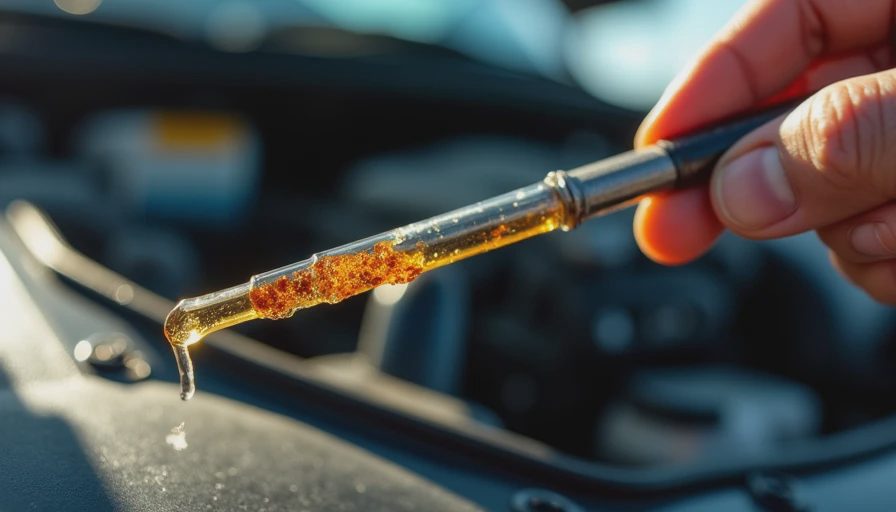
Severe Driving: When to Shorten the Interval
Even with modern oils, severe driving accelerates oil degradation. Short trips where the engine never reaches full operating temperature allow fuel and moisture to accumulate in the oil. Stop-and-go traffic increases shear on the viscosity improvers. If you primarily drive in congested cities, make frequent short trips under five miles, or live in extreme climates, you should lean toward the severe schedule. In those cases, an oil change frequency by mileage of 5,000 miles is still conservative for most cars running synthetic.
Oil Type: Conventional vs. Synthetic
Base oil quality directly affects how long the oil can protect. Conventional (Group I/II) oils have limited thermal and oxidative stability, making them best suited for shorter intervals—think 3,000–5,000 miles. Synthetic (Group III, IV, or V) oils resist breakdown at high temperatures, flow better in cold, and hold their viscosity longer. A high-quality synthetic can easily handle 7,500–15,000 miles in normal service before the additive package wears out. That's why many OEMs now pair synthetic fills with 10,000-mile intervals. If you're using a full synthetic, you can stretch the oil change frequency by mileage beyond what conventional allows.
Science Corner: Why synthetic lasts longer. Synthetic base oils have a more uniform molecular structure, which reduces friction and resists oxidation. They also contain more robust additive packages, including detergents and dispersants that hold contaminants in suspension longer. Used oil analysis shows that synthetic oils often maintain their viscosity grade beyond 10,000 miles in normal driving, while conventional oils may shear down sooner.

Used Oil Analysis: Let the Lab Decide
If you want to optimize your oil change frequency by mileage precisely, send a sample to a lab like Blackstone Laboratories or Oil Analyzers every 10,000 miles. A basic analysis ($30–40) measures viscosity, oxidation, fuel dilution, and wear metals. The report will tell you whether the oil still has life left. For example, a 2022 Toyota Camry running synthetic might show excellent viscosity retention at 8,000 miles, suggesting you can extend to 10,000. Meanwhile, a 2015 Ford F-150 towing regularly might show high iron particles at 5,000 miles, signaling that the severe interval is correct.
A Practical Guide to Setting Your Interval
- Check your owner's manual for both normal and severe schedules.
- Match your driving habits to the severe list—if you tick two or more items, use the severe interval.
- Choose your oil based on the recommended viscosity and API rating (e.g., API SP).
- For conventional oil, start at 5,000 miles; for synthetic, start at 7,500 miles.
- Adjust based on used oil analysis or your vehicle's oil life monitor (which uses an algorithm based on driving conditions).
- Never exceed 15,000 miles between changes, even with top-tier synthetics, as the filter may become saturated.
If you remember one number from this post, make it this one: the ideal oil change frequency by mileage for most modern cars on synthetic oil is 7,500 miles under normal driving. That's safe, cost-effective, and backed by engineering data. For severe service, drop it to 5,000 miles. And if you're still on the 3,000-mile plan, you're likely over-spending on oil changes without gaining extra engine life.
Real-World Scenarios: Comparing Intervals by Driving Profile
To see how the oil change frequency by mileage plays out in everyday life, consider three distinct driving profiles. Profile 1: Highway commuter. You drive 30 miles each way on the interstate, no towing, moderate climate, and mostly steady speeds. This fits the normal schedule, so an interval of 7,500–10,000 miles with synthetic oil is appropriate. Profile 2: Urban warrior. You navigate stop-and-go traffic daily, make frequent trips under five miles, and often idle. Severe conditions apply; stick to 5,000 miles even with synthetic to prevent sludge and wear. Profile 3: Weekend warrior. You drive only on weekends, logging fewer than 3,000 miles per year, but most trips are short. Here, time matters more than mileage—change the oil annually regardless of odometer reading to remove moisture and acids. These examples show that matching your driving habits to the correct schedule is the smartest approach. When in doubt, use the severe interval; it costs a little more but provides a safety margin.
Final Thoughts
Oil change intervals aren't one-size-fits-all. By understanding the variables—driving conditions, oil quality, and OEM specs—you can select an oil change frequency by mileage that fits your car and your wallet. Trust the laboratory data and the engineering behind the API starburst, not the quick-lube sign that says 3,000 miles.




No letters yet — pray write the first.