You've probably heard that premium fuel is automatically better for every engine. Here's what the data actually shows: octane and detergent quality are separate properties. When drivers ask what gas stations have top tier gasoline, they are usually asking about the detergent standard, not whether they should switch from regular to premium. TOP TIER is a fuel-performance standard created by automakers for gasoline sold in the United States and Canada.
The standard applies to detergent levels and deposit-control performance. It does not mean every participating station sells the same fuel from the same refinery, and it does not make a 93-octane product appropriate for an engine designed for 87. Read the pump label, follow your owner's manual, and treat TOP TIER as one useful specification rather than a magic badge.
What TOP TIER gasoline actually means
TOP TIER gasoline contains a higher detergent requirement than the minimum detergent level required by the Environmental Protection Agency. Detergents help reduce deposits on fuel injectors, intake valves, and combustion-related surfaces. The program also includes deposit-control testing intended to show that the fuel protects engine cleanliness under defined conditions.
Science Corner: Gasoline is not simply a liquid energy source. It contains a base hydrocarbon blend plus additives such as detergents, corrosion inhibitors, antioxidants, and sometimes friction modifiers. A detergent package does not raise octane. Instead, it helps keep fuel-system surfaces cleaner as the engine accumulates miles.
The word “premium” creates confusion here. Premium usually describes octane, commonly 91 or 93 in many areas. TOP TIER describes detergent performance. A station can sell TOP TIER regular, midgrade, and premium gasoline, assuming each grade is covered by the retailer's participation. Conversely, a high-octane fuel is not automatically TOP TIER.
If you remember one number from this post, make it this one: use the octane number specified by the automaker. Use the detergent standard as a quality filter, not as a reason to pay for unnecessary octane.

What gas stations have top tier gasoline?
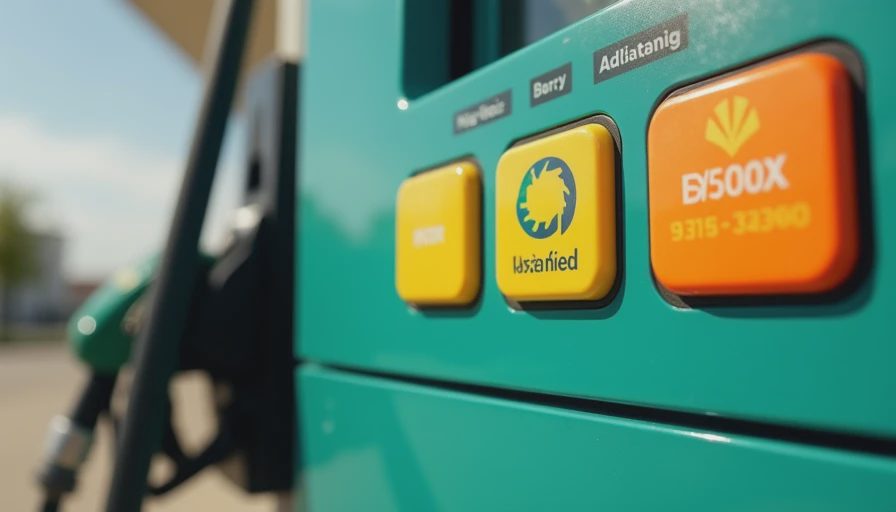
The official TOP TIER program maintains a current retailer list and station locator, which is the most reliable way to answer what gas stations have top tier gasoline in your area. Retailer participation can change, and a familiar logo on a canopy is not enough if you are traveling or looking at an independently operated location.
Major brands that have appeared on TOP TIER retailer lists include Costco, Chevron, Shell, Exxon, Mobil, QuikTrip, 76, Phillips 66, and several others. Availability is not identical in every state. Some branded retailers participate across much of their network, while individual stations, leased locations, or fuel suppliers can create exceptions.
Look for the TOP TIER logo on the pump or station signage, then confirm the retailer through the official online locator. If the pump has no clear designation and the station does not appear in the locator, do not assume the fuel qualifies. This simple check is more useful than relying on a color, price, or brand reputation.
How to choose fuel without overpaying
Start with your owner's manual or fuel-door label. If the vehicle requires regular 87-octane gasoline, buying 91 or 93 generally brings no routine benefit unless the manufacturer specifically recommends or allows it for a performance purpose. In a turbocharged engine, the manual may specify premium, recommend it for maximum power, or permit regular with reduced performance. Those instructions matter more than internet arguments.
Next, compare the same octane grade at participating stations. A TOP TIER regular fuel at 87 octane can be a sensible choice for a commuter vehicle. If the price difference is 10 to 30 cents per gallon, calculate it across your tank size and driving pattern rather than assuming the most expensive pump is best. On a 15-gallon fill, a 20-cent difference equals $3. That is a modest cost for some drivers, but it is still not a reason to buy fuel your engine does not need.
Fuel turnover also matters. A busy station is more likely to receive fresh deliveries and move product regularly, although turnover alone does not prove detergent compliance. Keep the receipt, avoid topping off after the pump clicks, and use a properly closed fuel cap. Those habits reduce spills and vapor loss while making the fuel system easier to monitor.
What the standard can and cannot fix
TOP TIER gasoline can help limit new deposit formation, but it is not an engine flush. It will not repair a leaking injector, clean a severely fouled intake-valve system instantly, remove varnish from a damaged fuel pump, or cure an ignition misfire. If the check-engine light is flashing, diagnose the fault instead of hoping a different fuel grade will solve it.
Deposit behavior also depends on engine design. Port-injected engines wash the back of intake valves with fuel, while many direct-injection engines spray fuel directly into the combustion chamber. In a direct-injection engine, gasoline detergent cannot clean the back of the intake valves in the same way because fuel does not contact those surfaces. Crankcase ventilation, oil consumption, driving conditions, and maintenance also influence deposits.
That distinction explains why two owners can report different results after switching fuel. One may notice smoother operation because a marginal injector was becoming restricted. Another may notice nothing because the original fuel was already adequate and the engine was healthy. Used-oil analysis cannot directly measure every fuel deposit, so avoid treating a single personal experiment as laboratory proof.
A practical fuel-quality routine
When I am filling a vehicle for a long trip, I use a straightforward process. First, I check the required octane and whether the automaker specifies detergent-qualified fuel. Second, I verify the station or retailer in the official TOP TIER locator. Third, I choose the lowest-cost grade that meets the vehicle's requirement. Fourth, I note unusual symptoms such as hard starting, hesitation, pinging, or a change in fuel economy.
If a problem appears after refueling, save the receipt and record the date, station, pump, and octane. Do not immediately add a random bottle of cleaner. Some products are useful in specific situations, but mixing unneeded aftermarket additives with an already balanced fuel package adds uncertainty. A technician can test fuel pressure, injector operation, ignition, and evaporative-emissions components more effectively than guesswork.
For fleet operators, consistency is valuable. Use a documented list of approved stations, review fuel receipts, and track maintenance by vehicle rather than blaming every drivability complaint on gasoline. A fleet that burns thousands of gallons monthly can also compare operating cost per mile, not just cents per gallon.
The short answer for drivers
So, what gas stations have top tier gasoline? Participating retailers listed by the official TOP TIER program are the answer, not a generic assumption about premium fuel or a familiar logo. Costco, Chevron, Shell, Exxon, Mobil, QuikTrip, 76, and Phillips 66 are examples commonly associated with the program, but verify current participation and local availability before relying on any list.
The best buying decision is simple: select the correct octane, choose a station that meets a recognized detergent standard, and ignore claims that confuse premium octane with cleaner gasoline. You do not need brand loyalty to make a technically sound choice. Read the spec, not the bottle—or in this case, read the pump designation, not the sign above it.
No letters yet — pray write the first.