
You've probably heard that thick, black oil means your engine is dying. Here's what the data actually shows. As a petroleum engineer who spent years formulating motor oils, I've seen plenty of used oil samples that looked like used motor oil should—dark and viscous. But when does normal aging cross into problem territory? Understanding **what causes oil to become thick and black** starts with the chemistry inside your crankcase.
The short answer is a combination of oxidation, thermal breakdown, and contamination. But each cause has a different fix, and knowing the difference can save you from unnecessary repairs or even engine failure.
The Science of Oil Thickening: Oxidation
**Science Corner:** Oxidation is a chemical reaction between oil molecules and oxygen, accelerated by heat. The base oil—whether Group III, IV, or V—contains hydrocarbon chains. When those chains react with oxygen, they form acids, aldehydes, and sludge precursors. Over time, these byproducts polymerize into larger molecules, thickening the oil.
Every engine run generates heat. For every 18°F (10°C) rise in operating temperature, the oxidation rate roughly doubles. That's why engines running at 220–240°F (common in modern gas engines) oxidize oil faster than older engines that ran cooler. The result? A gradual viscosity increase that turns your oil from amber to black and from fluid to sludge.
Your oil's additive package fights this. Antioxidants (like ZDDP or phenates) sacrificially react with oxygen to protect the base oil. Once those additives are consumed, oxidation accelerates. An oil analysis can show you your remaining TBN (Total Base Number) and oxidation levels. If your TBN drops below half its starting value, you're driving on borrowed time.

Contamination: Soot, Fuel, and Coolant
Not all thickening is chemical—some is physical contamination. Three main culprits invade your oil:
- **Soot:** Common in direct-injection gasoline engines (GDI) and diesels. Soot particles are carbon byproducts of incomplete combustion. Modern engines recirculate exhaust gas (EGR), which dumps soot into the oil. Soot-laden oil turns black and thickens because the particles agglomerate. Diesel oils (API CK-4, FA-4) contain dispersants to keep soot suspended, but once those dispersants are saturated, viscosity climbs.
- **Fuel dilution:** Unburned fuel leaking past piston rings thins the oil temporarily—but here's the twist: as the fuel evaporates (especially in short trips), it leaves behind heavier residues that can thicken oil over time. Gasoline in your oil also degrades the additive package, accelerating oxidation. That's a double hit.
- **Coolant contamination:** A head gasket leak lets ethylene glycol into the oil. Coolant reacts with oil to form a thick, milky brown sludge. If your dipstick shows a mayonnaise-like goo or your oil smells sweet, you've got coolant in your crankcase—and that causes rapid thickening and bearing damage.
If you can trace **what causes oil to become thick and black** to one of these contaminants, you can address the root cause rather than just changing the oil.
How to Diagnose Thick Black Oil
You don't need a lab to get a clue. Here's a three-step check:
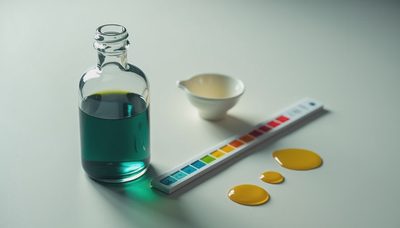
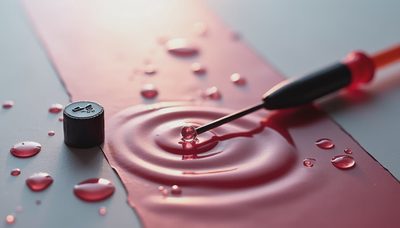
- **The drip test:** Warm up the engine, pull the dipstick, and let a drop fall onto a white paper towel. Fresh oil spreads evenly. Thick, oxidized oil forms a dark center with little lateral spread. If the drop stays a dense black bead, you're overdue.
- **The smell test:** Sniff the dipstick. A burnt, acrid odor indicates excessive heat and oxidation. A sweet smell means coolant. A gasoline smell means fuel dilution—common in taxis and short-trip vehicles.
- **The feel test:** Rub a bit of oil between thumb and forefinger. New oil feels slick and smooth. Thick, oxidized oil feels gritty or tacky. If it leaves a residue that doesn't wash off easily, you've got sludge.
A more precise method is a used-oil analysis from a lab like Blackstone or Polaris. They'll measure viscosity at 100°C, TAN (Total Acid Number), and insolubles. If viscosity has increased more than 30% from the fresh oil grade (e.g., from 10.5 cSt to 14 cSt for a 30-weight), you've got severe thickening. That's when you need to investigate further.

Prevention and Proper Maintenance
The best cure is prevention. Here's how to keep your oil from turning into black tar:
- **Change oil on time, not on mileage alone.** Severe service (short trips, stop-and-go, towing) demands shorter intervals. If your manual says 5,000 miles for severe, follow it. Don't stretch to 10,000 in city driving.
- **Use the right viscosity and API rating.** A thicker grade won't fix oxidation. An oil with a robust additive package (look for API SP or CK-4) will resist oxidation longer. No brand preference—read the spec, not the bottle.
- **Monitor coolant and fuel systems.** A leaking injector or failing EGR valve can contaminate your oil quickly. Fix leaks promptly.
- **Consider an oil analysis at every other change.** For $30, you get a snapshot of your engine's health. Track trends: rising viscosity, falling TBN, and increasing iron are warning signs.
If you remember one number from this post, make it this one: viscosity increase of more than 30% is cause for concern. Don't wait for warning lights—your dipstick tells the story.
Final Thoughts
Thick, black oil isn't always a death sentence, but it's a signal worth reading. Whether it's oxidation from high heat, soot from direct injection, or coolant from a gasket leak, the fix is straightforward once you know the cause. Keep your intervals reasonable, use quality oil that meets your engine's specs, and stay curious about what's happening under the hood. Your engine will thank you.
*Marcus Webb is a petroleum engineer and lubricant formulation consultant based in Tulsa, Oklahoma. He runs RevJudge—a no-brand, data-driven resource for motor oil science.*

No letters yet — pray write the first.