You've probably heard that motor oil lasts forever as long as the bottle is sealed. Here's what the data actually shows: does motor oil expire? Not in the same sharp, calendar-based way that milk does, but oil can become less suitable after years of poor storage. The base oil is generally stable. The additive package, container condition, and exposure to heat, moisture, dust, and air determine whether that jug still deserves a place in your engine.
For a typical driver, a properly stored, unopened bottle several years old is not automatically bad. However, date codes, storage history, and physical inspection matter. This is especially important when the oil carries a current API or manufacturer performance specification. A cheap top-off is not a bargain if the fluid has separated, absorbed water, or lost the properties your engine depends on.
Does motor oil expire in an unopened bottle?
An unopened bottle stored indoors can remain usable for a long time, often several years, because the seal limits oxygen and moisture exchange. Petroleum and synthetic base stocks do not suddenly turn into sludge on a particular birthday. That said, lubricant companies commonly publish shelf-life guidance, and those recommendations can differ by product and packaging. The safest approach is to follow the manufacturer’s stated shelf life when it is available.
Storage conditions matter more than the number printed on a receipt. A jug sitting in a climate-controlled garage in Tulsa is in a very different environment from one stored for four summers in the bed of a pickup. Repeated heat cycles can accelerate additive reactions and stress plastic packaging. Freezing temperatures usually do not permanently ruin motor oil, but they can make it extremely thick and encourage temporary separation or wax crystallization until the fluid warms and is mixed.
Look at the bottle before opening it. Avoid containers with a swollen side, a damaged cap seal, a cracked handle, heavy dust around the opening, or obvious leakage. If the oil looks cloudy, contains sediment, has strings or gel-like material, or shows distinct layers after gentle rocking, do not put it in an engine. A dark amber color alone is not proof of failure; color varies by base oil and additive chemistry.
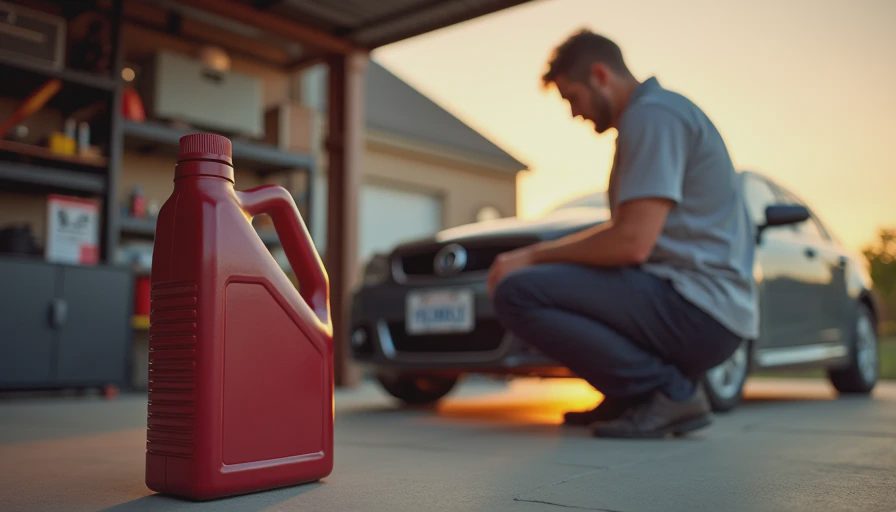
The chemistry behind oil aging
Science Corner: Engine oil is more than a slippery liquid. A finished formulation combines base oils with detergents, dispersants, antiwear agents, antioxidants, corrosion inhibitors, friction modifiers, and viscosity-index improvers. Those ingredients are balanced to meet a specific performance target, such as an API rating and SAE viscosity grade like 0W-20 or 5W-30.
Antioxidants help slow oxidation, while detergents and dispersants keep deposits controlled during engine operation. In a sealed container, these additives have little contamination to manage, so the package can remain stable. Heat, oxygen, and trace moisture can gradually change that balance. The process is usually slow, not dramatic. You will not necessarily see a clear visual warning before every important property changes.
Viscosity is also more complicated than thickness at room temperature. A multigrade oil must flow during a cold start and maintain an appropriate film at operating temperature. If viscosity-index improvers degrade or the formulation changes through oxidation, the oil may no longer behave as designed across that temperature range. Read the specification on the label, not just the words “full synthetic” or “advanced protection.”
If you remember one number from this post, make it the viscosity grade and performance specification required by your owner’s manual. Fresh 5W-30 that fails the required standard is a worse choice than properly stored oil that meets it. Read the spec, not the bottle’s marketing slogan.
Does motor oil expire after the bottle is opened?
Opened oil has more opportunities to encounter humid air, dust, and accidental contamination. A tightly recapped container kept upright in a cool, dry place is not instantly unusable, but I would treat it more cautiously than a factory-sealed bottle. The longer it sits, the greater the chance that the cap, spout, or storage shelf introduces dirt or water.
Do not store an opened jug beside a pressure washer, lawn equipment fuel can, or damp concrete floor. Keep the cap clean, avoid pouring through a dirty funnel, and never return leftover oil from an engine drain pan to the original container. Used oil contains soot, fuel dilution, wear metals, acids, and depleted additives. Mixing it with clean oil defeats the purpose of the fresh product.
The practical question is not only does motor oil expire, but whether the container has been protected from contamination. If the bottle has been open for an unknown period, has a missing cap, or came from a shelf exposed to weather, replacement is sensible. Motor oil is usually inexpensive compared with the cost of an oil change, turbocharger, timing-chain system, or engine repair.

How to inspect old motor oil before use
Start by confirming the product matches the engine’s requirements. Check the SAE grade, API service category, and any manufacturer approval listed in the owner’s manual. A bottle that is visually perfect can still be wrong for a modern turbocharged engine, diesel system, hybrid application, or vehicle requiring a specific low-ash formulation.
Next, inspect the container and cap. Look for leaks, cracks, swelling, corrosion on a metal can, or a broken inner seal. Pour a small amount into a clean, transparent cup. Healthy oil should flow as a uniform liquid. Slight haze can be caused by temperature or formulation, but persistent cloudiness, gritty particles, stringy deposits, or two layers that do not recombine are reasons to reject it.
Smell is a weak screening tool. A sharp solvent-like odor, rancid smell, or burnt odor suggests contamination or severe degradation, but normal oil can have a noticeable additive smell. Never taste a lubricant, and do not rely on a home freezer test to prove quality. Laboratory tests measure viscosity, oxidation, water, insolubles, and additive elements far more reliably than garage experiments.
Does motor oil expire in the engine?
Oil already inside an engine ages through a different and harsher process. Combustion blow-by introduces soot and acidic compounds. Heat promotes oxidation, while fuel dilution can reduce viscosity. Short trips can leave water and fuel in the crankcase because the oil never reaches a long enough hot operating period to evaporate them. Time-based oil-change intervals exist for this reason, even when mileage is low.
Follow the vehicle manufacturer’s mileage and time schedule, including the severe-service guidance if the car sees towing, dusty roads, repeated short trips, racing, or extreme temperatures. An oil-change reminder is useful, but it cannot identify every form of contamination. A vehicle driven only 2,000 miles over a year still deserves attention to the calendar interval.
A used-oil laboratory analysis can help fleet operators and enthusiasts investigate an interval. Results can reveal viscosity change, fuel dilution, coolant contamination, wear metals, and remaining additive elements. It is a diagnostic tool, not permission to ignore the owner’s schedule indefinitely.
A sensible storage and replacement plan
Keep new oil indoors, upright, and away from direct sun, heaters, welding areas, and water. Rotate older bottles forward and write the purchase month on the cap. Use containers that remain sealed and clean, and buy only the amount you expect to use within a reasonable period. If you cannot verify the age or storage history, use the oil for recycling rather than gambling on an expensive engine.
So, does motor oil expire? The honest answer is that it can age, but sealed, correctly stored oil does not become useless overnight. Verify the date guidance, inspect the packaging, check for contamination, and match the required API rating and SAE grade. That process takes minutes and costs less than guessing. When the evidence is uncertain, fresh oil is the clear choice.




No letters yet — pray write the first.