You've probably heard that brake rotors should be replaced every time you install brake pads. Here's what the data actually shows: rotors do not have a universal replacement interval. Their service life depends on thickness, heat exposure, corrosion, driving habits, vehicle weight, and the quality of previous repairs. If you are asking how often to change brake rotors, start with measurements and symptoms rather than a calendar reminder.
A rotor is a cast-iron disc that transfers friction heat away from the brake pad. Every stop removes a tiny amount of material, but heat and corrosion often matter more than mileage. A sedan used for highway commuting can retain usable rotors at 80,000 miles, while a heavy SUV driven in steep terrain may need them much sooner. The owner’s manual and the rotor manufacturer’s minimum-thickness specification are more useful than a generic mileage promise.
How often to change brake rotors: mileage is not the answer
The question how often to change brake rotors cannot be answered responsibly with “every 30,000 miles.” Some vehicles use relatively thin rotors from the factory, leaving less wear margin. Others have generously sized rotors designed for towing or repeated high-temperature stops. City traffic, mountain roads, trailer loads, and aggressive braking all increase heat cycles and wear.
In ordinary mixed driving, a rotor might last through one or two sets of brake pads, but that is only a rough pattern, not a specification. A rotor should be replaced when it is at or below its discard thickness, has severe scoring, is badly rusted, or has developed heat-related distortion or cracks. The minimum thickness is often cast into the rotor hat, printed in a service manual, or listed in a reputable parts catalog. Do not confuse the “new thickness” with the “minimum thickness.” Machining a rotor below that limit reduces its ability to absorb and release heat.
A quick example makes the point. Suppose a rotor is new at 28 millimeters and its discard limit is 26 millimeters. A measurement of 26.4 millimeters might look acceptable before machining, but removing another fraction of a millimeter could make it unsafe or unusable. The mechanic should measure both faces and compare the thinnest reading with the specification.
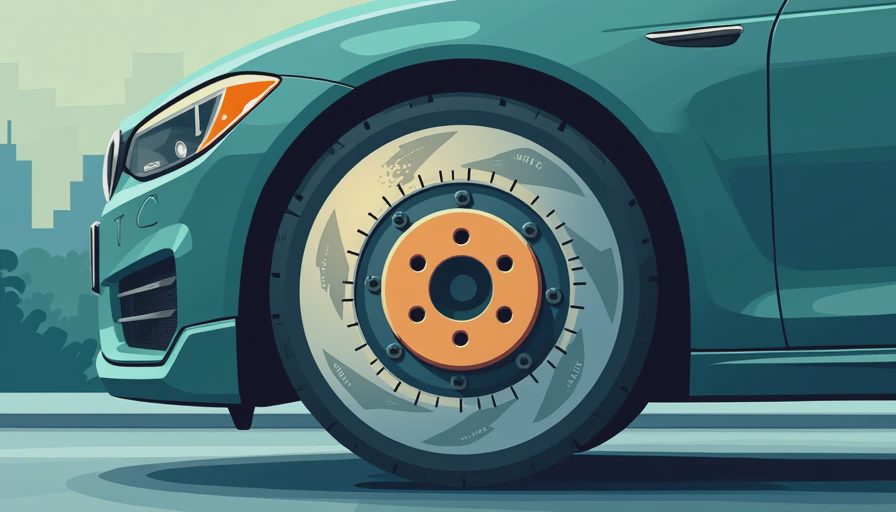
What actually wears a brake rotor?
Brake pads and rotors wear through friction, but the process is not as simple as two dry surfaces scraping together. The pad contains binders, fibers, abrasives, lubricants, and friction modifiers. Under braking pressure, small contact patches generate intense heat. The rotor conducts that heat through the disc and into the surrounding air.
Science Corner: a blue or purple band on a rotor usually indicates excessive heat, not a magical performance upgrade. Repeated overheating can change the surface structure of the iron and create uneven friction. That can contribute to pedal pulsation, steering-wheel shake, or a brake pedal that feels normal at first but becomes inconsistent after several hard stops.
Rust is another major factor. Surface rust after rain is normal and usually disappears during braking. Deep grooves, flaking around the outer edge, or corrosion in the pad contact area is different. In regions that use road salt, a rotor can become unacceptable because of corrosion before it reaches its wear limit. A vehicle that sits for months may also develop a patch of rust where the pads were holding the disc, producing a recurring thump or vibration.
A practical answer to how often to change brake rotors
For many drivers, the best schedule is inspection at every brake service and measurement whenever pads are replaced. That approach answers how often to change brake rotors based on condition. During an inspection, remove the wheel if necessary, look at the outer and inner rotor faces, and check for a pronounced outer lip. The inner face deserves attention because it is easy to overlook and can wear or corrode more severely than the visible side.
A shop can measure rotor thickness with a micrometer at several points around the disc. Several readings help identify taper or uneven wear. A dial indicator can check lateral runout, which is side-to-side variation as the rotor turns. Runout is not automatically a “warped rotor.” It can result from uneven rust, incorrect wheel-lug torque, hub debris, or actual disc distortion. Cleaning the mounting surfaces and tightening lug nuts in the correct sequence can prevent a new rotor from developing a vibration blamed on the part.
If a rotor is close to its minimum thickness, replacing it is usually more sensible than machining it. Turning a rotor removes material and leaves less thermal capacity. Many modern rotors are not thick enough to allow resurfacing, and labor can erase the small savings. Always replace rotors in pairs on the same axle so braking response remains balanced.
Symptoms that deserve immediate attention
Knowing how often to change brake rotors is useful, but symptoms can override any mileage estimate. A vibration through the steering wheel during braking often points to a front-brake issue, while a pulsing pedal can involve the rear brakes or hydraulic system. Neither symptom proves that the rotor is defective, so a measurement and inspection still matter.
Grinding is more urgent. It may mean the friction material is gone and the pad’s metal backing is contacting the rotor. Continuing to drive can destroy a rotor quickly and damage the caliper. A deep scrape, pulling to one side, burning odor, or smoke from one wheel can indicate a seized caliper or uneven brake application. Stop driving when practical and arrange a professional inspection rather than testing the brakes repeatedly.
A light squeal is less conclusive. Brake noise can come from pad material, surface contamination, missing hardware, or normal vibration. Replacing rotors without addressing a sticking caliper or contaminated pad will not solve the underlying problem.

Replacement choices and installation details
When replacement is necessary, compare specifications instead of trusting dramatic packaging. The rotor must match the vehicle’s diameter, thickness, venting, hat height, bolt pattern, and wheel-clearance requirements. Coated rotors can help protect non-friction surfaces from corrosion, but coating does not compensate for incorrect dimensions or poor installation.
New pads should normally accompany new rotors. Reusing heavily worn or unevenly bedded pads can prevent proper contact with the fresh disc. The caliper slide pins should move correctly, the piston should retract according to the caliper design, and the pad hardware should be clean and correctly positioned. A rotor installed over rust or scale on the hub may sit crooked and produce a vibration.
After installation, follow the pad manufacturer’s bedding procedure. That usually involves a series of moderate stops with cooling time between them, but the exact process varies by pad compound. Avoid holding the pedal firmly while stopped immediately after repeated hard braking, because the hot pad can leave an uneven transfer layer on the rotor.
How to make a sound decision in the garage
The simplest way to decide how often to change brake rotors is to record three facts: measured thickness, visible condition, and driving symptoms. Write down the new and minimum specifications when the vehicle is serviced. If the rotor is comfortably above the discard limit, smooth, evenly worn, and free of cracks, replacement may not be justified merely because new pads are being installed.
If the rotor is near the limit, deeply scored, cracked, badly corroded, or producing repeatable vibration after proper diagnosis, replacement is the safer repair. Ask the shop to show you the measurement and explain the specification. A clear answer should include the actual reading, the discard limit, and whether machining would leave adequate thickness.
If you remember one number from this post, make it this one: the rotor’s minimum thickness. That number, combined with an honest inspection, is more reliable than a blanket mileage interval. Read the specification, not the marketing claim, and you will know how often to change brake rotors without replacing good parts or gambling on worn ones.
No letters yet — pray write the first.