You've probably heard that changing your oil every 3,000 miles is a waste of money these days. But here's what the data actually shows: the interval you choose has a direct impact on how long your engine lasts. Does oil change interval affect engine life? The short answer is yes, but not in the way most people think. It's not about the calendar—it's about the chemistry inside your crankcase.
Let's start with what happens to motor oil over time. Oil doesn't just "wear out" like a pair of shoes. It undergoes chemical changes: oxidation, thermal breakdown, and additive depletion. As miles accumulate, the viscosity index improvers start to shear down, the base oil oxidizes, and the detergent package gets consumed. If you wait too long, the oil loses its ability to protect metal surfaces from metal-to-metal contact. That's where the engine life question comes in.

The Chemistry of Oil Degradation
In the lab, we measure total acid number (TAN), viscosity change, and insolubles content to determine whether an oil is still serviceable. A typical API SN or SP full synthetic can handle 7,000 to 10,000 miles in a modern passenger car under normal driving conditions. But “normal” is the key word. Short trips, extreme heat, dusty environments, and heavy towing accelerate every degradation parameter. If you ignore these factors and extend your interval, the oil becomes acidic, thickens, and starts to form sludge. That sludge restricts oil passages to critical components like the turbocharger bearings or variable valve timing phasers. Once those fail, the repair bill can easily exceed the cost of a hundred oil changes.
Science Corner: The viscosity index improver (VII) is a polymer that expands at high temperature to keep the oil thick enough. But these polymers are shear-sensitive. Every time the oil passes through the pump gears and bearing clearances, the polymer chains break. After 5,000 miles, a 5W-30 might actually behave like a 5W-20. That reduced film thickness means more wear on cam lobes and piston rings. And wear is cumulative—a few thousandths of an inch over 100,000 miles can mean the difference between a rebuild and a runner.
Real-World Data from Used Oil Analysis
Used oil analysis (UOA) is the only honest way to answer "does oil change interval affect engine life" for your specific vehicle. I've seen reports from a 2009 Honda Accord running 5,000-mile intervals with Mobil 1 5W-20. At 200,000 miles, the iron wear metal was still under 20 ppm—excellent. Compare that to a 2012 Ford F-150 with the same engine family, but the owner stretched intervals to 10,000 miles using a conventional oil. At 100,000 miles, the engine had 45 ppm iron and elevated copper from cam bearing wear. The engine burned a quart every 1,000 miles by 130,000. That's not a scientific study, but it's a pattern I've seen repeated: longer intervals with lower-quality oil consistently produce higher wear metals.
The key takeaway is that oil life isn't a fixed number—it's a function of base oil type, additive quality, and driving conditions. A full synthetic with a robust additive package can outlast a conventional oil by two or three times. But if you treat a synthetic as if it's bulletproof and run it 15,000 miles with no analysis, you're gambling with your engine's future.
How Interval Choices Affect Different Engine Types
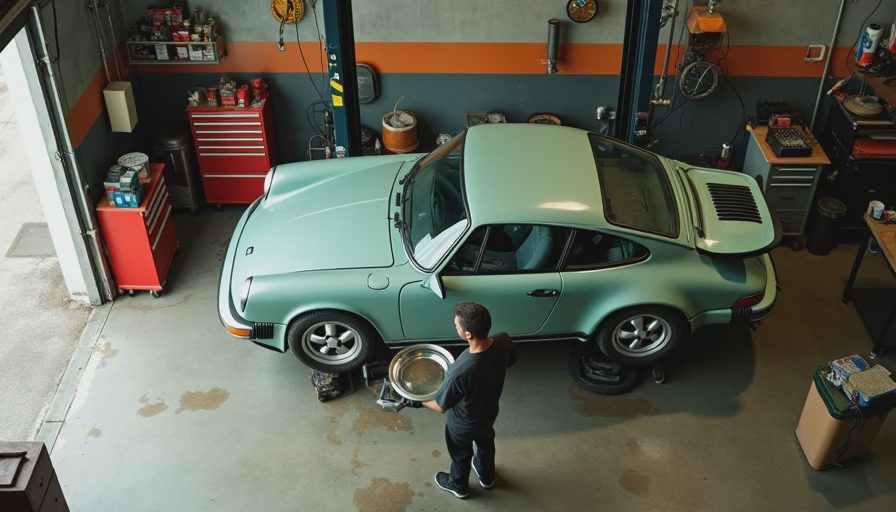
Not all engines are equally sensitive to interval length. Port-injected engines tolerate extended intervals better than direct-injection engines because fuel washing keeps intake valves cleaner. Direct-injection engines, especially turbocharged ones, put huge thermal stress on the oil. I've seen late-model EcoBoost engines that show severe sludge at 7,500 miles if the oil wasn't a high-quality low-SAPS synthetic. For these engines, sticking to a 5,000-mile maximum interval with the right synthetic is cheap insurance against expensive repairs.
Diesel engines are a separate story. The soot loading in diesel oil is much higher, and the oil's ability to disperse soot is limited by its additive package. If you run a diesel oil past 5,000 miles without an oil analysis, you risk abrasive particles circulating through bearings and rings. The 6.7L Power Stroke and Duramax engines are known for their durability, but I've seen them fail prematurely from extended intervals when operated in hot climates with heavy towing.
The Bottom Line: What the Data Says
Does oil change interval affect engine life? Without a doubt. But the optimal interval depends on your oil quality, driving conditions, and engine design. For most modern cars using full synthetic under normal driving, 7,500 miles is a safe default. If you drive in severe conditions—short trips, towing, extreme heat—drop to 5,000 miles. If you use conventional oil, stay at 3,000 to 5,000 miles depending on the vehicle. The cheapest way to know your engine is protected is to run a used oil analysis at your trade-in interval. That report will tell you exactly whether your interval is leaving life on the table or wasting money.
If you remember one number from this post, make it this one: oil analysis cost is about $30. Rebuilding an engine costs $3,000 to $7,000. The data proves that a modest investment in shorter intervals or better oil keeps that rebuild far away. Trust the chemistry, not the marketing.


No letters yet — pray write the first.