You've probably heard that a bent suspension arm automatically means an expensive dealership repair. Here's what the data actually shows: bent control arm repair cost often falls between $200 and $700 for one wheel, but severe collision damage, luxury parts, and additional alignment work can push the bill past $1,000. The key is identifying whether the arm itself is bent, a bushing has failed, or another suspension component absorbed the impact.
A control arm connects the steering knuckle to the vehicle's frame or subframe. Most cars have lower control arms, while some designs also use upper arms. These parts help the wheel move vertically while staying positioned correctly during braking, cornering, and acceleration. A damaged arm can change camber, caster, and toe, which are the alignment angles that determine how the tire contacts the road.
What a Bent Control Arm Does to Your Car
A pothole, curb strike, collision, or road debris can bend a control arm. Aluminum arms can crack or deform, while stamped-steel arms often show a visible crease or change in shape. A control arm that looks only slightly different can still move the wheel far enough out of alignment to cause rapid tire wear.
Common symptoms include pulling to one side, a crooked steering wheel, clunking over bumps, uneven tire wear, vibration, and a vehicle that feels unstable under braking. None of these symptoms proves the arm is bent. A worn ball joint, damaged tie rod, broken spring, bent steering knuckle, or separated bushing can create a similar complaint.
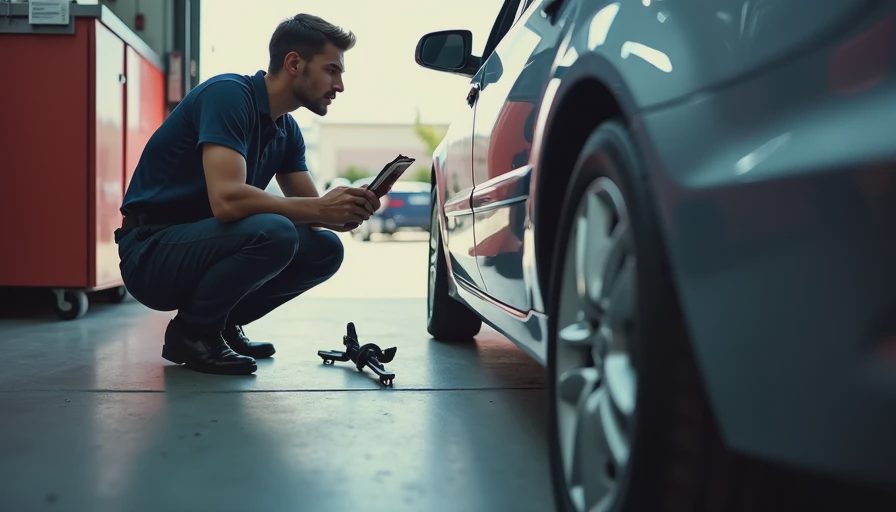
This is why a proper inspection matters. A technician should compare the affected side with the opposite side, inspect mounting points, check the ball joint and bushing, and measure alignment before and after the repair. A visual inspection alone can miss a small deformation.
Science Corner: alignment numbers are not cosmetic. Excessive toe causes the tire to scrub sideways as it rolls, creating a feathered tread pattern. Incorrect camber loads one edge of the tread. A control arm can be responsible for either condition because its geometry helps locate the wheel.
How Much Does Bent Control Arm Repair Cost?
For a mainstream front-wheel-drive sedan, a replacement control arm commonly costs about $80 to $300 for the part and $120 to $400 for labor. That places a typical one-side repair around $200 to $700 before or including alignment, depending on the shop and vehicle. Some arms are sold with bushings and a ball joint already installed; others require those components to be transferred or purchased separately.
The bent control arm repair cost rises when the vehicle uses an integral aluminum arm, a difficult subframe design, or electronically controlled suspension. European vehicles and performance cars can use parts costing $300 to $900 each, with labor adding another $200 to $600. A dealership estimate can be higher because of labor rates and original-equipment parts, although the repair procedure itself may be similar at an independent shop.
Alignment is an important line item. Expect roughly $80 to $180 for a four-wheel alignment in many markets. If the shop finds that the steering knuckle, tie rod, wheel bearing, or subframe is also bent, the total can reach $1,000 to $2,500 after a serious impact. Ask for an itemized estimate rather than accepting a single package price.
Part Choice: Original Equipment or Aftermarket?
The lowest part price is not automatically the lowest ownership cost. An original-equipment control arm usually matches the vehicle's dimensions, bushing stiffness, and ball-joint fit. Quality aftermarket arms can also work well, but quality varies widely. A very inexpensive assembly may use a softer bushing, a lower-grade ball joint, or poor corrosion protection.
When comparing estimates, ask whether the replacement includes the ball joint and bushings, whether the part is steel or aluminum, and what warranty covers the assembly. A reputable shop should be able to identify the manufacturer and explain why a complete arm is being installed instead of pressing in one bushing.
Replacing only a bushing can save money when the arm is straight and the ball joint is healthy. It is not a sensible shortcut when the arm has visibly changed shape. Pressing a new bushing into a bent arm leaves the basic geometry wrong, so the tire can still wear unevenly and the vehicle can remain difficult to control.
How to Confirm the Diagnosis Before Paying
Start by asking for photographs of the damaged part. The photo should show the suspected bend, torn bushing, cracked metal, or impact mark. Then request the alignment printout. The numbers before repair show the problem; the numbers after repair show whether the vehicle is within the manufacturer's specified range.
If the estimate includes several suspension parts, ask which component failed first and which damage is confirmed. After a curb strike, it is reasonable to inspect the wheel, tire, tie rod, strut, sway-bar link, and subframe. A shop should not replace parts solely because they are nearby or because the car has high mileage.
The bent control arm repair cost is easier to judge when you separate necessary repairs from recommended maintenance. For example, a cracked ball-joint boot may justify replacement, but an old sway-bar link is not automatically the cause of a crooked steering wheel. Clear evidence protects your budget and makes the repair easier to verify.
Do not continue driving at normal speed if the wheel visibly leans, the tire rubs the fender, steering feels loose, or the vehicle pulls sharply. A tow is cheaper than turning suspension damage into a loss of steering control or a ruined tire.
Can Insurance Cover the Repair?
Collision coverage often applies when a control arm bends because of a crash or impact with an object, subject to the policy deductible. If a driver hits a curb and has a $500 deductible, a $650 covered repair may produce little insurance benefit after the claim is processed. Comprehensive coverage generally handles non-collision events such as theft, falling objects, or weather, not an ordinary pothole strike.
Pothole coverage depends on the policy and circumstances, and many drivers pay for smaller repairs themselves to avoid a claim. Get a written estimate, compare it with the deductible, and consider whether related damage makes filing worthwhile. Your insurer, not a repair shop, determines coverage under the policy terms.
Ways to Keep the Final Bill Under Control
Get two estimates from independent repair shops with alignment equipment. Ask whether labor includes removing the old arm, torquing fasteners at the correct ride height, and performing the final alignment. Suspension bushings can be preloaded if bolts are tightened while the suspension hangs, shortening bushing life. Correct installation matters as much as the part itself.
If one arm is bent from an impact, the opposite arm does not automatically need replacement. Have it inspected for looseness, cracks, and bushing deterioration. Replacing both sides can be reasonable on an older vehicle with worn rubber, but it should be based on condition rather than a blanket rule.
The practical bent control arm repair cost for many daily drivers is a manageable few hundred dollars when the damage is limited to one assembly. The expensive cases involve hidden collision damage, specialty suspension parts, or repeated alignment problems. Read the estimate, review the alignment results, and replace the part that is actually bent. That approach keeps the repair safe without paying for guesswork.



No letters yet — pray write the first.