You've probably heard that emissions simply mean smoke coming from the tailpipe. Here's what the data actually shows: what does emission mean in a car is a question about the gases and particles produced when fuel burns, how the vehicle controls them, and what reaches the atmosphere. Some emissions are visible, but many are invisible. A properly running gasoline engine can produce no obvious smoke while still releasing carbon dioxide, nitrogen oxides, carbon monoxide, and hydrocarbons.
That does not automatically mean your car is defective. Combustion always creates byproducts. The engineering challenge is to reduce the harmful ones through precise fuel control, exhaust after-treatment, and regular maintenance. Understanding the terminology helps you separate a normal emissions system from a genuine fault.
What emissions are produced by an engine?
The basic answer to what does emission mean in a car starts inside the combustion chamber. Gasoline combines with oxygen, and the resulting heat pushes the piston downward. Ideally, the fuel becomes mostly carbon dioxide and water vapor. Real engines are less than perfect because combustion temperature, mixture strength, ignition timing, and engine load constantly change.
Carbon dioxide is the main carbon-containing product of complete gasoline combustion. It is not poisonous at normal outdoor concentrations, but it is a greenhouse gas. Carbon monoxide forms when combustion is incomplete and is dangerous because it can interfere with oxygen transport in the body. Unburned hydrocarbons are fuel fragments that escaped complete combustion. Nitrogen oxides form when high combustion temperatures allow nitrogen and oxygen from intake air to react.
Small amounts of particulate matter can also come from direct-injection gasoline engines, diesel engines, oil entering the combustion chamber, or incomplete burning. Modern vehicles use calibrated controls to limit these pollutants rather than relying on the engine alone.
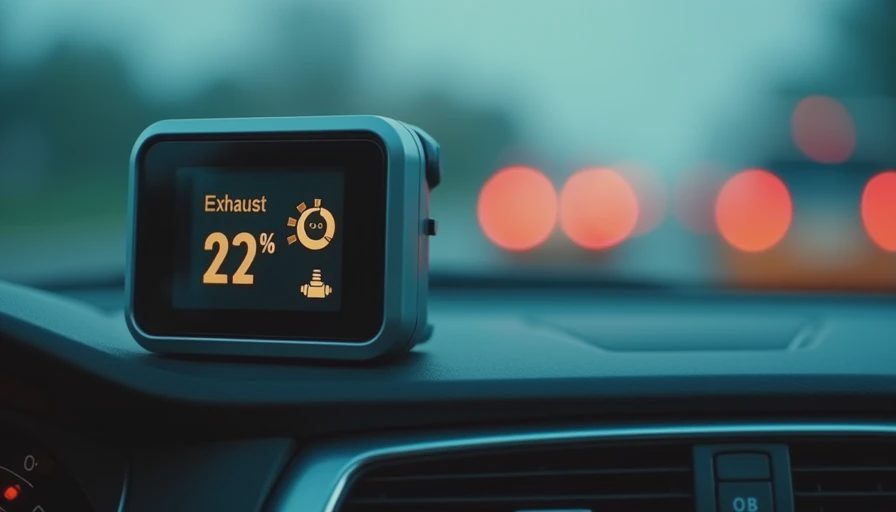
How a car controls exhaust pollution
If you are asking what does emission mean in a car because of a dashboard light, it helps to know the major hardware. The oxygen sensor measures oxygen remaining in the exhaust. The engine control module uses that information to adjust injector pulse width and maintain the intended air-fuel mixture. A mass airflow sensor or manifold pressure sensor helps estimate how much air enters the engine.
The catalytic converter is the chemical cleanup stage. Its catalyst encourages oxidation of carbon monoxide and hydrocarbons while helping reduce nitrogen oxides. It does not store pollutants indefinitely or repair a rich-running engine. Raw fuel, coolant contamination, or repeated misfires can overheat and damage the catalyst, which is why ignoring a flashing check-engine light can become expensive.
Evaporative emissions are another category. Fuel vapors from the tank and fuel system are captured in a charcoal canister and later pulled into the engine to burn. A loose fuel cap, cracked vapor hose, or failed purge valve can trigger an emissions fault even when the car drives normally.
Science Corner: why the catalytic converter needs heat
A catalytic converter is not a filter packed with disposable material. It is a coated substrate that needs to reach operating temperature before its reactions work efficiently. The first few minutes after a cold start therefore produce a larger share of some pollutants. Engineers place the converter close to the engine and use fuel and ignition strategies that warm it quickly.
What the check-engine light is telling you
The phrase what does emission mean in a car often appears after an emissions warning illuminates. In the United States, the check-engine light is commonly called the malfunction indicator lamp. It monitors systems that can affect emissions, including fuel delivery, ignition, oxygen sensors, catalytic-converter efficiency, and evaporative controls.
A steady light usually indicates a fault that deserves prompt diagnosis but does not always require pulling over immediately. A flashing light commonly indicates an active misfire severe enough to threaten the catalytic converter. Reduce load and seek service quickly rather than continuing a high-speed trip.
A code reader can retrieve diagnostic trouble codes, but a code is a starting point, not a final diagnosis. For example, an oxygen-sensor-related code may result from a vacuum leak, exhaust leak, wiring problem, or genuinely failed sensor. Replacing parts by code alone is how a $40 diagnosis becomes a $600 parts carousel.
How oil and engine condition affect emissions
Motor oil is not an emissions-control device, but lubrication condition can influence what leaves the tailpipe. Worn piston rings, valve seals, or a turbocharger seal can allow oil into the combustion chamber. Burning oil often creates blue-gray exhaust and can contaminate oxygen sensors and catalytic converters over time.
Using the correct viscosity and specification helps the engine control oil consumption and maintain designed clearances. A modern engine might require an SAE 0W-20, 5W-30, or another grade, but viscosity alone is not enough. Read the owner manual for the required API service category, ILSAC approval, or manufacturer specification. The additive package, volatility performance, and oxidation resistance all matter.
An oil that meets the required specification is a better choice than one selected because its label makes the biggest mileage promise. Read the spec, not the bottle. Also investigate falling oil levels instead of treating frequent top-offs as normal without finding the cause.

Common emissions problems and likely clues
When a car smells like raw gasoline, possible causes include a leaking injector, rich fuel mixture, evaporative leak, or fuel spilled during service. A rotten-egg smell can occur when a catalytic converter is overloaded or damaged, although the odor itself does not identify the failed part. Rough idle and poor fuel economy often point toward ignition, air metering, or fuel-control problems.
Black exhaust generally suggests an overly rich mixture on a gasoline engine. Blue smoke points more toward burning oil. White vapor on a cold morning can be ordinary condensation, while persistent thick white smoke with coolant loss deserves immediate attention because it can indicate coolant entering the combustion chamber.
These clues narrow the search, but they do not replace testing. A technician may use fuel-trim data, misfire counters, smoke testing, compression testing, or an exhaust-gas analyzer. The right test depends on the symptoms and stored codes.
Does passing an emissions test prove the car is healthy?
Not completely. An emissions inspection checks whether the vehicle meets a defined standard under specified conditions. A car can pass while consuming oil, developing a small vacuum leak, or approaching a catalytic-converter failure. Conversely, a simple loose fuel cap or recently disconnected battery can cause a temporary readiness-monitor issue without a major mechanical failure.
After repairs or battery replacement, the vehicle may need normal driving before all emissions monitors complete their self-tests. Clearing codes immediately before inspection can create an incomplete-monitor result rather than solving anything. Keep maintenance records and repair the underlying issue instead of repeatedly resetting the light.
A sensible emissions diagnosis plan
Start by recording when the light appeared, whether the engine runs differently, and whether fuel economy or oil consumption changed. Check that the fuel cap is tight and inspect fluid levels, but do not disconnect the battery just to hide the warning. Retrieve codes with a quality scan tool or have a repair shop perform a diagnostic scan.
Next, distinguish a symptom from a cause. A misfire code needs ignition and fuel testing; it does not automatically mean the spark plug is the only problem. Compare fuel-trim readings, inspect intake hoses, and look for exhaust leaks before condemning expensive hardware. If the converter is suspected, confirm the engine is not sending unburned fuel into it.
The practical answer to what does emission mean in a car is that emissions are both a chemistry topic and a maintenance signal. Good combustion, correct oil specification, sound sensors, and an intact exhaust system work together. If you remember one number from this post, make it this one: a flashing warning light deserves attention now, not after the next oil change.



No letters yet — pray write the first.