You've probably heard that checking engine oil is as simple as pulling a stick and looking at it. Here's what the data actually shows: the reading is only useful when the car is parked level, the oil has had time to settle, and the dipstick is interpreted correctly. Learning how to check oil level in car takes about five minutes and can reveal low oil, overfilling, leaks, or rising oil levels before they become expensive problems.
Start with the right conditions
Park on a level surface, switch off the engine, and apply the parking brake. A warm engine gives oil better flow, but hot oil can burn skin and can produce an inconsistent reading immediately after shutdown. Wait about five to ten minutes after driving. If the owner's manual specifically calls for a cold-engine check, follow that instruction instead. Some engines have unusual dipstick arrangements or electronic oil-level systems, so the manual is the final authority.
Open the hood and identify the dipstick. It often has a yellow or orange handle, but not every vehicle follows that convention. Do not confuse it with the transmission fluid dipstick on older vehicles. Keep a clean paper towel nearby, and avoid dropping dirt into the dipstick tube or oil filler opening. A small amount of grit can circulate through the lubrication system and contribute to wear over time.
Pull the dipstick straight out and wipe it completely clean. Reinsert it until it is fully seated, then remove it again and hold it horizontally. The oil film should reach somewhere between the low and full marks. On many cars, the distance between those marks represents roughly one quart, but that is not universal. If you are learning how to check oil level in car, this two-pass method is more dependable than reading the first pull, which can leave oil smeared up the tube.
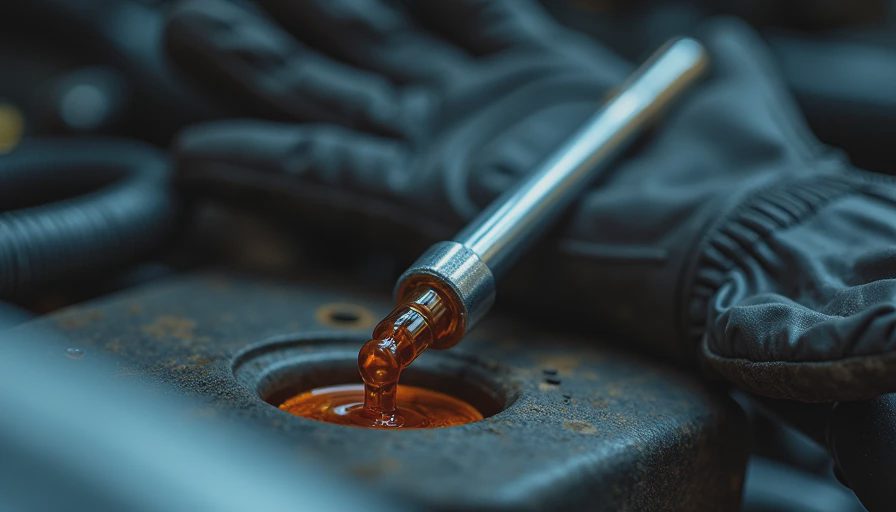
Reading the dipstick without guessing
Look at both sides of the dipstick. If the marks disagree, use the lower consistent reading rather than assuming the engine is full. Fresh oil is usually amber or honey-colored, although color alone does not diagnose condition. Used oil can turn dark while its additive package is still functioning. What matters more is the level, texture, odor, and any visible contamination.
The oil should form a continuous wet band. A level below the low mark means the engine may be short on lubricant, but do not pour in a large amount all at once. Add one-half quart, wait a minute, and recheck. Adding too much can cause the crankshaft to whip the oil into foam, which reduces the pump's ability to deliver a stable oil supply. If the level is only slightly low, a small measured addition is safer than guessing.
Science Corner: Motor oil is a carefully balanced mixture of base oil and additives. Detergents help manage deposits, dispersants keep fine contaminants suspended, antiwear chemistry protects heavily loaded surfaces, and viscosity modifiers help a multigrade oil perform across temperatures. The dipstick cannot measure additive depletion or viscosity directly, but a sudden level change can expose a mechanical issue.
What a low or high level can mean
A low reading can result from a leak, normal consumption, a recent oil change filled below specification, or an engine problem. Inspect the ground beneath the vehicle for fresh drops, then look around the oil filter, drain plug, valve cover, and front or rear crankshaft areas. A burning-oil smell or blue exhaust smoke deserves attention. Modern engines can consume oil without leaving a puddle, particularly during sustained highway driving or when piston rings, valve seals, or a turbocharger have a fault.
A level above the full mark is not automatically harmless. It might indicate overfilling, but fuel or coolant can also dilute the crankcase oil and make the level rise. Fuel dilution may produce a strong gasoline odor and unusually thin oil. Coolant contamination can create a beige, creamy deposit under the oil cap, although short trips can also create some condensation there. Do not diagnose from one clue alone. Recheck the level and arrange professional inspection if it keeps rising.

Choosing oil after the check
Knowing how to check oil level in car is only half the job. If the level is low, use the viscosity grade and performance specification listed in the owner's manual or on the oil cap. A grade such as 0W-20 or 5W-30 describes viscosity behavior, not overall quality. The first number with the W relates to cold-temperature flow, while the second describes viscosity at operating temperature. Substituting a thicker oil because it feels more protective can interfere with an engine designed around a specific flow rate.
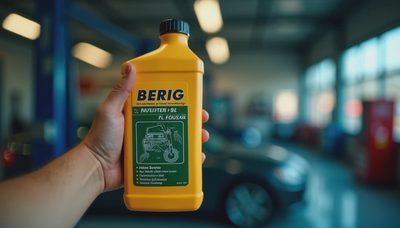
Read the API service category and any manufacturer approval printed on the container. API categories address performance requirements such as deposit control, oxidation resistance, wear protection, and emissions-system compatibility. An oil can be expensive, fully synthetic, or heavily advertised and still be the wrong choice if it lacks the required specification. Read the spec, not the bottle. Brand loyalty is less useful than matching viscosity, approval, and capacity.
If the engine is nearly empty, do not treat topping off as a substitute for finding the cause. A quart added every few hundred miles is a warning pattern, not routine maintenance. Record the odometer, amount added, and date. That simple log helps distinguish a one-time low reading from increasing consumption and gives a technician usable information.
A five-minute maintenance routine
For a practical routine, check the level once a month and before a long trip, especially if the vehicle has an older engine, a turbocharger, or a history of consumption. Keep the car level, wait after shutdown, wipe and reinsert the dipstick, then record the result. Inspect for leaks while the hood is open. Never crawl under a vehicle supported only by a jack, and keep loose clothing away from belts and fans.
If the oil-pressure warning light appears while driving, stop safely and shut the engine off as soon as traffic conditions allow. That warning concerns oil pressure, not merely oil quantity. Continuing to drive can damage bearings, camshafts, or a turbocharger within minutes. A low dipstick reading combined with unusual ticking, knocking, smoke, or a burning odor calls for towing or prompt mechanical diagnosis.
Learning how to check oil level in car gives you an early-warning tool, not a laboratory report. The best interpretation combines a repeatable dipstick reading with the correct oil specification, a consumption record, and attention to warning signs. Spend five careful minutes now, and you have a much better chance of catching a small maintenance issue before it becomes an engine repair.


No letters yet — pray write the first.